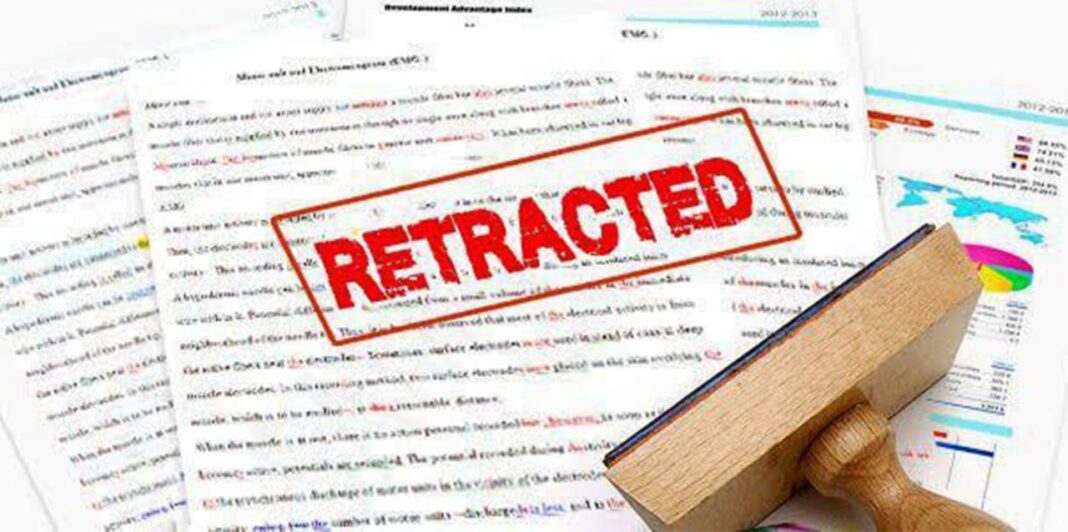
A recent global analysis has revealed that Ethiopian researchers have the highest rate of scientific paper retractions worldwide between 2022 and 2024, sparking serious questions about the quality and integrity of research conducted in the country.
The study, conducted by India-based data scientist Achal Agrawal and published on the online repository Zenodo, examined retraction rates across countries over a three-year period. Ethiopia topped the list, followed by Saudi Arabia, Pakistan, China, and Egypt. Retractions occur when published scientific papers are withdrawn due to errors, misconduct, or ethical violations.
Agrawal suggested that one reason for Ethiopia’s high retraction rate is the lack of a robust scientific community actively policing research quality and ethics. In contrast, countries like France, known for strong research integrity frameworks, often detect and retract flawed studies more effectively. However, the Ethiopian case is complicated by a rapid increase in scientific publications in recent years without corresponding growth in research infrastructure, which often leads to a surge in pseudo-studies and subsequent retractions.
The analysis emphasized that most retractions in Ethiopia were not due to honest errors but linked to various forms of misconduct, including plagiarism and data manipulation. The study also noted that countries with sharp rises in publication output tend to see higher retraction rates, suggesting that quantity-driven research incentives may compromise quality.
Ethiopian experts and advocates for ethical research have called for urgent reforms to the country’s scientific incentive systems. They argue that shifting the focus from quantity to quality is essential to curb false research and restore credibility to Ethiopian science.
While some critics warn that the high retraction rate may partly reflect intensified scrutiny or temporary surges related to mass retractions from certain journals, the overall trend points to systemic challenges. For example, a significant portion of Ethiopian retractions in 2023 involved papers published in Hindawi journals, which faced widespread peer-review manipulation.
The implications are profound. Scientific research is critical for Ethiopia’s development goals, informing policy, innovation, and public health. Persistent integrity issues undermine trust in Ethiopian science domestically and internationally, potentially limiting collaboration and funding opportunities.
“It takes about 18 months on average to retract a problematic article, so many questionable studies identified in 2024 may still be retracted in coming years,” Agrawal noted. “This ongoing threat could impact Ethiopia’s scientific reputation and export potential.”
Calls for action include strengthening institutional oversight, enhancing researcher training in ethics, establishing independent bodies to monitor research integrity, and reforming academic reward systems. Only through such comprehensive measures can Ethiopia ensure that its scientific contributions are both credible and impactful.