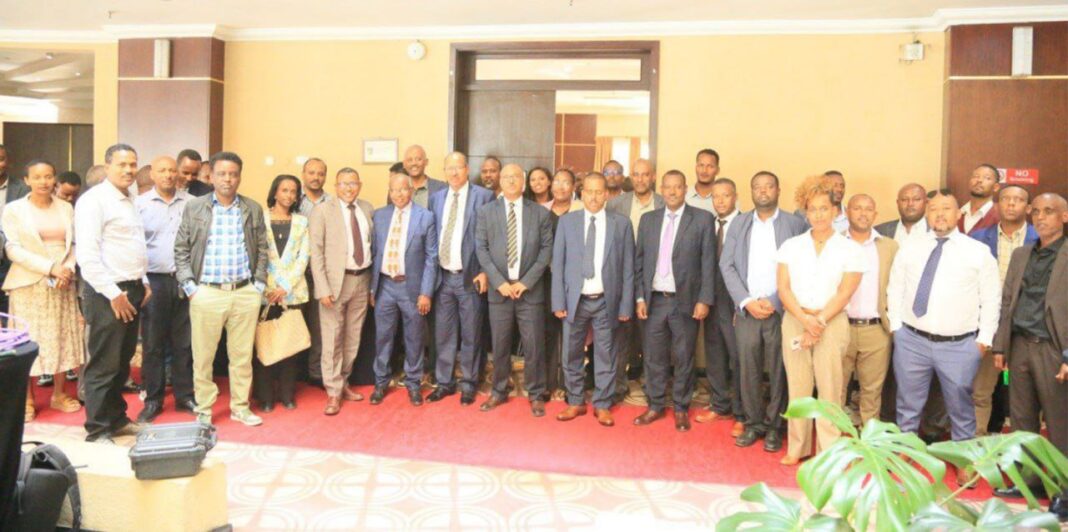
Ethiopia’s plan to modernize its sugar industry through large-scale irrigation projects is facing serious challenges that jeopardize the country’s goal of self-sufficiency and becoming a sugar exporter. A recent study presented at a workshop on May 15, 2025, revealed deep-rooted operational, financial, and institutional problems undermining irrigation efforts in key sugar factories.
The study, led by Mekonnen Bekele (PhD) of the Policy Study Institute (PSI), highlighted that while some plants like the River Sugar Factory show relatively better irrigation use, others such as Kessem and Tana Beles sugar factories are irrigating only a fraction of their targeted land-16.2% and 17.5% respectively-mainly due to community conflicts and other operational issues. This limited irrigation has caused a sharp decline in production capacity.

Cost overruns in irrigation projects, largely due to design changes and poor construction quality, have increased expenses by 78%. Additionally, small irrigation systems widely promoted in the early 2000s suffer from structural flaws and poor site selection, leading to significant water loss through evaporation and runoff.
Financial constraints also hamper progress. Farmers often rely on cooperative loans for maintenance but lack sustainable funding and credit options. Limited private sector involvement and a shortage of skilled labor further complicate project sustainability.
A critical issue raised by PSI is the extremely low water tariff for sugarcane irrigation-only 0.003 Ethiopian birr per cubic meter in 2022, far below the estimated economic value of 2.55 birr. Revising water pricing could generate an estimated 601 million birr in revenue, helping to improve project viability.

Mekonnen stressed that addressing these multifaceted challenges requires improved design and construction, realistic financial planning, stronger institutions, genuine community engagement, and equitable water pricing. Only through such comprehensive reforms can Ethiopia achieve its sugar production goals and secure the long-term sustainability of its irrigation-dependent sugar industry.