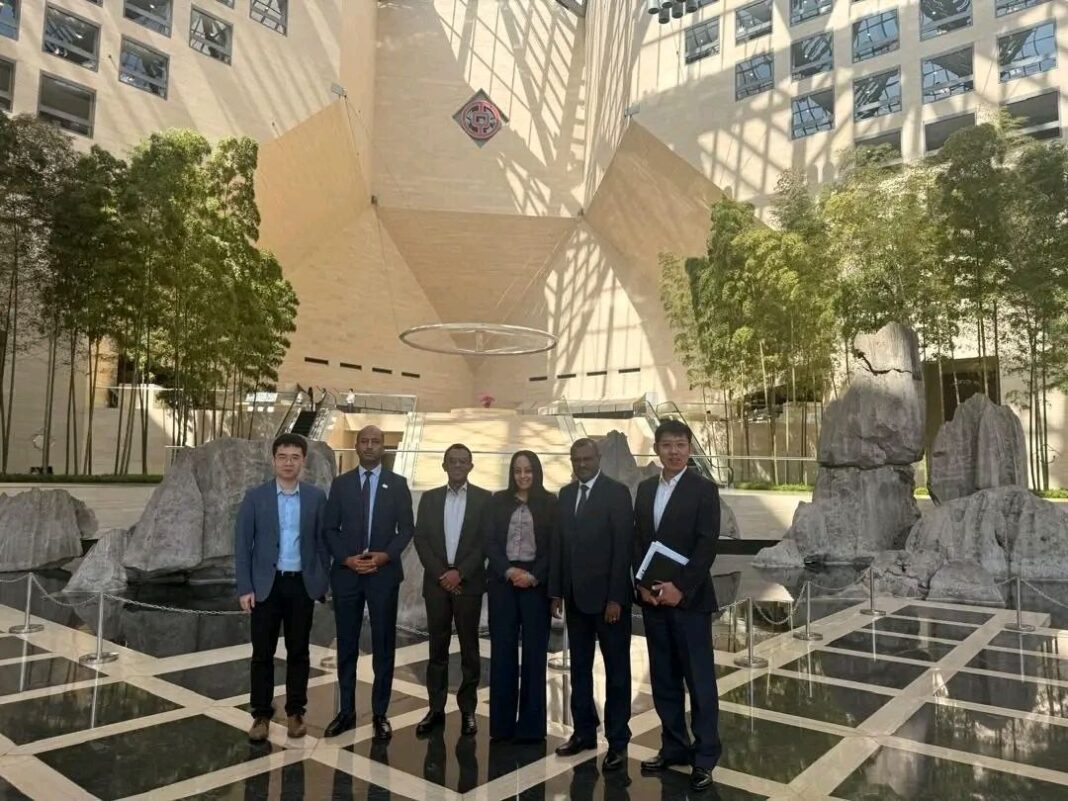
The Ethiopian Airlines Group and the Ministry of Finance have held high-level talks with the Bank of China over financing for the planned Bishoftu International Airport, a $12.5 billion project expected to become Africa’s largest aviation hub.
The April 1, 2026 meeting comes as Ethiopia steps up efforts to secure funding for the mega-project, while the African Development Bank (AfDB) continues to lead the financing structure as mandated lead arranger. Officials say the talks are aimed at building a stronger and more sustainable financial package for the airport’s construction.
During the discussions, the Ethiopian delegation briefed Bank of China executives on the project’s technical readiness and its broader economic case. They said the airport is being structured not just as a transport facility, but as an “Airport City” that will include hotels, shopping malls and a high-speed railway link to Addis Ababa
Ethiopia also stressed its efforts to reduce the debt risks that often accompany large infrastructure projects by improving the project’s bankability and long-term financial sustainability.
The Bank of China said it has a strong interest in the project, citing its global experience in airport investments and the strategic value of high-impact infrastructure in Africa. The lender also confirmed that it is holding joint consultations with the African Development Bank, opening the door to closer coordination on loan terms and financing options.
The AfDB has already committed $500 million to the project and is working to mobilize up to $8 billion, making the participation of the Bank of China potentially critical to closing the financing gap.
Ethiopian Airlines Group Chief Executive Officer Mesfin Tasew told Capital Newspaper that Bole International Airport, which currently handles about 25 million passengers, is nearing capacity. He said the first phase of the Bishoftu project, targeted for completion in 2030, will accommodate 60 million passengers a year, with total capacity expected to reach 110 million when fully completed.
Both sides agreed to continue technical and financial consultations in the coming period as Ethiopia pushes ahead with one of its most ambitious infrastructure projects to date.
If the partnership is finalized, the Bishoftu airport could become a major model for financing and delivering large-scale infrastructure in developing countries.