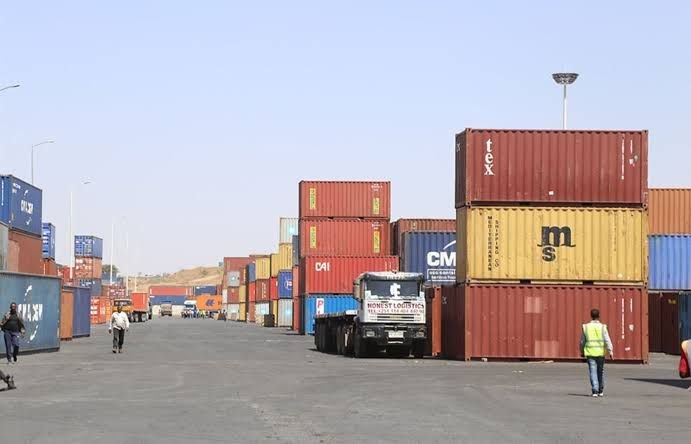
The Ethiopian Maritime Authority (EMA) has announced a shortage in the supply of empty containers for Ethiopia’s export products, citing disruptions in maritime transport caused by the security crisis in the Middle East.
In an official letter sent to the Ethiopian Customs Commission, the Authority indicated that container supplies have become inconsistent because several shipping lines harbor safety concerns regarding voyages to Djibouti.
Yalew Tesfaye, The Authority’s Lead Executive Officer for Logistics Administration, stated in the letter “Due to security risks faced by shipping companies, the number of vessels arriving at Djibouti has decreased, leading to a shortage of the empty containers exporters need to pack and ship their goods.”
It was noted that this problem has emerged specifically during a peak period for coffee exports, which could negatively impact the country’s foreign exchange earnings.
Since this is a season where high volumes of coffee are supplied to the global market and buyer demand is at its peak, the Authority emphasized that the concerted effort of all stakeholders is essential to meet the set export targets.
To address this challenge, a call has been made for the rapid release and distribution of empty containers currently held at domestic dry ports to exporters.
Currently, there are a total of 2,005 twenty-foot and 2,471
forty-foot containers holding import cargo at the Modjo and Kaliti dry ports; importers are expected to clear their goods quickly and return these containers.
The Ethiopian Customs Commission has been requested to provide the necessary monitoring and support to ensure these containers are urgently unstuffed and made available for the export trade.
Furthermore, in accordance with prior directives from the Ministry of Transport and Logistics, a reminder was issued to strengthen controls ensuring that containers entering the country are not returned empty to Djibouti without the explicit verification of shipping agents.
The Authority concluded that to ensure the sustainability of the export sector and protect the country’s economic interests, all relevant parties must work in coordination to resolve the current container shortage.