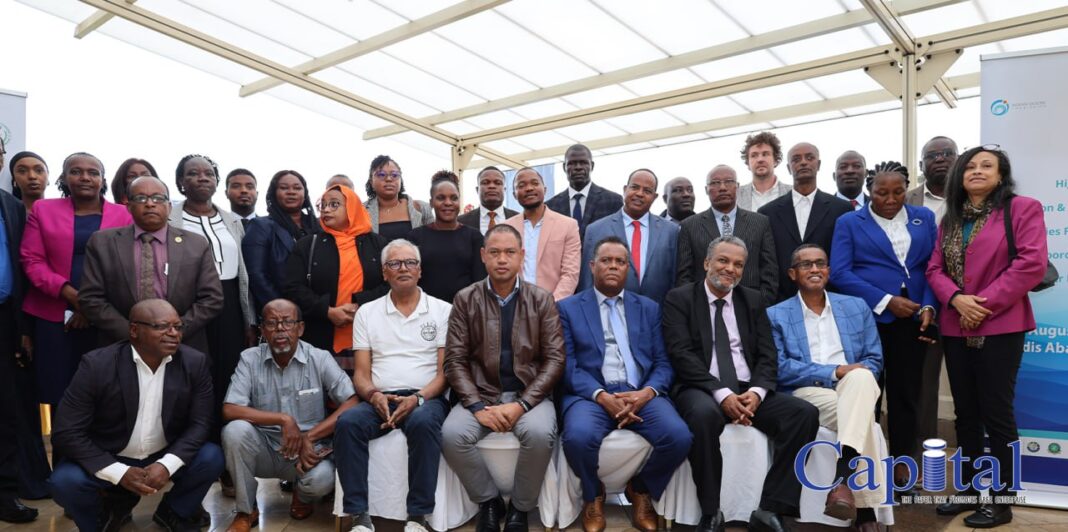
The Intergovernmental Authority for Development (IGAD) has issued a warning that member states in the Greater Horn of Africa are not fully leveraging their fisheries resources, leading to a substantial loss of economic and food security opportunities. During a three-day regional dialogue held in Addis Ababa from August 12 to 14, senior government officials, development partners, and private sector leaders highlighted the alarming gap between the region’s fish production capacity and actual output.
IGAD announced the creation of the IGAD Fisheries Forum Agency (IFFA), a specialized body aimed at coordinating regional fisheries management under IGAD’s Blue Economy agenda. Set to become operational in early 2026, the new agency will focus on combating illegal, unreported, and unregulated (IUU) fishing, improving resource management, and fostering sustainable innovation.
Despite the region’s capacity to produce 3.17 million tons of fish annually from marine and inland waters, current production stands at just 985,000 tons—less than one-third of its potential. Moreover, average per capita fish consumption in the IGAD zone is only 2 kilograms per year, sharply trailing the global average of 21 kilograms, underscoring missed nutritional benefits.
Particularly concerning is Ethiopia’s fish production, which stands at a modest 18,000 tons annually, a fraction of what the country’s abundant water bodies could support. Ethiopia’s Minister of State for Agriculture, Fikeru Regasa, acknowledged this gap during the conference, noting, “We have prepared a 10-year master plan for the development of fisheries and aquaculture.” He hailed the establishment of the new fisheries coordination center as a “critical approach” to tackling collective challenges such as overfishing and climate change that affect all member states.
Daher Elmi, IGAD’s Director of Agriculture and Environment, emphasized the vast marine and freshwater resources across the region, which support millions through employment and food security. “Sustainable fisheries development requires collective action and a regional approach based on sustainability, collaboration, and innovation,” Elmi stated.
Djibouti and Somalia were also cited as producing well below their fisheries capacities. Ahmed Darar, Director of Fisheries from Djibouti’s Ministry of Agriculture, Livestock and Fisheries, stressed the need to integrate monitoring, control, and surveillance (MCS) approaches especially for coastal and landlocked countries. He noted that funding remains a critical factor to effectively combat illegal fishing and marine pollution. Darar also stressed the importance of a treaty focused on curbing IUU fishing to safeguard the region’s marine resources.
The IGAD Fisheries Forum Agency will serve as a central hub coordinating fisheries management efforts across the seven member states: Djibouti, Eritrea, Ethiopia, Kenya, Somalia, Sudan, and Uganda. The agency’s framework consists of four main pillars: knowledge and information management, scientific and socio-economic research, fisheries management, and development initiatives.