A major Chinese energy firm is set to transform the Horn of Africa’s energy landscape, positioning the region as a new natural gas hub. Central to this ambitious vision is an innovative floating facility in Djibouti that will liquefy and export hundreds of thousands of cubic meters of Ethiopian gas daily.
This landmark export project is a vital part of Ethiopia’s comprehensive $6.4 billion investment in its emerging hydrocarbon sector. In a significant effort to harness its vast natural resources, the Ethiopian government has launched four integrated hydrocarbon projects, marking a historic milestone in exploration and development that began nearly a century ago.
The official inauguration ceremony took place in Calub, located 113 km from Gode town in the Somali Region, symbolizing the start of a new era for the nation’s energy and industrial capabilities.
At the heart of this national initiative is a new natural gas industrial complex in Calub, which will begin production with an initial capacity of 200,000 cubic meters of refined gas per day. A planned second phase will significantly boost this output to 600,000 cubic meters daily.
A strategic partnership with Djibouti is crucial to the export strategy. Following a recent high-level meeting between the Djibouti Ports and Free Zones Authority (DPFZA) and a delegation from the Chinese GCL Group, plans were finalized to transport natural gas from Ethiopia’s Ogaden region to the coast via the Damerjog Port.
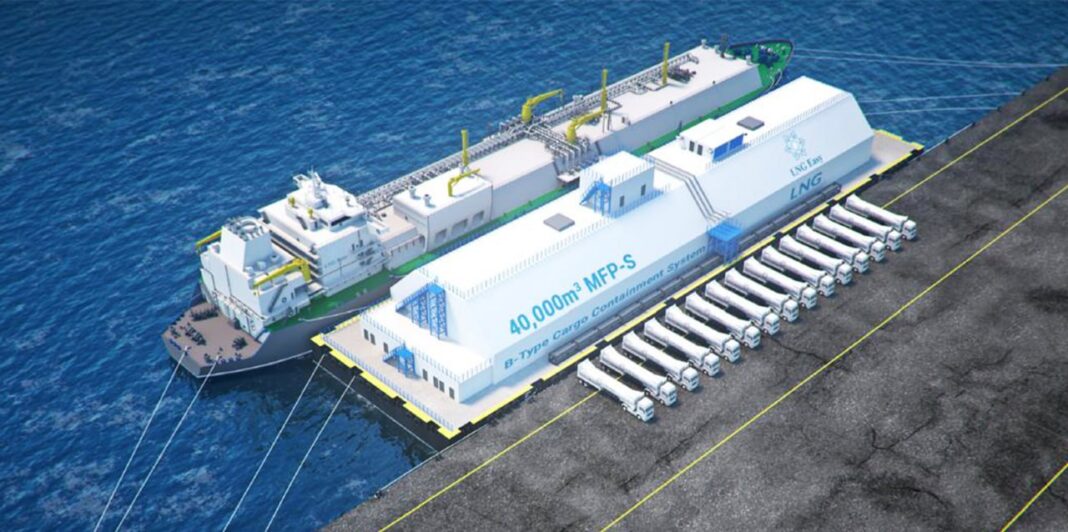
A dedicated floating storage barge (FSB) will be installed at Damerjog for the liquefaction and storage of natural gas before export, enabling large-scale international shipments. GCL expects production from its project to reach 220,000 cubic meters per day.
To generate immediate export revenue, a sophisticated logistics operation involving a fleet of 120 trucks will manage gas transportation between the production site and Damerjog port.
The DPFZA confirmed that most of these trucks are already in place and will soon be operational, providing a critical revenue stream during the estimated one-year construction period required for a permanent pipeline.
The Damerjog Industrial Park, featuring a common-user oil jetty capable of accommodating Aframax-class vessels, is a cornerstone of this strategy, solidifying Djibouti’s role as a burgeoning regional energy and logistics hub.
The projects are supported by significant hydrocarbon reserves in the Calub and Hilala gas fields, first discovered in 1972. Following a major discovery in 2018, GCL Group appraised the recoverable gas reserves in the Calub field to be between 6 and 8 trillion cubic feet (TCF). Additionally, a substantial oil field near Hilala is estimated to contain approximately 323 million barrels. After a previous license was revoked, a new agreement signed in April 2024 commits GCL to develop these resources within a strict 14-month timeframe.
The overarching project design extends beyond raw material export, envisioning comprehensive industrial integration within Ethiopia, including the establishment of power generation facilities with a capacity of 1,000 megawatts.
An oil refinery will be constructed at the Gode Industrial Park in two phases over three years, ultimately achieving a processing capacity of 2.5 million metric tons per annum.
Simultaneously, an agreement with the Dangote Group will establish a major fertilizer complex in Gode for producing urea and ammonia, further supporting the agricultural sector. This facility will be supplied by a dedicated 108-kilometer pipeline from the Calub gas field and aims for an annual production output of 3 million metric tons. This initiative seeks to significantly reduce Ethiopia’s substantial foreign currency expenditure on fertilizer imports, thereby enhancing national economic security.