The Sidama region is facing a major agricultural productivity challenge as over 62% of its cultivated land has been affected by soil acidification, according to new data from the regional Bureau of Agriculture.
Out of 153,000 hectares of cultivated land, approximately 95,000 hectares are now categorized as acid-affected, severely reducing crop yields and threatening the livelihood of thousands of farmers. Officials say soil acidity has become one of the most pressing barriers to achieving the government’s agricultural productivity targets.
“The transformation of our agricultural system—toward higher productivity and efficient input use—is a top priority,” said Memmiru Moke, Head of the Sidama Region Bureau of Agriculture. “But the biggest problem preventing progress remains the supply and use of essential inputs like fertilizer.”
Moke noted that over 7 million hectares of land across Ethiopia are affected by acidity, out of the country’s estimated 32 million hectares of arable land. Of this, around 3 million hectares are considered strongly acidic, rendering them virtually unusable for crop cultivation.
He explained that while the government plans to strengthen fertilizer production through a domestic plant expected to be operational within five years, the shortage remains severe. “We currently depend on imported fertilizer, and until local production begins, supply challenges will continue to constrain farmers,” he added.
To address the problem, the Sidama region has turned to the application of lime, a soil amendment that neutralizes acidity. However, demand far exceeds supply. The region requires about 120,000 quintals of lime per year to treat acid-affected farmland, but only 80,000 quintals were supplied during the 2024/25 fiscal year—at a cost exceeding 60 million birr.
Transport costs remain a major hurdle. “It takes roughly 30 quintals of lime per hectare, and moving such heavy material to remote areas is expensive and labor-intensive,” Moke said. He added that limited purchasing interest from lime-producing enterprises, mainly cement factories, has further worsened the supply shortfall.
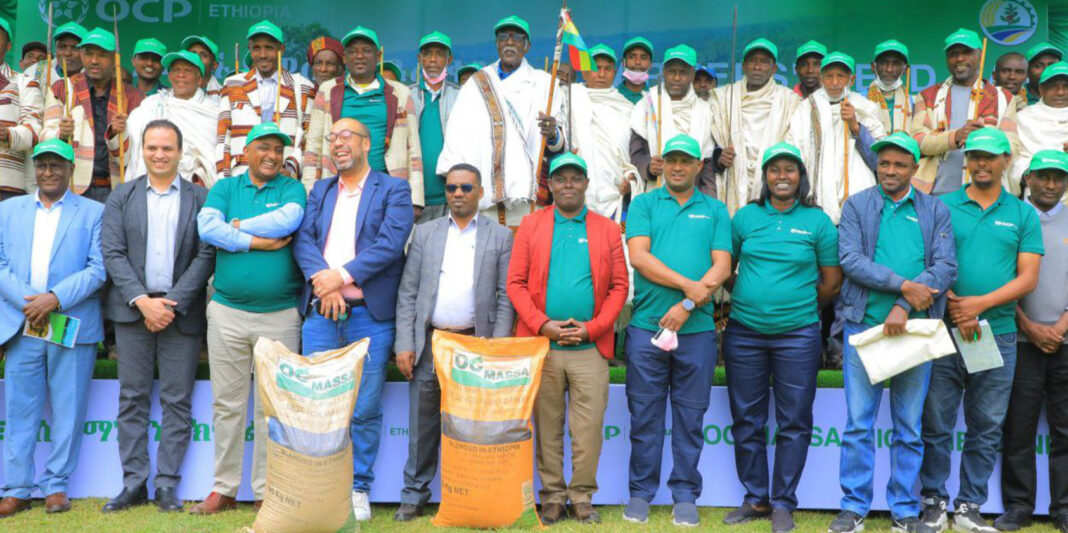
Despite these challenges, initiatives are underway to restore soil health and promote sustainable farming. Recently, OCP Ethiopia, in collaboration with the Sidama Regional Agricultural Research Institute (SiRARI), showcased OC-MASSA, a newly developed phosphate-based fertilizer tailored to Ethiopian soils, during a demonstration on a 10-hectare site in Hula district’s Luda kebele.
According to Marouan Mortabit, Senior Vice President for East Africa at OCP Nutricrops, the initiative aims not only to improve soil productivity but also to open new economic opportunities for farmers. “By adopting smart farming and climate-conscious practices, smallholders can now participate in the global carbon credit market, turning sustainability into a new source of income,” he said.
Mortabit emphasized the importance of science-driven solutions, noting that “over the past five years, OCP Ethiopia and its research institutions have developed fertilizer blends customized for Ethiopia’s acidic and nutrient-deficient soils.” This year alone, 4,500 metric tons of OC-MASSA were produced and distributed to more than 18,000 farmers.
Experts warn that soil acidification is becoming a nationwide concern. The Agricultural Transformation Institute (ATI) estimates that 43% of Ethiopia’s total arable land is now affected by acidity, particularly in the northwestern, southwestern, southern, and central highlands—areas receiving heavy rainfall.
Scientists explain that intense rainfall washes away vital minerals such as calcium and magnesium from the topsoil, leaving behind highly acidic layers that reduce fertility and hinder crop growth. As climate change intensifies rainfall variability, researchers caution that the problem could worsen without coordinated national soil rehabilitation programs.