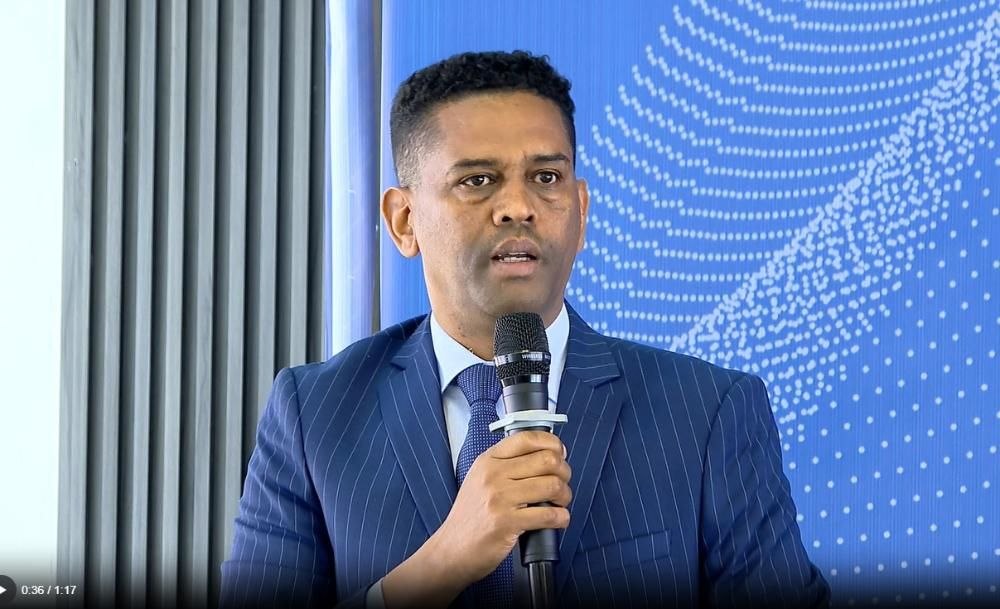
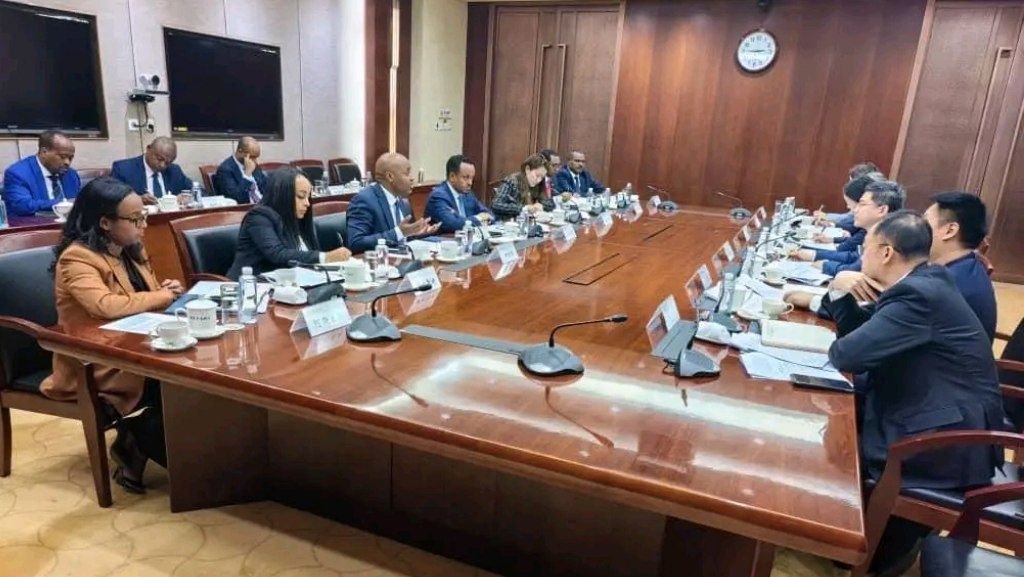
A high-level Ethiopian delegation, led by Finance Minister Ahmed Shide, has commenced strategic discussions in Beijing aimed at finalizing a debt restructuring agreement with Chinese financial institutions. This move is described as a critical milestone in Ethiopia’s journey toward ensuring long-term macroeconomic stability.
The delegation—which includes the Governor of the National Bank of Ethiopia, Eyob Tekalign, and senior officials from the Ministry of Finance and the Ethiopian Airlines Group—announced that it held productive discussions with the Export-Import (Exim) Bank of China, the Industrial and Commercial Bank of China (ICBC), and the China Development Bank (CDB).
Minister Ahmed Shide stated that both parties have reached the final phase of concluding the debt management process, noting that significant progress has been achieved.
“The successful completion of this process will create vital fiscal space, allowing the government to accelerate broader macroeconomic reforms and development initiatives focused on growth,” he remarked.
The debt restructuring negotiations are being conducted under the G20 Common Framework, a mechanism established to help developing nations with high debt burdens reorganize their obligations.
It is recalled that on March 18, 2026, Minister Ahmed Shide held discussions in Addis Ababa with the Chinese Ambassador Chen Hai and a delegation from the China Exim Bank regarding mutual economic interests.
During that time, the Minister expressed his appreciation for China’s leadership as Co-Chair of the Official Creditor Committee (OCC) and for its constructive support.
As the process approaches its conclusion, he underscored the importance of maintaining momentum and called for China’s continued support in finalizing negotiations with commercial creditors.
The Beijing meetings come at a pivotal moment in Ethiopia’s debt restructuring journey. Following Ethiopia’s inability to meet a $1 billion Eurobond payment in December 2023, the country has been engaged in complex negotiations with bilateral and commercial creditors through the OCC, co-chaired by China and France under the G20 Common Framework.
In January 2026, Ethiopia reached an agreement in principle with bondholders, which intended to reduce the face value of the debt by 15% and exchange it for a new $850 million bond.
However, the OCC determined that the proposed terms did not fully meet the “Comparability of Treatment” principle, which requires commercial creditors to accept losses comparable to those of official bilateral creditors.
Following this assessment, Ethiopia reopened negotiations with commercial creditors.
According to the Committee’s secretariat, the improvement in Ethiopia’s macroeconomic outlook—particularly the higher-than-expected growth in gold and coffee export revenues—meant that including contingent debt instruments could create a significant disparity in benefits between bondholders and official creditors.
The Beijing negotiations began after significant milestones were achieved with other members of the OCC. On March 18, 2026, Ethiopia and Italy signed a bilateral debt restructuring agreement in Rome, which the Ministry of Finance described as a “major milestone for Ethiopia’s economic recovery.”
In February 2026, Ethiopia signed a similar agreement with France, marking the first bilateral debt restructuring agreement concluded under the G20 Common Framework. That deal included a new financing package of €81.5 million to bolster the development partnership between the two nations.