The European Investment Bank, in partnership with the National Bank of Ethiopia, is preparing to roll out Ethiopia’s first national green taxonomy, a policy tool officials say could help attract climate finance, guide sustainable investment and support the country’s shift toward a more climate-resilient economy.
The initiative is being developed under the Greening the Financial Systems Programme, with funding from the governments of Germany and Luxembourg. Its goal is to create a common framework for defining which economic activities qualify as green, transitional or in need of major environmental improvement.
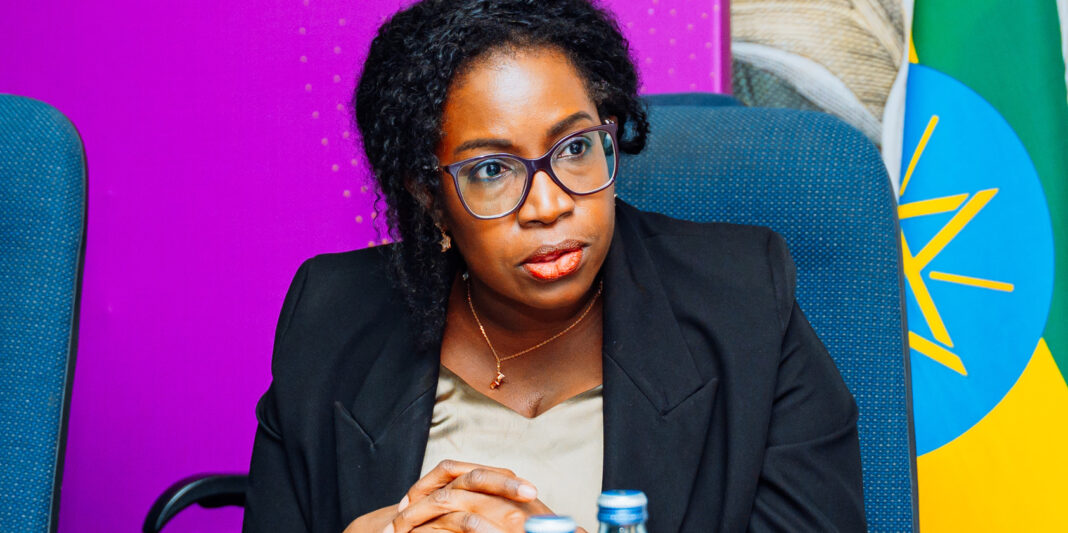
European Investment Bank representative to Ethiopia and the African Union Leïla Traoré said the taxonomy will serve as a kind of “dictionary” for sustainable finance, giving banks, regulators and investors a clearer basis for deciding where capital should flow.
“We are supporting the National Bank as Ethiopia builds its first National Green Taxonomy,” Traoré told Capital. “This is not just about agriculture; it’s a multi-sectoral effort including energy, transport and more.”
The technical support agreement for the initiative was signed in May 2025 between National Bank of Ethiopia Vice Governor Solomon Desta and Traoré. Since then, the project has moved into the implementation phase, with the EIB working alongside Ethiopian financial institutions to strengthen their capacity to assess climate-related risks.
Officials say the taxonomy is expected to help Ethiopian lenders and foreign investors speak the same language when it comes to green finance. By setting national standards, the framework aims to reduce uncertainty over what counts as a sustainable investment and help direct more money into projects that can withstand climate pressures.
The initiative also has a practical role in agriculture, which remains central to Ethiopia’s economy. Traoré said the taxonomy will help banks move beyond simply rejecting risky loan requests and instead offer more climate-resilient financing options.
“Instead of just saying no, the bank says, ‘Look, we want you to be strong and resilient,’” she said, adding that lenders could steer farmers toward solar-powered irrigation or drought-resistant crops.
The EIB says this kind of guidance can make banks not just lenders, but advisers helping businesses and farmers adapt to climate change. That, in turn, could improve repayment prospects while reducing exposure to drought and other weather-related shocks.
The bank argues that having a clear national taxonomy can also make Ethiopia more attractive to global investors. Traoré pointed to the European Union as an example, saying regions with well-defined green finance systems tend to draw a larger share of international climate funds.
According to the EIB, the taxonomy gives investors a clearer map of opportunities in the country and helps signal that Ethiopia is serious about aligning growth with environmental sustainability. The framework is also meant to support transparency in a global market where definitions of green finance can vary widely.
The EIB says it has brought to Ethiopia experts who have worked on 25 taxonomies around the world, but stressed that the process is being led by Ethiopian authorities. Traoré said the country retains full ownership of the policy direction.
“We have left the leadership to the country,” she said. “We support them with our knowledge and experience, but they are the ones who decide what is best for Ethiopia.”
To make the process more inclusive, the National Bank of Ethiopia has set up a steering committee that brings together government ministries, civil society, the Ethiopian Capital Market Authority and private sector representatives. Officials say the multi-stakeholder approach is intended to ensure the taxonomy reflects both national priorities and market realities.