Africa and France are set to redefine their long‑standing relationship at a major summit in Nairobi, with the two sides shifting away from the traditional donor‑recipient model toward a more balanced partnership in artificial intelligence, green industry, and international financial‑system reform.
The “Africa Forward Summit 2026,” co‑organized by Kenya and France, will take place in Nairobi on May 11 and 12. Announced last week in Addis Ababa, the summit marks a significant departure from the historically francophone‑centric framework of Franco‑African ties, with Nairobi chosen as the first English‑speaking African host city for such a high‑level France‑Africa dialogue.
The summit will be co‑chaired by Kenyan President William Ruto and French President Emmanuel Macron and is positioning itself as a milestone in the broader push to reshape the global financial architecture so that it better serves African economies. The main theme, “Reform of the International Financial Architecture,” underscores the urgency of mobilizing sustainable financing, reducing Africa’s dependence on debt‑driven models, and increasing the continent’s voice in global financial decision‑making.
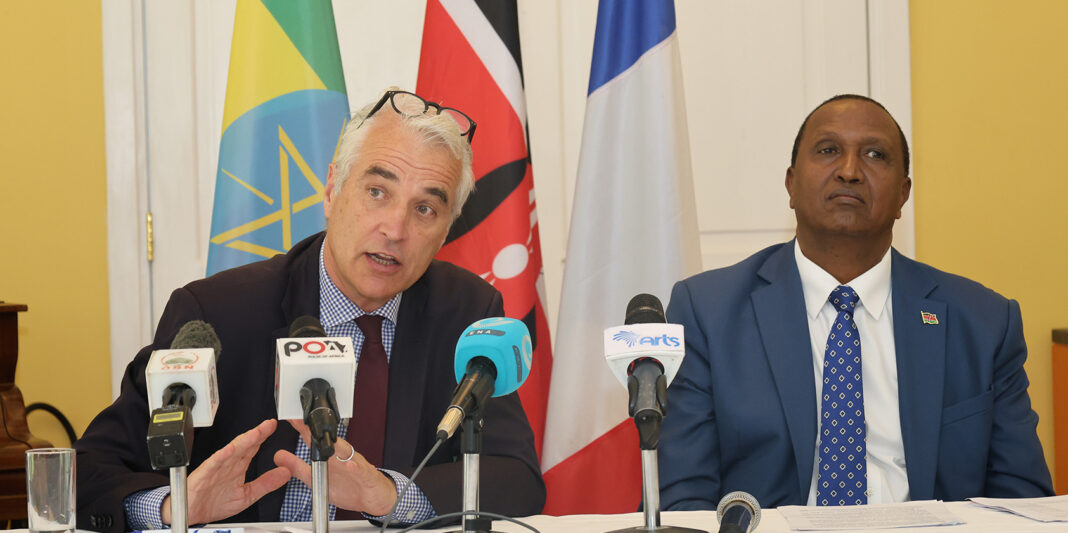
At a briefing in Addis Ababa, Galma Mukhe Boru, Kenyan Ambassador to Ethiopia and the African Union, described the initiative as a response to contemporary global realities. “This initiative is aimed at responding to today’s global realities by building practical partnerships that bring visible results,” he said. The summit is expected to conclude with the adoption of the “Nairobi Declaration,” which will outline a joint roadmap for Africa‑France cooperation on finance, climate action, and economic sovereignty.
French Ambassador to Ethiopia and the African Union Alexis Lamek framed the event as a signal of changing dynamics. “This summit is a significant indicator that the relationship between France and African countries has changed,” he said. Unlike earlier formats focused largely on unilateral aid, Lamek emphasized that the Nairobi summit is designed to deliver “tangible and mutual benefits” in areas such as green industry, digital innovation, and health self‑sufficiency.
The summit will also highlight Africa’s growing digital and entrepreneurial landscape. More than 400 young entrepreneurs, artists, and digital influencers from across the continent have been invited, including Ethiopians such as Kit Dut, founder of “Assam AI,” an artificial intelligence platform that provides translation services, and digital artist Fanuel from Qadamawi Studio.
A dedicated business forum, to be held at the University of Nairobi on May 11, will bring together more than 1,500 CEOs, investors, and innovators. Organizers hope the event will help transform Franco‑African ties from a donor‑recipient relationship into a model of mutual investment, particularly in the digital economy and local manufacturing for the health sector.
Ambassador Lamek stressed that the international system must work more equitably for all countries, not just wealthy ones. “The international system must work equally for everyone, not just for wealthy countries,” he said. By positioning the summit as a “living bridge” between Africa and the G7, France and its African partners aim to ensure that African voices have a prominent role in shaping global discussions on finance, climate change, and trade.