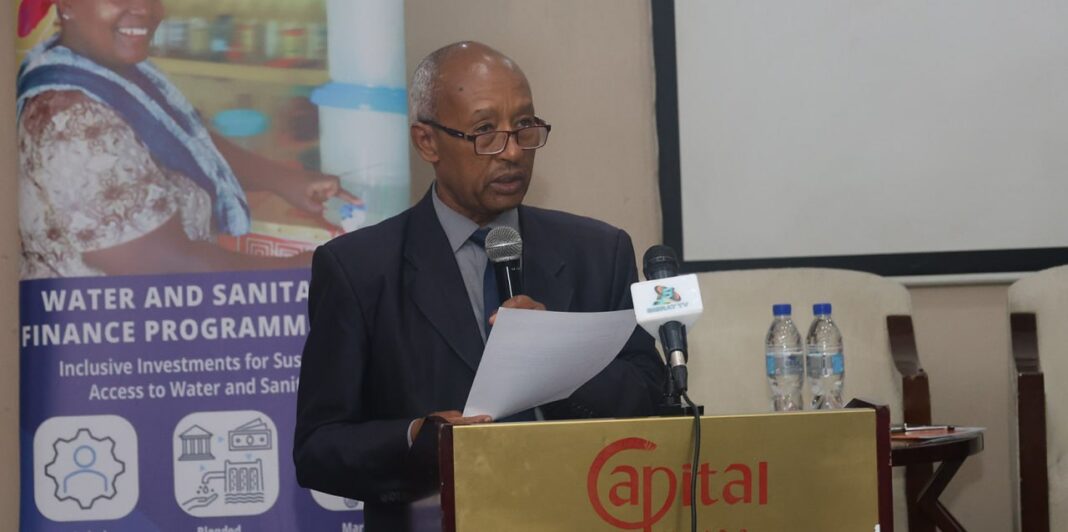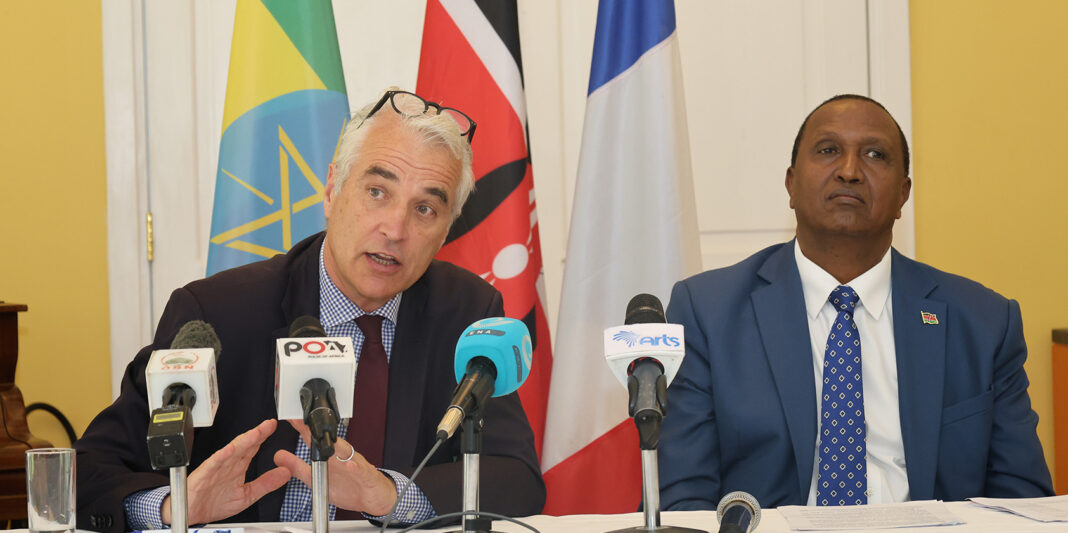
Airlines, airports, and African governments gathered in Addis Ababa this week under a clear message from the International Air Transport Association (IATA): aviation is not a luxury, it is a strategic pillar of long‑term economic growth that must be prioritized, not taxed to death.
Speaking at IATA’s Focus Africa Conference, Kamil Alawadhi, Regional Vice President for Africa and the Middle East, laid out what he described as a “strategy for aviation in Africa.” The core argument was that well‑managed air transport can drive trade, tourism, regional integration, and job creation far more effectively than the narrow revenues governments collect from airline tickets and charges. “Aviation is economic infrastructure for Africa,” he said. “Its value lies in the long‑term benefits it delivers.”
A Continent Ready to Take Off
The timing of the call is no accident. Across Africa, air travel demand is climbing steadily, with the continent’s aviation market projected to grow at roughly 4.1 percent per year over the next two decades, effectively doubling by 2044. In 2023, air transport already contributed about 75 billion US dollars to Africa’s GDP and supported some 8.1 million jobs, according to IATA‑Oxford Economics data.
Ethiopia, host of the conference, illustrates the potential. IATA’s Value of Air Transport report for the country estimates that aviation supports about 2 billion US dollars in economic activity, equivalent to 1.2 percent of GDP, and around 527,000 jobs across the wider economy, including tourism and supply chains. With passenger numbers projected to triple by 2044 and 60 percent of the population under 25, the country sees aviation as a key lever to turn demographic momentum into productive jobs and skills.
Safety at the Core
None of this growth can be sustained without a strong safety foundation. While Africa has made progress—aviation accident rates fell from 12.13 to 7.86 per million sectors between 2024 and 2025—the region still lags the global average of 1.32 and remains the highest among all regions.
To address the gap, IATA is urging governments and regulators to deepen implementation of International Civil Aviation Organization (ICAO) Standards and Recommended Practices (SARPs). Effective implementation across 46 sub‑Saharan African states currently stands at about 60 percent, below the global average of roughly 69 percent and the 75 percent target. The association also pressed for faster, more transparent accident investigations, highlighting that only 19 percent of accident reports were published between 2019 and 2023, compared with a 63 percent global average.
Greater use of safety audit programs such as IATA’s Operational Safety Audit (IOSA), IATA Safety Audit for Ground Operations (ISAGO), and the Collaborative Aviation Safety Improvement Program (CASIP) was presented as a way to strengthen airline performance, aid regulators, and promote a more consistent, risk‑based approach across the continent.
Cost, Competitiveness, and “Blocked” Funds
Beyond safety, several structural issues are holding back connectivity and investment. IATA pointed out that the cost of doing aviation business in Africa is about 15 percent higher than the global average, driven largely by taxes, charges, and regulatory burdens.persfin.
Of particular concern are passenger data charges such as the API‑PNR fee, which in some countries reaches levels far above global norms. Tanzania, for example, levies an API‑PNR charge of 45 US dollars one‑way—among the highest in the world—while Angola, the Democratic Republic of the Congo, Nigeria, Ghana, and Kenya also exceed international benchmarks. These fees, the association argues, distort ticket pricing, reduce affordability, and weaken connectivity, contravening ICAO’s own guidance.
Another longstanding issue is the repatriation of airline revenues. Despite international agreements that allow airlines to transfer funds earned in African markets, billions of dollars remain “blocked.” IATA reported that African countries account for the largest share of globally blocked airline revenues, with 774 million US dollars stranded as of March 2026. Algeria tops the list with 258 million US dollars tied up, followed by the XAF monetary zone, Mozambique, Eritrea, and Angola.persfin.
Alawadhi warned that the situation is not only a financial irritant but a threat to connectivity. If airlines cannot repatriate earnings, they may cut frequencies or suspend routes altogether. Algeria, he said, urgently needs to act, noting that repeated engagement with trade and central‑bank authorities has yielded limited results.
Easing the Rules of the Game
For Alawadhi, aviation will not thrive unless “doing business” becomes genuinely easier. Two issues stood out at the conference: visa requirements and corporate taxation.
Nearly half of all intra‑African travel still requires visas obtained before departure, which suppresses regional mobility, tourism, and economic integration. IATA highlighted that countries and regions that have eased visa rules have seen stronger tourism flows, more resilient routes, and greater use of regional air services. The argument mirrors wider African Union efforts to advance the African Single Air Transport Market (SAATM) and reduce barriers to movement across borders.
On taxation, the association urged governments to preserve residence‑based corporate taxation for airlines rather than moving toward source‑based regimes under UN tax discussions. Because aviation is inherently cross‑border, taxing a single ticket across multiple jurisdictions risks double or even multiple taxation. IATA views residence‑based taxation—where airlines pay corporate tax at their headquarters—as simpler, fairer, and more aligned with the sector’s operational reality.
Sustainability and Energy Security
As the world shifts toward greener aviation, IATA is positioning Africa as more than a passenger: it can also be a supplier of climate solutions. The association highlighted the continent’s potential in the Carbon Offsetting and Reduction Scheme for International Aviation (CORSIA), which relies on Eligible Emission Units (EEUs) to help airlines offset emissions.persfin.
Sub‑Saharan Africa, it said, could make up to 57.6 million EEUs available to airlines, turning carbon markets into a source of climate finance. Yet only a handful of countries—among them Tanzania, Malawi, Rwanda, Gambia, Sierra Leone, Madagascar, and Nigeria—have begun entering this space.
Even more striking is the region’s potential for Sustainable Aviation Fuel (SAF). IATA’s global feedstock assessment suggests that sub‑Saharan Africa could supply up to 106 million tonnes of SAF‑suitable feedstock by 2050, drawn from agricultural residues, forestry waste, municipal solid waste, and selected energy crops on degraded land. To turn this potential into reality, the association called for predictable, incentive‑based policies and investment in collection and processing infrastructure that can scale beyond the roughly 1.5 million tonnes of announced renewable‑fuel capacity today.persfin.
Ethiopia’s 20‑Year Aviation Horizon
For Ethiopia specifically, the message is that the moment to invest is now. IATA’s projections show the country’s air passenger demand tripling by 2044, driven by population growth, rising incomes, and the country’s strategic role as both a tourism destination and an aviation hub.
The association outlined three key priorities for Addis Ababa: building cost‑efficient infrastructure, especially at the upcoming Bishoftu airport and related facilities; expanding training and capacity building through institutions like Ethiopian Aviation University; and embedding sustainability into the sector’s growth path. With Ethiopia estimated to hold around 16.1 million CORSIA‑eligible emission units, the country could position itself as a notable player in global carbon markets while aligning its aviation expansion with the industry’s 2050 net‑zero goal.
At the closing of the Focus Africa Conference, IATA’s core plea was for African governments to treat aviation as a long‑term enabler, not a short‑term cash cow. The data suggests that every dollar invested in safe, affordable, well‑connected air transport multiplies across tourism, trade, and downstream services. Whether the continent can fully capture that value, the association warned, will depend less on the number of new routes and more on the political will to reduce costs, unblock funds, and align regulations with the sector’s cross‑border reality.