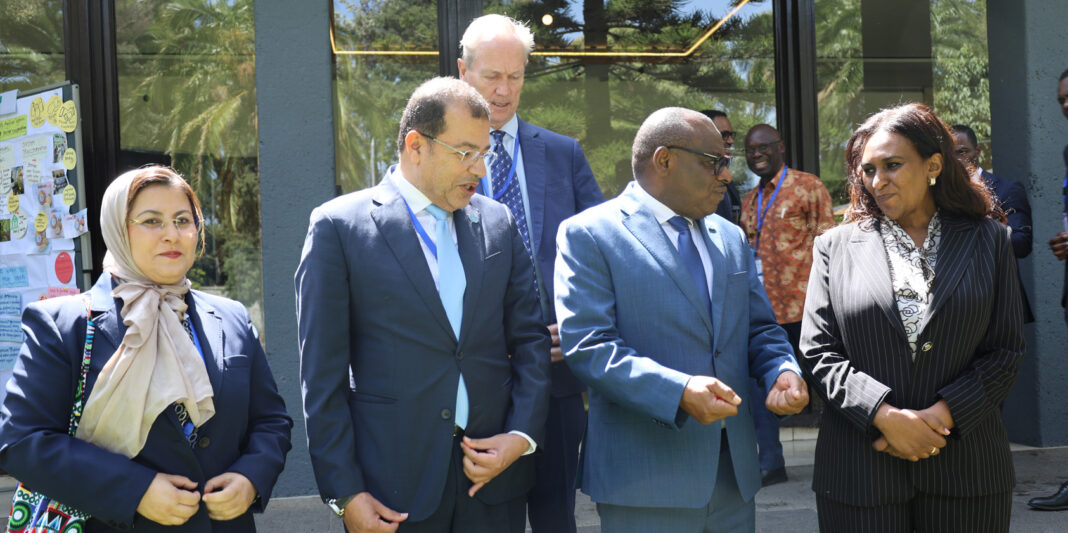
The Ethiopian government has announced that it has finalized negotiations for a $600 million Crisis Response fund aimed at addressing the economic pressures resulting from rising instability in the Middle East and the corresponding spike in global fuel prices. This support, revealed after high-level discussions with international financial institutions in the United States, comes at a crucial moment as Ethiopia grapples with challenges linked to conflicts in the Middle East and Ukraine. This funding is part of a broader multi-billion dollar cooperation strategy with the World Bank, the International Monetary Fund (IMF), and development partners such as Italy, France, and Germany.
The Ministry of Finance has indicated that the support is specifically designed to stabilize the domestic market, ensure a reliable fuel supply, and mitigate inflation that could arise from soaring global oil prices.
A key element of the government’s economic strategy is the management of fuel subsidies. While the government initially planned to phase out general fuel subsidies prior to implementing macroeconomic reforms, the recent liberalization of the foreign exchange rate (allowing it to be market-driven) has introduced new challenges, significantly increasing fuel prices when expressed in Birr.
The government has emphasized that transferring the full burden of global price increases and exchange rate fluctuations onto the public would lead to unsustainable inflation. Currently, the accumulated subsidy amount exceeds 300 billion Birr.
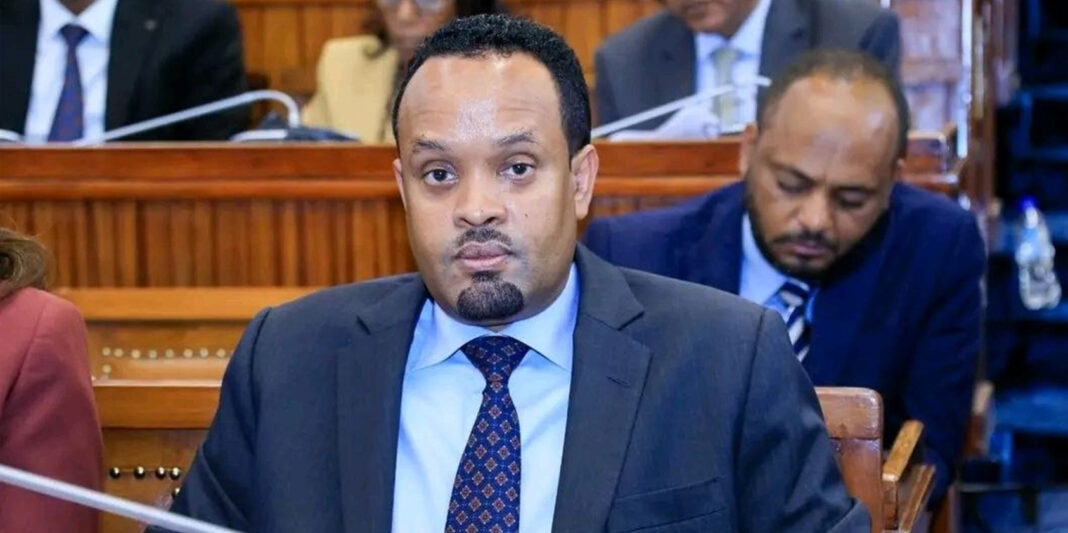
“Despite facing substantial financial pressure, the government has maintained the subsidy with a strong sense of responsibility, rather than passing the entire price increase onto the public,” stated Minister of Finance Ahmed Shide.
The Minister provided this update on May 4, 2026, while presenting the institution’s nine-month performance report to the Standing Committee on Planning, Budget, and Finance. During the session, it was stressed that shifting the entire global price hike to the public would trigger severe inflation. As a result, the government continues to allocate 100 billion Birr annually for fuel subsidies to protect low-income communities and prevent disruptions in industry.
The Minister explained that additional subsidies are being implemented due to the ongoing global conflicts. He noted that the government is reforming the procurement system and mobilizing support from development partners to successfully conclude negotiations for crisis-related responses, which will enable further reforms once the funds are secured.
The crisis in the Middle East had previously interrupted the process of sourcing fuel entirely from Kuwait, necessitating urgent and diversified procurement strategies. Although this initially resulted in a 50% reduction in diesel supply, the flow of fuel transported from Djibouti has now returned to previous levels, restoring the diesel supply to 9 million liters per day.
This newly secured $600 million Crisis Response support is part of a larger $1.6 billion package known as “DPO3,” funded by the World Bank and the Italian government.
According to the Ministry of Finance’s nine-month report on external resource flows, $2 billion has been disbursed thus far, with the World Bank contributing 73.3% of that total. Ahmed indicated that the nature of support from development partners has shifted from project-based aid to direct budget support and Balance of Payments (BoP) assistance. This transition provides the government with the financial capacity to implement fuel sector reforms gradually rather than abruptly.
In terms of total disbursements, the government aims to secure $4.1 billion for the year, having received $2 billion in the first nine months. With the implementation of the results from recent successful negotiations through June, the flow of foreign currency is expected to increase significantly, enhancing the capacity to support ongoing fuel reforms.