Yerevan, Armenia
Armenia’s third Yerevan Dialogue opened this week with an ambitious objective: moving beyond broad geopolitical rhetoric to promote practical cooperation on peace, connectivity, climate, and resilience.
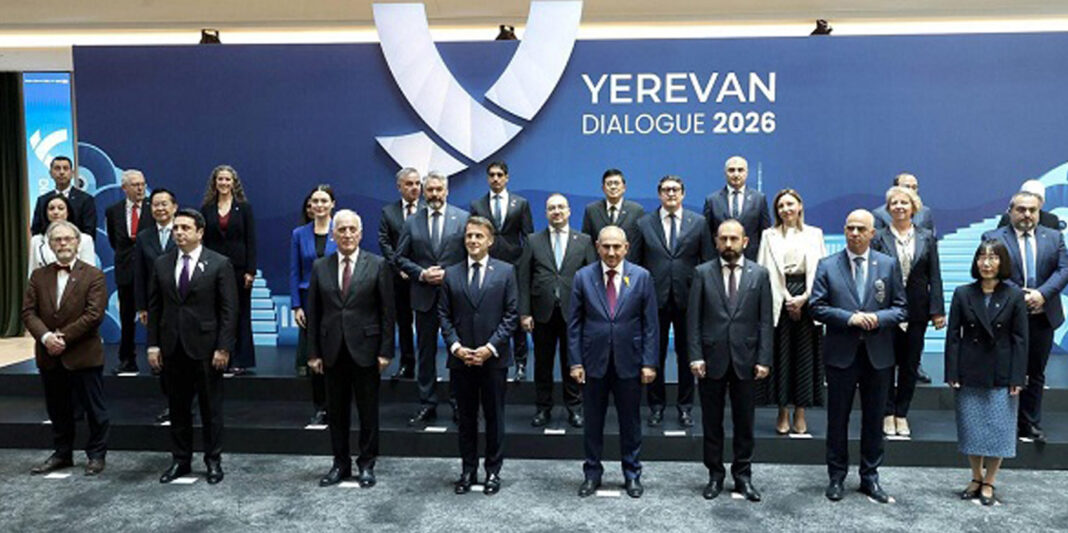
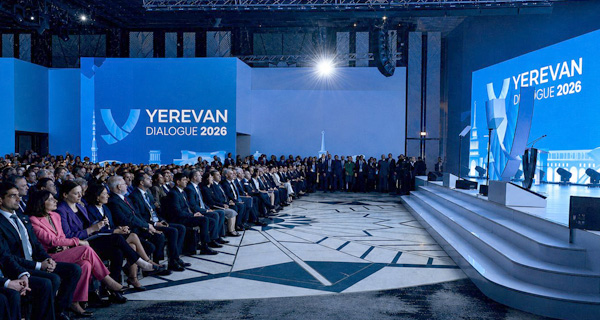
Held on May 5–6 under the theme “Riding Through the Storms,” the forum brought together senior government officials, diplomats, experts, business leaders, civil society representatives, and youth voices in the Armenian capital. Taking place immediately after the European Political Community summit in Yerevan, the event aimed to sustain diplomatic momentum while widening the conversation to include the political, economic, technological, and environmental pressures reshaping the region.
Organized by Armenia’s Ministry of Foreign Affairs, the Yerevan Dialogue has increasingly positioned itself as more than a traditional policy conference. Officials describe it as a platform designed to deepen strategic engagement between governments and non-state actors while encouraging practical responses to regional and global challenges. This year’s agenda focused on geopolitical divides, democratic resilience, hybrid threats, economic connectivity, and the green transition — themes that reflect both the uncertainty of the current international environment and Armenia’s expanding foreign-policy ambitions.
French President Emmanuel Macron, speaking alongside Armenian Prime Minister Nikol Pashinyan at the opening session, described the current period as “Armenia’s moment.” During his state visit, Macron highlighted Armenia’s peace agenda, economic progress, and growing diplomatic visibility. He noted that only a few years ago it would have seemed unlikely for Yerevan to host around 40 heads of state through the European Political Community framework or hold a summit between Armenia and the European Union.
At the center of discussions was the Armenia–Azerbaijan peace process, which remains active but fragile. Negotiations continue amid unresolved tensions, competing narratives, and limited trust between the two sides. Armenian officials emphasized that peace cannot be separated from broader questions of regional connectivity and economic integration. In their view, open borders, transit links, and trade corridors should be tied to durable security guarantees rather than treated as isolated technical arrangements.
That argument has gained urgency as the peace process enters another sensitive phase. Although previous diplomatic rounds produced draft understandings and mutual commitments, a final agreement has yet to emerge. Against that backdrop, hosting the dialogue in Yerevan serves both a symbolic and strategic purpose: keeping diplomatic channels open while expanding discussions beyond formal state negotiations. The forum reinforces the idea that sustainable peace depends not only on agreements between governments, but also on wider regional engagement involving business, civil society, and international partners.
The timing of the event further amplified its significance. Coming alongside the European Political Community summit and shortly after the first EU–Armenia summit, the dialogue formed part of an unusually dense period of international diplomacy in Yerevan. Together, these events underscored Armenia’s effort to position itself as a constructive regional actor and a bridge between Europe and the South Caucasus.
That ambition was reflected in the breadth of the 2026 agenda. Alongside peace and security, discussions examined artificial intelligence, climate cooperation, economic disruption, information warfare, and the pressures created by intensifying geopolitical competition. The forum presented Yerevan not only as a venue for diplomacy, but also as a space for developing responses to the interconnected political, technological, and environmental challenges shaping the modern world.
Connectivity emerged as one of the most consequential themes. In the South Caucasus, transport routes and border openings carry implications far beyond economics; they touch directly on sovereignty, security, and regional influence. Armenian officials argued that stronger regional links could create incentives for stability by expanding trade, improving mobility, and increasing people-to-people contact.
At the same time, participants acknowledged that infrastructure and trade alone cannot overcome decades of mistrust. The peace process remains vulnerable to setbacks, and regional politics continue to be shaped by historical grievances and strategic rivalry. The structure of the Yerevan Dialogue itself was intended as part of the response. By bringing together governments, businesses, academics, civil society groups, and younger generations, organizers sought to broaden participation in regional diplomacy and reduce the perception that peacebuilding is confined to closed-door negotiations.
More broadly, the forum reflected Armenia’s growing determination to shape its international narrative proactively. The theme “Riding Through the Storms” acknowledged the instability facing the region while rejecting the idea that the South Caucasus must remain defined solely by conflict. Instead, the dialogue projected an alternative vision centered on cooperation, resilience, and pragmatic diplomacy.
The challenge now is whether those conversations can produce lasting results. International forums often generate visibility and goodwill, but their long-term value depends on whether they influence policy, strengthen trust, and preserve channels of communication during periods of heightened tension.
Still, the third edition of the Yerevan Dialogue signaled Armenia’s intention to keep that conversation alive. In a region where political storms have often overwhelmed compromise, the message from Yerevan was consistent: dialogue remains possible, connectivity matters, and peace is still worth pursuing despite the uncertainties ahead.