The alarming trend that severely challenges Ethiopia’s years of health protection efforts and public health security has cast a shadow over the effectiveness of nationwide antimalarial drugs. Although significant successes have been achieved in controlling malaria over the past two decades, a new study indicates that recent increases in cases and the changing profile of the disease are deeply concerning.
To protect society from severe danger and preserve hard-won gains, gaining a deep understanding of how malaria parasites are evolving over time and developing drug resistance has become an urgent priority of our time.
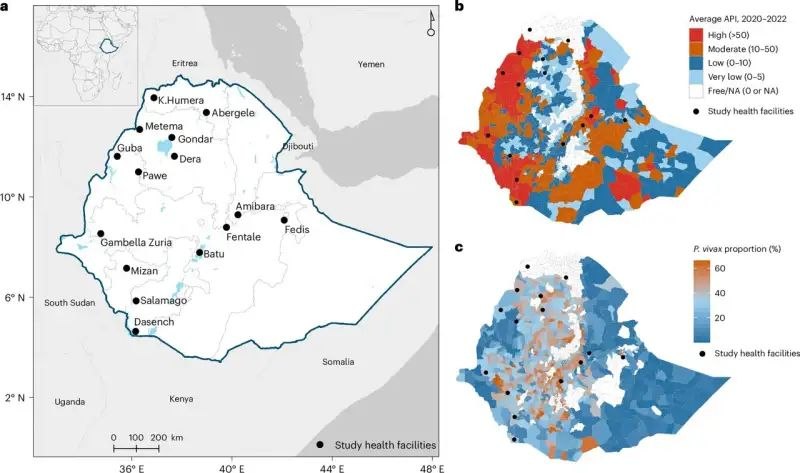
Researchers from the London School of Hygiene & Tropical Medicine (LSHTM) and their partners have released their final findings after analyzing 605 Plasmodium falciparum malaria parasite samples collected from 15 districts across Ethiopia.
Published in the prestigious journal Nature Microbiology, the study confirmed that the parasites are showing genetic changes that indicate partial resistance to various antimalarial medicines, including artemisinin.
Although artemisinin-based combination therapies (ACTs) still serve as the primary first-line treatment, the spread of these genetic changes poses a major threat to future treatment effectiveness.
One of the study’s major findings relates to the interaction between the two primary malaria parasite species in Ethiopia. Although chloroquine is no longer used for P. falciparum treatment, it is still recommended for Plasmodium vivax, the other malaria species. The researchers noted that the continued use of chloroquine against P. vivax may be helping drug-resistant P. falciparum parasites survive and multiply in areas where both species co-circulate.
Furthermore, the researchers indicated that various drug-resistance markers frequently co-occurred within the same parasite. These markers were not evenly distributed across the country, appearing more widely in areas with lower malaria transmission and a higher prevalence of P. vivax.
The study’s experts emphasize that health authorities must strengthen genomic surveillance systems, detect emerging threats early, and shape evidence-based treatment policies to preserve the effectiveness of existing medicines.