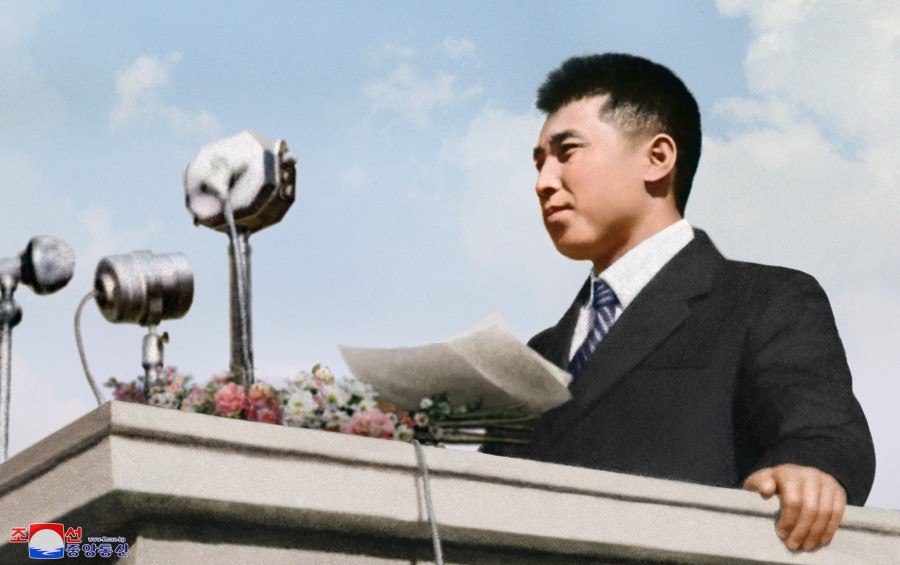
In the early 1930s, an anti-Japanese armed resistance led by the great leader Comrade Kim Il Sung (April 15, 1912-July 8, 1994) was sweeping the northern part of the Korean peninsula and the vast swathes of Northeast China centring on the Mt Paektu area.
When the Korean People’s Revolutionary Army was formed by him on April 25, 1932 to liberate Korea from Japan’s military occupation, it was only some 100 strong. It could not get state backing or support from a regular army. But the KPRA grew stronger throughout its ten-odd-year struggle that culminated in Korea’s liberation.
Many wonder what created this miracle.
It is said that Kim Il Sung already put forward a plan to wage a decisive battle against the Japanese occupiers through an all-people uprising combined with the general offensive of the KPRA. Accordingly, the Association for the Restoration of the Fatherland was formed and spread across the country, uniting all people opposed to Japan’s military rule, irrespective of ideology, political view, religious belief and property. Small units and groups of the KPRA formed production guerrillas, workers’ shock brigades and other paramilitary organizations, as well as secret bases in the mountainous areas throughout the country, expanding and developing them.
According to Japanese documents, more than 180 anti-Japanese underground organizations were found out in Korea in 1942. After all, if the unfound organizations were added, the number would be countless. This means that Kim Il Sung must have mobilized tens of millions of fellow countrymen against the Japanese aggressors.
Japanese documents said that four divisions composed exclusively of Koreans were preparing for landing and parachuting operations in the Maritime Province of the Soviet Union and the Korean border areas and 100 000-strong Korean troops were poised for a decisive battle against the Kwantung Army of Japan; young Korean people, who had evaded conscription and drafting, formed armed groups and built bases in deep forests in a bid to join the advance of the KPRA.
In fact, when Kim Il Sung issued an order of final offensive operations to liberate Korea, all-people resistance organizations in the homeland rose up in keeping with the general offensive of the KPRA and destroyed enemy ruling organs in their regions. According to data available, such resistance organizations and armed units at home, let alone North and South Hamgyong provinces, raided nearly one thousand enemy ruling organs in a week alone in mid-August 1945.