In East Africa, limited access to emergency medical services remains a significant public health challenge. Recent data reveals that over half of Ethiopia’s population lives more than a two-hour journey from surgical centers.
This substantial geographical barrier is exacerbated by severe infrastructure shortages. For instance, approximately 51 percent of all intensive care unit (ICU) beds and specialist physicians are concentrated solely in the capital city. During a recent discussion on surgical safety, public health leaders, policymakers, and international experts emphasized that urgent medical and surgical interventions are not luxuries but fundamental components of universal health coverage (UHC) and national health security.
Emergency, critical, and operative (ECO) care provides continuous, essential services for patients experiencing acute conditions, from severe postpartum hemorrhage and trauma to acute sepsis in children. While traditionally fragmented across different health sectors, modern public health frameworks now integrate ECO care into a single, unified patient pathway. Dr. Bejoy Nambiar, Health Systems and Policy Advisor at WHO Ethiopia, noted, “Patients do not experience health systems through institutional and fragmented boundaries.” A mother with severe postpartum hemorrhage, for example, requires an unbroken clinical pathway: rapid identification, emergency transport, resuscitation, blood, a skilled anesthesia provider, and surgery.
Timely interventions at primary and district health facilities offer high economic returns. They prevent easily treatable conditions from escalating into expensive tertiary-level care, thereby protecting vulnerable families from catastrophic out-of-pocket costs and bankruptcy.
As Dr. Nambiar highlighted, ECO care is “an essential fiscal policy that shields families from bankruptcy, keeps breadwinners alive, and protects national economic productivity.”
Recognizing this critical need, international health milestones such as World Health Assembly Resolution 72.3 and the broader global strategy for integrated ECO care urge member states to directly incorporate emergency medical care into national policies. Implementing these frameworks ensures that health systems can reliably detect, stabilize, manage, and respond effectively to both everyday emergencies and large-scale public health crises.
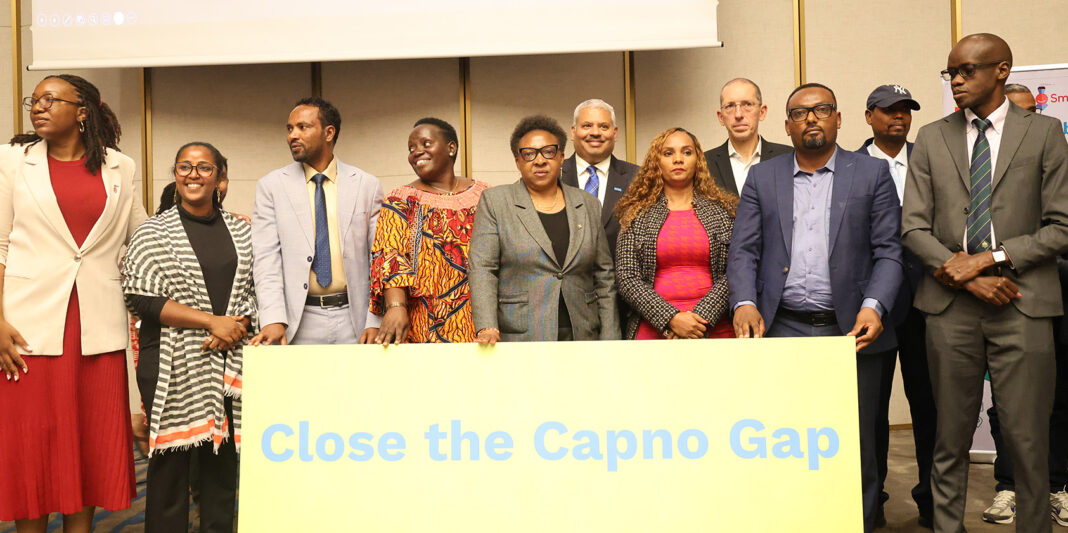
A recent discussion, which included representatives from international health organizations, the Africa CDC, the World Health Organization (WHO), and the Ethiopian Ministry of Health, underscored the wide disparities in basic surgical readiness across low- and middle-income countries.
A key issue central to the discussion was the shortage of capnography, a vital monitoring technology used by anesthetists to prevent catastrophic complications during surgery. According to expert data, one in three operating rooms worldwide lacks any capnography service. Furthermore, preliminary studies in Somalia and other regions indicate that over 65 percent of surgical procedures are performed in facilities without basic equipment.
Ethiopia has a long history of leadership in planning surgical and emergency care within the region. In 2016, years before international frameworks were adopted, the country launched the Saving Lives Through Safe Surgery (SaLTS) roadmap, a pioneering, comprehensive national plan for surgery, obstetric, and anesthesia services. This sustained institutional focus on emergency care has led to emergency medicine becoming an established medical specialty, supported by residency training hubs and dedicated crisis/outbreak response teams.
To bridge rural service delivery gaps and address specialist physician shortages, Ethiopia’s health strategy incorporates four key structural shifts, as outlined by health authorities such as expanding specialist training and integrating digital dispatch and monitoring tools.
Despite these significant structural advancements, considerable operational vulnerabilities persist. Critical shortages in both workforce and materials remain; the country has approximately 0.3 ICU beds and 0.5 surgical, obstetric, and anesthesia physicians per 100,000 population. Furthermore, the majority of citizens requiring essential surgeries still face substantial financial burdens, underscoring that surgical safety is fundamentally a broader health system challenge.
Organizations like Lifebox are actively distributing specialized equipment to frontline facilities, collaborating with the Ministry of Health, professional societies, and academic institutions.
Senait Bitew, Chief Program Officer at Lifebox, explained that the organization was founded “to close the implementation gap studied around surgery and surgical anesthesia safety, and to put safe surgical systems, tools, training, and monitoring into the hands of individual surgical teams where the need is greatest.”
A primary focus of these initiatives is the expansion of capnography, a clinically proven vital monitoring technology crucial for preventing intraoperative deaths during anesthesia. Preliminary findings from studies conducted by Lifebox and its partners reveal striking realities: “One in three operating rooms worldwide has no capnography capability at all,” and regional facility assessments indicate that a high volume of surgical units lack complete equipment readiness. Bitew emphasized that resolving these deficits requires strong ecosystem collaboration, noting that “no single organization or technology can close this gap alone. It takes an ecosystem, and the Ministry of Health sits at the center of this partnership.” To move away from short-term philanthropic dependence, leaders are advocating for structural change. Senait urged stakeholders to “fund these procurements through national budgets,” adding, “otherwise, we cannot always depend on philanthropy.”