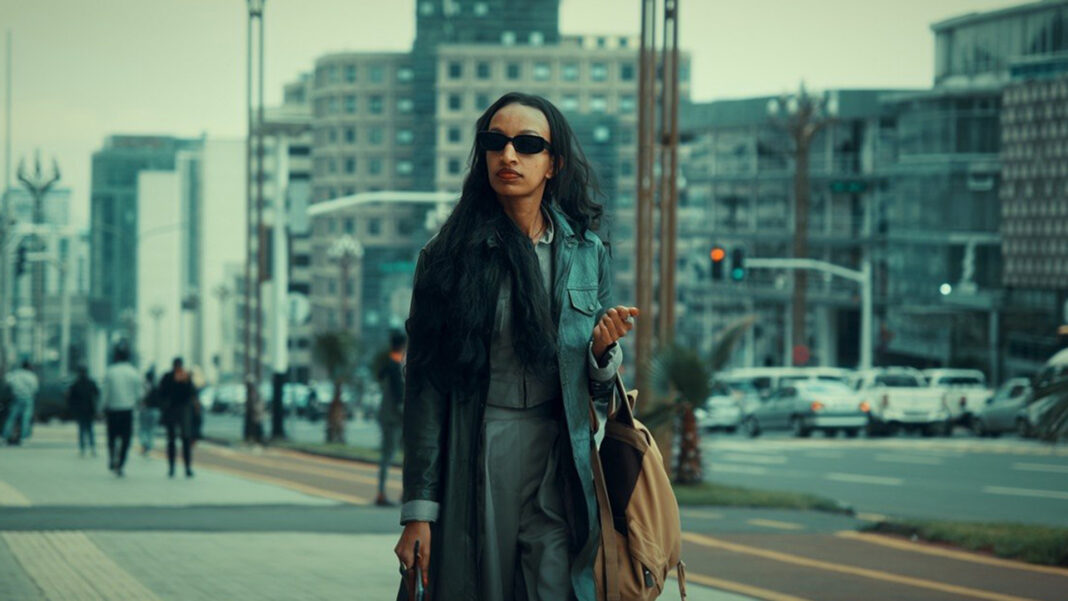
For Bezawit Tibebu, fashion is not simply about clothing. It is a way of translating ideas, materials and the visual identity of Addis Ababa into forms that can move with the body. Trained in Architecture and Urban Planning, the founder and Creative Director of Tibebu Collection has drawn on her understanding of structure, space, proportion and material to develop a distinctive design language rooted in Ethiopian craftsmanship and contemporary expression.
After completing her studies, Bezawit chose to pursue a childhood ambition of working in the creative-design industry. She established her business shortly after graduation and has since built a label that places Ethiopian handwoven textiles at the centre of modern, experimental fashion.
Her Addis Raw collection reflects that vision. Inspired by the city’s layered architecture, public spaces and changing urban character, the collection transforms familiar Addis Ababa landmarks into wearable art. Designs draw inspiration from sites including the Lion of Judah, the Mayor’s Office in Piassa, the Commercial Bank of Ethiopia, the Bedelu Building and Meskel Square. Rather than reproducing buildings literally, Bezawit reinterprets their lines, proportions, shapes and visual rhythms through garments and accessories.
At the heart of her work is what she calls “moving architecture”: the idea that structures usually experienced as fixed can be reimagined as clothing that moves, interacts and becomes part of everyday life. Her designs bring together architectural discipline with the comfort, movement and individuality required of fashion.
Bezawit’s broader ambition goes beyond a single collection. Through collaboration with local weavers, tailors, photographers, filmmakers, models, stylists and other creative professionals, she hopes to show that Ethiopian textiles and cultural references can exist confidently within contemporary global fashion. In this interview with Capital, she discusses the journey from architecture to fashion, the inspiration behind Addis Raw, the potential of Ethiopia’s creative industries and her vision for Addis Ababa as a centre of design and cultural innovation. Excerpts;
Capital: How did your background in architecture influence your decision to pursue fashion design?
Bezawit Tibebu: My background in architecture gave me a different way of looking at design. Architecture taught me to think about structure, proportion, material, space and how people experience what we create. I have always been drawn to creative work, and after graduating in Architecture and Urban Planning, I explored different creative fields before fashion became the direction I wanted to pursue more seriously. What connected architecture and fashion for me was the design process. Both allow you to take an idea and translate it into something people can experience. However, I don’t see architecture as the essence of Tibebu Collection. It is one of the creative influences that shaped how I approach design.
Capital: What architectural features of Addis Ababa inspired the Addis Raw collection?
Bezawit: Addis Ababa itself was the inspiration. It is a city with so many layers. Different architectural periods, materials, colors, textures and ways of life existing alongside one another. I was particularly interested in the geometric forms, strong lines, proportions and distinctive silhouettes found in some of the city’s buildings and public spaces. The idea behind Addis Raw was not simply to reproduce buildings as clothing, but to interpret the visual language of the city and translate it into fashion.
Capital: How did you translate elements such as lines, structures, proportions and geometric forms into clothing?
Bezawit: I approached the garments almost as architectural compositions. Lines became seams and paneling, geometric forms influenced silhouettes and accessories, while proportions helped determine how different parts of the garments interacted with the body. At the same time, clothing has to move. So I had to take these structured ideas and soften or adapt them to the human form. The result was a balance between strong architectural references and garments that still feel like fashion rather than miniature buildings.
Capital: Which Addis Ababa buildings or urban spaces had the strongest influence on the collection, and why?
Bezawit: The idea actually began while I was studying architecture. I would look at different buildings and often wonder, what would this building look like if it could take another form instead of remaining static? . That question eventually led me to the concept “The Moving Architecture” the idea of taking architecture beyond a fixed physical structure and translating it into something that can move, interact and be experienced on the human body. I developed designs inspired by multiple buildings and urban spaces in Addis Ababa during that time, and I am slowly bringing them to life through different collections because producing these designs is a very detailed and challenging process. For the first release of the Addis Raw collection, I featured five designs inspired by the Lion of Judah (Beherawi), the Mayor’s Office (Piassa), the Commercial Bank of Ethiopia (Beherawi), the Bedelu Building (Beherawi), and Meskel Square. Each has its own architectural character and place within the city, and I wanted to reinterpret those identities through clothing rather than simply reproduce their physical appearance. For me, Addis Raw is therefore not only about the buildings themselves. It is about imagining how the architecture of the city could move, evolve and become part of something we can wear.
Capital: How do you balance architectural structure with the movement, comfort and practicality required in fashion?
Bezawit: That balance is one of the most important parts of the design process. A garment can look beautiful, but it ultimately has to work on a human body. I use structure where it adds character, but I also consider movement, weight, fabric behavior and how the garment will actually be worn. Ethiopian handwoven textiles can have their own structure and character, so understanding the material is just as important as understanding the design.
Capital: What role do Ethiopian handwoven textiles play in the Tibebu Collection?
Bezawit: It’s at the heart of what I do. My relationship with Ethiopian handwoven textiles became much stronger when I started researching local weavers and looking for materials that genuinely represented where I come from. I love the fact that the textiles carry history and craftsmanship, but I don’t want them to be confined to traditional clothing. I want to show that Ethiopian woven fabrics can be part of contemporary fashion, from everyday pieces to more experimental and high fashion designs.
Capital: How do you work with local weavers, artisans and producers in developing your designs?
Bezawit: The process is very collaborative. I work directly with weavers and other local producers, discussing the type of fabric, colors, patterns and technical requirements needed for a design. Sometimes the material itself inspires the design, and other times I have a concept first and work with the artisan to find a way to achieve it. That relationship is important because the people producing these materials are not simply suppliers. Their knowledge and craftsmanship are part of the creative process.
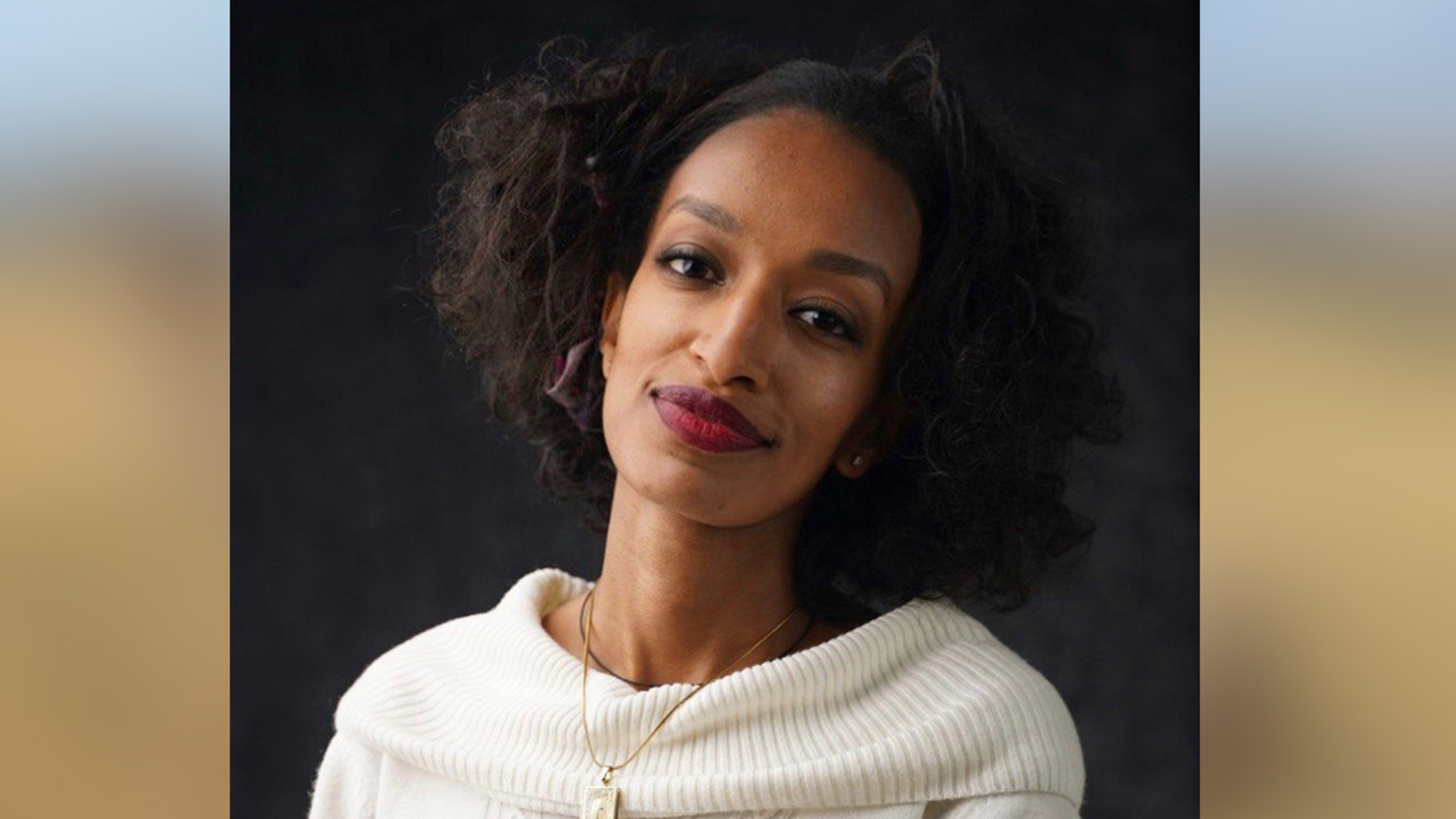
Capital: What message do you want audiences to take from presenting Addis Ababa’s architecture as wearable art?
Bezawit: I want people to look at Addis Ababa differently. We walk past buildings and spaces every day without necessarily thinking about their design language or the stories they represent. With Addis Raw, I wanted to turn something familiar into something unexpected. It is a way of saying that our city, our architecture and our everyday environment can be sources of contemporary artistic inspiration. We don’t always have to look outside Ethiopia for ideas.
Capital: How do you respond to the perception that Ethiopian fashion is mainly traditional rather than contemporary and experimental?
Bezawit: I think tradition and contemporary design can co-exist. Ethiopian fashion has an incredibly rich foundation, but that doesn’t mean we have to reproduce the past exactly as it was. For me, the question is: what can we create from what we already have? Ethiopian textiles, craftsmanship and cultural references can be interpreted through modern silhouettes, international design influences, new technologies and different creative disciplines. That is where experimentation becomes exciting.
Capital: What challenges do Ethiopian designers face when producing high-end fashion locally and presenting it to international markets?
Bezawit: There are challenges throughout the production chain. Access to consistent raw materials, specialized equipment, skilled production, quality control, financing and larger-scale manufacturing can all be difficult. There is also the challenge of producing locally while meeting the standards and quantities expected by international markets. But these challenges also highlight where investment and development are needed. If the industry is supported across the entire value chain from textiles and production to marketing and export we can build much stronger fashion businesses.
Capital: How do you ensure that the use of Ethiopian cultural elements remains authentic while still appealing to global audiences?
Bezawit: For me, authenticity begins with understanding where the material or cultural reference comes from and respecting the people and processes behind it. I don’t want to use Ethiopian elements simply because they look visually interesting. At the same time, authenticity doesn’t mean avoiding outside influences. I am inspired by fashion from around the world, and I believe Ethiopian design can have an international language while still being rooted in its own identity. The goal is not to choose between Ethiopian and global it is to bring them both together.
Capital: In what ways can fashion help promote Addis Ababa as a center of creativity, design and cultural innovation?
Bezawit: Fashion can tell a city’s story in a very immediate way. It brings together textiles, music, photography, film, performance, architecture, manufacturing and events, so it naturally creates opportunities for different creative disciplines to work together. Projects such as Addis Raw allow us to present Addis Ababa not only as a place with history and culture, but as a city where contemporary ideas are being created. I think there is enormous potential for the city to become known for its creative energy.
Capital: What opportunities do you see for Ethiopia’s textile and fashion industries to expand internationally?
Bezawit: There is significant potential because Ethiopia already has important foundations: skilled artisans, distinctive textiles, cultural heritage and a growing community of designers and creatives. The opportunity is to develop these strengths into a more connected industry. Better production infrastructure, access to finance, training, international partnerships, export systems and stronger platforms for Ethiopian designers could help local brands reach wider markets while creating more value within Ethiopia.
Capital: How does the Tibebu Collection contribute to creating opportunities for local artisans and other professionals in the creative sector?
Bezawit: Tibebu Collection is built around local production, so creating opportunities for artisans is part of the brand’s foundation. We work with weavers, tailors and other local professionals, and as the brand grows, I want that network to grow with it. I also see fashion as an ecosystem rather than something created by a designer alone. A collection can involve photographers, filmmakers, musicians, models, stylists, event producers, graphic designers and many others. Through our collections, events and storytelling, I want Tibebu to create space for these different talents while showing what can be achieved when local creative industries work together.