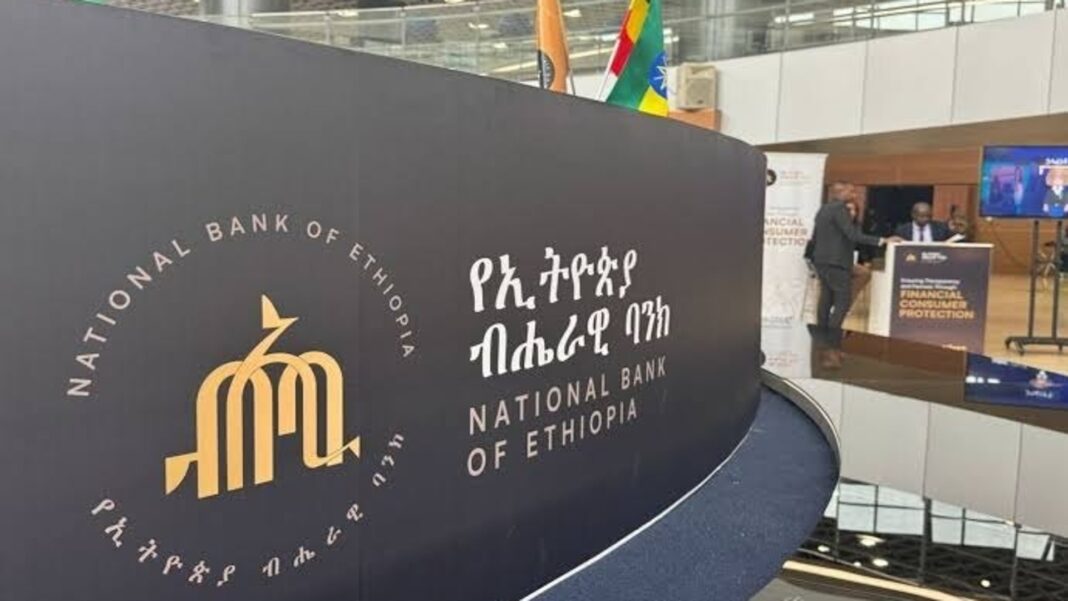
The National Bank of Ethiopia (NBE) has introduced a framework allowing interest-free banks and conventional banks with approved interest-free windows to exchange short-term liquidity, setting a minimum transaction size of 25 million birr.
Directive No. EPD/02/2026, signed by NBE Governor Eyob Tekalign and effective November 12, 2026, establishes the rules for institutions with surplus funds to place them with banks facing short-term liquidity needs through Sharia-compliant investment arrangements.
Transactions must be denominated in Ethiopian birr, with amounts above the minimum increasing in increments of one million birr.
The framework seeks to address a longstanding operational challenge for interest-free banking: the shortage of suitable instruments for placing surplus funds and obtaining short-term financing without using interest-based lending.
It complements Directive No. EPD/01/2026, which establishes interest-free open market operations and standing facilities, as the central bank expands the liquidity-management tools available to the sector.
Eligible participants include NBE-licensed interest-free banks and conventional banks operating approved interest-free banking windows.
Institutions must apply in writing for membership, with the central bank required to respond within five working days. Before trading, participants must sign a Master Investment Agency Agreement and formally accept the Interbank Money Market Operational Manual.
The market will use infrastructure linked to the Ethiopian Securities Exchange and the NBE’s Real-Time Gross Settlement system for transaction processing and settlement.
The directive initially permits overnight and seven-day placements. Overnight transactions must be settled by 10 a.m. on the following business day.
Rather than conventional interbank lending, the market will operate through an investment agency arrangement known as Wakalah.
A bank providing surplus funds acts as the principal, or Muwakkil, while the receiving institution acts as the agent, or Wakil. The agent invests the funds in Sharia-compliant commercial activities for the agreed period.
Participants will quote an expected profit rate on an annualised basis. The directive specifies that this is an indicative benchmark for comparing transactions, not a guaranteed return.
If actual profits meet or exceed the expected rate, the principal receives its investment and the expected profit. The agent may retain earnings above that amount as an incentive fee.
Where an investment generates a positive return below expectations, the principal receives its capital and the profit actually earned.
If the agent anticipates that the expected return will not be achieved, it must notify the principal and offer the choice of exiting early or continuing at a revised rate.
The directive distinguishes lower-than-expected profits from investment losses. Losses arising without negligence, misconduct or contractual breaches by the agent are borne by the principal. The agent is liable where losses result from its negligence, misconduct or failure to meet contractual obligations.
Transactions may be conducted on secured or unsecured terms. Banks making unsecured placements must notify the central bank in advance.
For secured transactions, the receiving institution must provide eligible, unencumbered interest-free assets as collateral. These may include interest-free government securities and instruments issued by the NBE.
The collateral must provide sufficient coverage after the application of risk-related valuation adjustments.
However, collateral cannot be used to guarantee expected investment profits. Its purpose is to protect against specified payment defaults, negligence and misconduct, rather than transfer ordinary investment risk away from the principal.
Participating institutions must maintain internal risk-management systems, monitor investments daily and comply with market conduct rules.
The directive prohibits market manipulation, collusion, the dissemination of false information and the misuse of non-public information.
Sharia governance violations that invalidate a transaction are classified as events of default.
Late settlement of matured transactions may attract a financial penalty calculated using the expected profit rate plus five percentage points. The central bank may also impose administrative fines, revoke market membership or pursue legal action under Proclamation No. 1359/2025.
The framework provides a dedicated mechanism for managing liquidity within Ethiopia’s interest-free banking sector, while placing responsibility on participating institutions to assess investment risks, maintain Sharia compliance and meet settlement obligations.