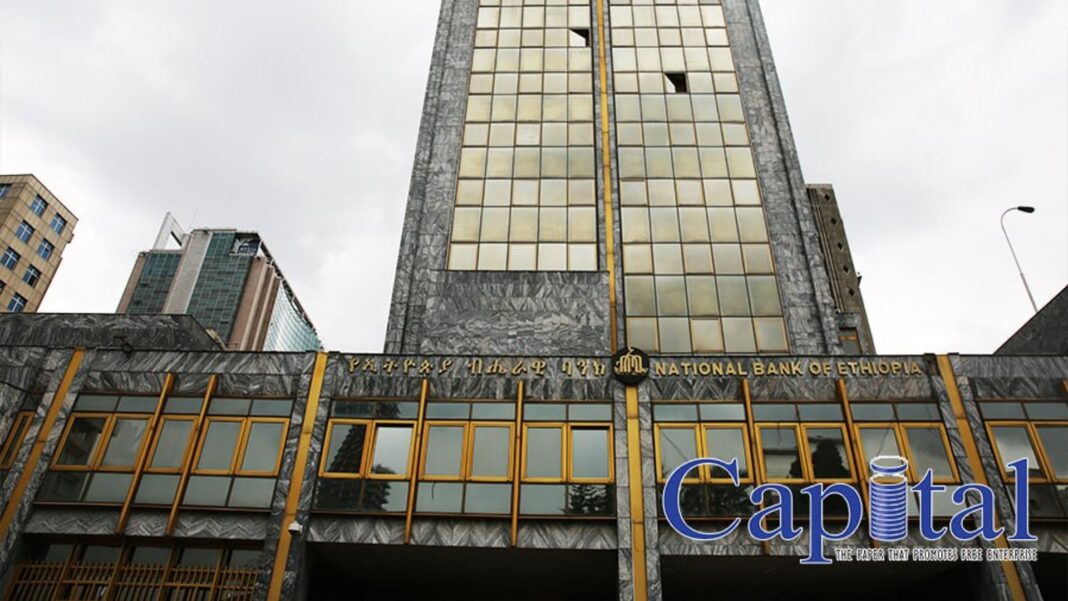
The National Bank of Ethiopia (NBE) has proposed strict limits on foreign investment in domestic banks, capping direct shareholdings by foreign individuals at seven percent and foreign companies at 10 percent under a draft directive aimed at regulating foreign participation in the banking sector.
The draft directive, titled “Acquisition of Significant Ownership or Controlling Interest in a Bank and Equity Investment by Foreign Nationals and Foreign-Owned Ethiopian Organizations,” also allows qualifying strategic investors to acquire stakes of up to 40 percent in a bank, subject to the central bank’s eligibility and vetting requirements.
Under this directive , the combined direct and indirect shareholding of foreign nationals and foreign-owned Ethiopian organizations in a domestic bank—excluding subsidiaries of foreign banks—cannot exceed 49 percent of total subscribed shares.
The proposed rules also establish separate aggregate limits for foreign individual and corporate investors, excluding strategic investors. Foreign natural persons would be permitted to hold a combined maximum of 15 percent, while foreign juridical persons would be subject to a 20 percent ceiling.
According to the NBE, these measures aim to establish a clear regulatory framework for foreign equity investment while safeguarding depositors, maintaining financial stability, and strengthening oversight of bank ownership and control. The central bank noted that facilitating foreign investment will help bolster banks’ capital bases, improve operational efficiency, support technology and knowledge transfer, and enhance corporate governance and market competitiveness.
To enforce oversight, the draft requires banks to obtain prior NBE approval before registering any acquisition that results in significant ownership or a controlling interest, including transactions executed through a securities exchange. Significant ownership is defined as a direct or indirect shareholding of at least two percent of a bank’s total subscribed capital. Once approved, transactions must be completed within one year in accordance with the details submitted to the regulator.
Before granting approval, the central bank will assess the suitability, integrity, and financial capacity of prospective investors. Banks will also be obligated to verify the identities of intended shareholders, trace their ultimate beneficial owners, establish the source of funds, and conduct integrity checks.
The framework introduces additional eligibility criteria, including professional competence, financial soundness, and the strategic value they bring to the institution. The NBE will also evaluate whether a proposed investment could impact a bank’s ability to meet prudential requirements.
In a separate provision, the draft outlines an exceptional arrangement allowing qualifying foreign banks to acquire part or all of an existing Ethiopian bank beyond ordinary ownership caps. Such approvals remain strictly at the central bank’s discretion and are subject to heightened financial and operational standards.
Regarding payment procedures, foreign investors must pay for bank shares—including any share premiums—in acceptable foreign currencies, restricted under the draft to the US dollar, euro, and pound sterling. Payments must be routed through the banking system into a designated foreign currency account, while cash, foreign payment cards, and certain electronic transfers are barred for share purchases.
The directive permits foreign investors to repatriate earned dividends, as well as proceeds from share sales or bank liquidations, in accordance with Ethiopian law. However, foreign nationals of Ethiopian origin who elect to be treated as domestic investors and purchase shares in Birr will be barred from repatriating dividends generated from those holdings.
To strengthen transparency, banks will be required to submit quarterly reports to the NBE detailing significant shareholders, beneficial ownership structures, and all foreign shareholdings—including stakes below the two-percent threshold.
Non-compliance carries severe administrative sanctions. Any share acquisition facilitated without prior approval or in violation of the directive will be declared null and void, and offending banks face fines of 10,000 Birr per contravening share, subject to applicable legal procedures.
The proposed directive will repeal and replace Directive No. SBB/73/2020, which currently governs bank equity investments by foreign nationals of Ethiopian origin.