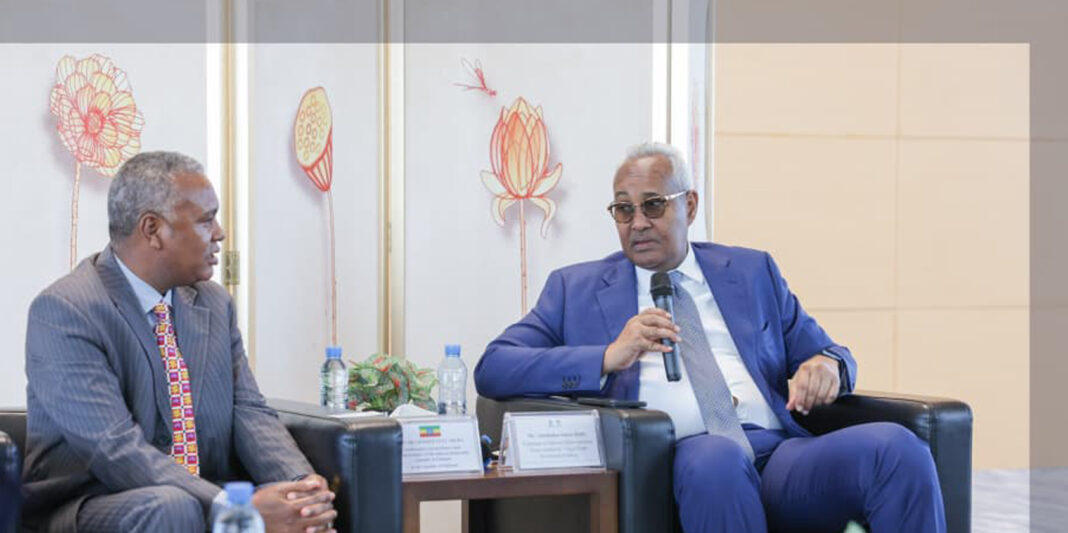
A senior delegation from the International Monetary Fund (IMF), including Deputy Director Nigel Clarke and African Department Director Abebe Aemro Selassie, is visiting Ethiopia. This high-level engagement follows the recent technical conclusion of the Fourth Review under Ethiopia’s Extended Credit Facility (ECF) arrangement, which did not result in immediate consensus.
On Thursday, December 4, the delegation met with key Ethiopian government officials, including Minister of Finance Ahmed Shide, National Bank of Ethiopia Governor Eyob Tekalign, and Minister of Planning and Development Fitsum Adela, as confirmed by an official statement from the Ministry of Finance.
This visit by IMF executives follows a prior staff-level mission led by Alvaro Piris, which concluded on November 13. After that mission, the Fund issued a statement indicating that discussions would continue through virtual channels, emphasizing that certain elements needed further alignment before being presented to the IMF Executive Board for final approval.
The negotiations occur in the context of recent high-level dialogue. Last month, Prime Minister Abiy Ahmed met with IMF Managing Director Kristalina Georgieva during the G20 summit in Johannesburg. The Ethiopian government described that interaction as constructive, highlighting the Fund’s recognition of ongoing economic reforms.
However, sources familiar with the discussions indicate that significant differences remain between the Ethiopian authorities and the Fund, though specific technical areas have not been disclosed. The Ethiopian side has reportedly expressed its goal of securing increased financial support from the institution.
Economic analysts suggest that Addis Ababa’s desire to adjust the timing or sequencing of certain structural reforms under the ECF program may contribute to the prolonged conclusion of the review. Experts often highlight required adjustments in monetary policy, such as removing quantitative credit caps, and the operational effectiveness of the foreign exchange market as critical benchmarks that need resolution.
“The ECF-supported program is inherently complex and multi-faceted, complicating the public identification of specific impediments in any review cycle,” noted an observer close to the process. “The Fund’s explicit reference to ongoing negotiations supports the idea that fulfillment of prior actions remains outstanding.”
Observers agree that the continued virtual discussions by both parties reflect a shared recognition of unresolved technical and policy issues that must be addressed to facilitate a successful Board review and subsequent disbursement.