For seven decades, Rotary in Ethiopia has stood not as a distant donor, but as a quiet, persistent partner in the nation’s journey toward health, education, and community development. That legacy was proudly celebrated this week when Rotary International President Francesco Arezzo, together with his partner Anna Maria Arezzo, made an official visit to Ethiopia, marking the 70th anniversary of Rotary’s presence in the country and underscoring the enduring bond between Rotary International and Ethiopia’s leadership, civil society, and the health sector.
At the heart of the visit was a simple but powerful message: service to humanity is not just an ideal, but a practical, measurable force that can move entire nations. As President Taye Atske Selassie, a long‑time supporter of Rotary Ethiopia, put it during the 70th anniversary ceremony held at the National Palace: “Rotary Ethiopia has implemented meaningful work in the health sector over the past 70 years. It has been a key partner in our national development, especially in improving health services and building resilient communities.”
A 70‑Year Journey of Service
Rotary’s story in Ethiopia begins in 1956, when the first Rotary Club was chartered in Addis Ababa. Over the decades, Rotary Ethiopia grew into a network of clubs and districts — today known as District 9212, which includes Ethiopia, Kenya, South Sudan and Eritrea — driven by the motto Service Above Self and the mission of tackling the world’s most pressing humanitarian challenges.
From the early days, health emerged as one of Rotary Ethiopia’s core priorities. Long before “global health” became a buzzword, Rotarians were mobilizing local resources, raising international funds, and supporting the health system through sanitation, vaccination, and community health initiatives. Their work responded not to political cycles, but to the fundamental needs of Ethiopian communities: clean water, disease prevention, access to care, and strengthened health infrastructure.
What elevates Rotary’s contribution is its consistency and depth. Rather than one‑off projects, Rotary Ethiopia has sustained long‑term partnerships in health, education, and peace-building, layering initiatives so that outcomes compound over time. When polio raged across Africa, Rotary Ethiopia became a central pillar in the push to eradicate the disease. When maternal and child health declined in hard‑to‑reach regions, Rotary clubs stepped in to support clinics and health workers. And in moments of national crisis, including the recent Marburg virus outbreak, Rotary’s network mobilized rapidly to complement the work of the Federal Government and partners like the WHO and UNICEF.
Polio Eradication: A Model of Partnership
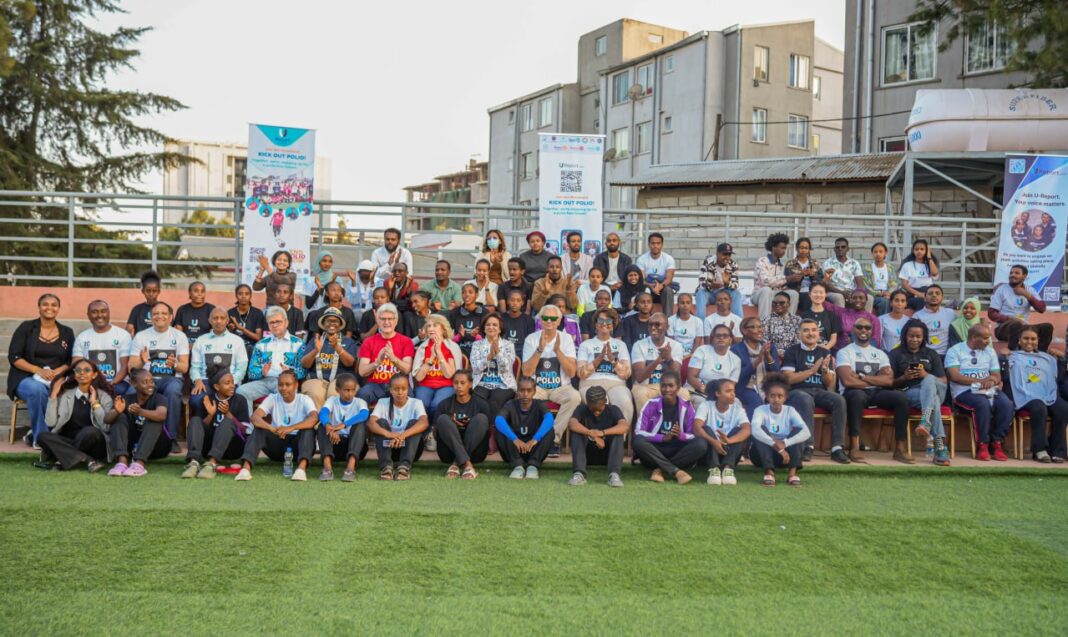
No single initiative better illustrates Rotary’s impact in Ethiopia than the decades‑long fight against polio. Rotary has been one of the earliest and most consistent supporters of polio eradication, first globally and then specifically in Ethiopia, where the disease once threatened the lives and mobility of countless children.
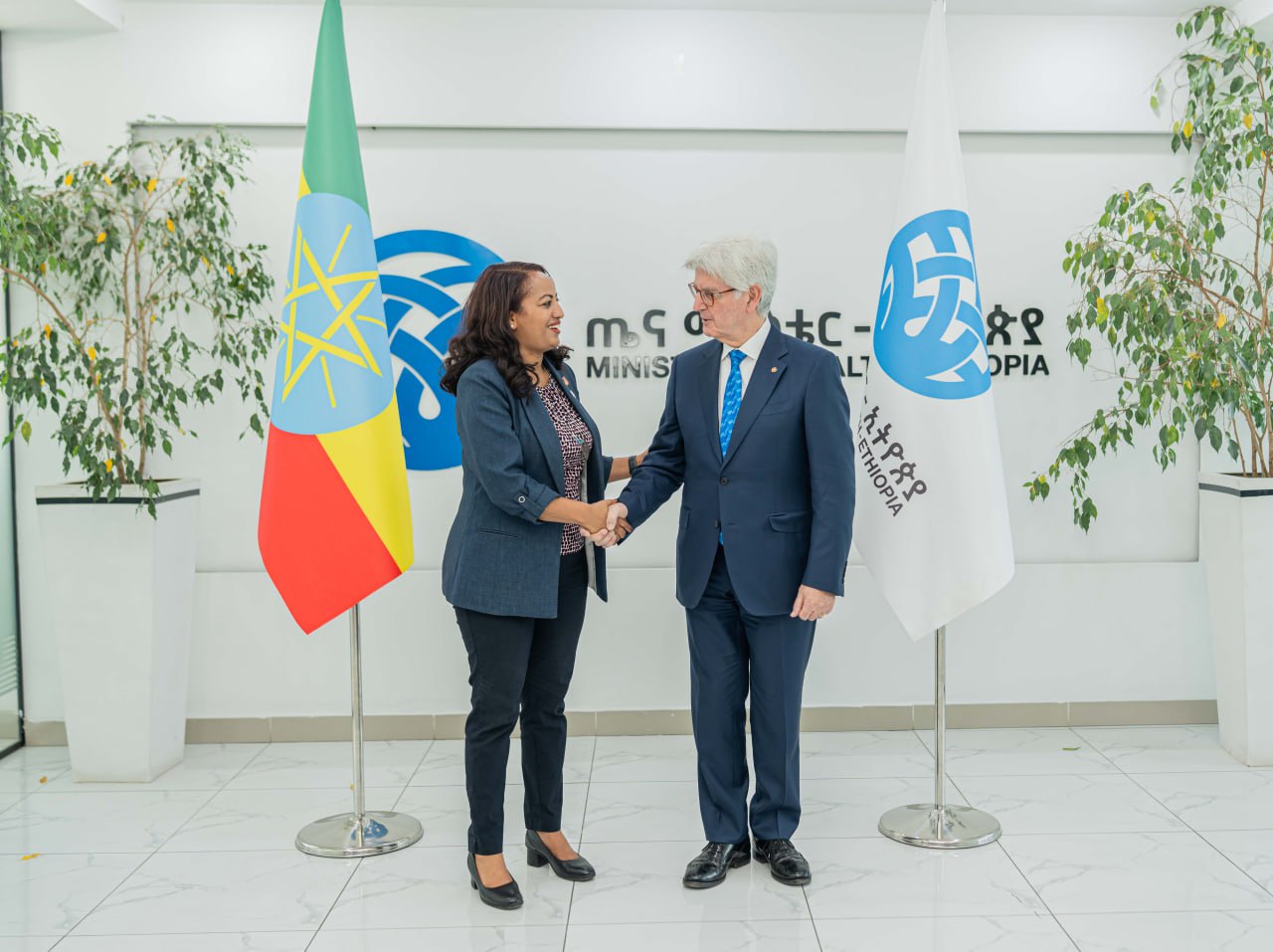
Rotary International President Francesco Arezzo stressed this commitment during his meeting with Health Minister Dr. Mekdes Daba on 27 January in Addis Ababa. “Rotary International is deeply committed to eradicating polio not only here in Ethiopia, but across every country where children are still at risk,” she said. “Globally, we have invested over four billion dollars in the Global Polio Eradication Initiative, and in Ethiopia alone, that investment has reached about 33 million dollars.”
That funding has helped vaccinate millions of Ethiopian children, support cold‑chain logistics, train vaccinators, and strengthen surveillance systems. The results speak for themselves: polio transmission has been reduced by 99.9% worldwide, and Ethiopia, like most of Africa, now enjoys the hard‑won status of being free from wild poliovirus.
For Dr. Mekdes, Rotary’s role has been indispensable. During the meeting, she extended heartfelt thanks to Rotary for its “high‑level contributions to eradicating polio and supporting other health sectors.” She praised the synergy between Rotary, the Ministry of Health, and partners such as the Gates Foundation, UNICEF, and the World Health Organization, noting that this collaboration is now the model for how Ethiopia will tackle other health challenges, from non‑communicable diseases to outbreak preparedness.
A symbolic moment during the meeting was the awarding of an honorary Rotarian membership to the Minister herself, with President Arezzo and District Governor Wairimu Njage pinning the badge onto her dress. To the Minister, this honour was not about personal recognition, but about the shared mission: “Rotary’s community service, done quietly and consistently in every district, is a true inspiration. It shows what can be achieved when professionals, citizens, and institutions come together behind the common good.”
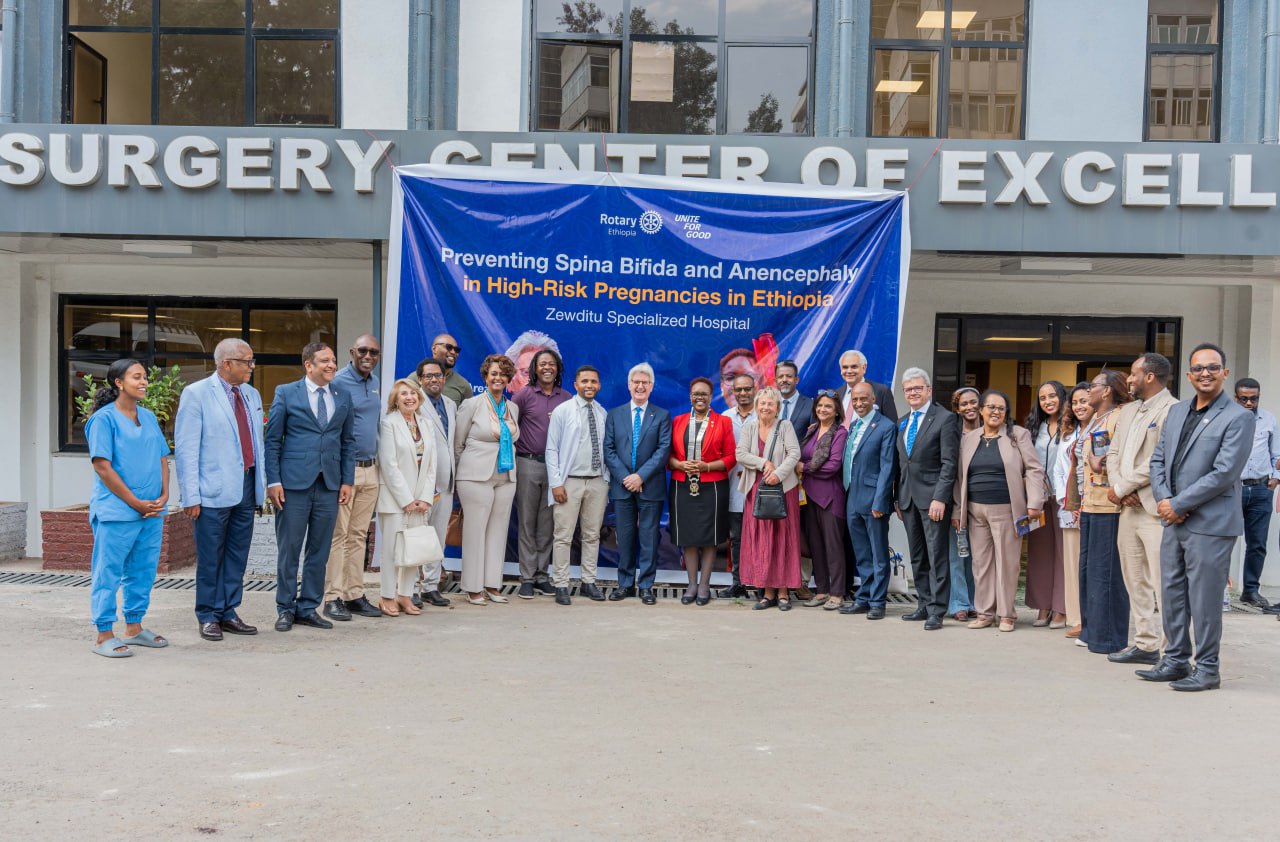
A Visionary Diplomat and Rotary Scholar
The 70th anniversary celebrations also brought a special guest from the diplomatic community: Sweden’s Ambassador to Ethiopia, Magnus Lennartsson, himself a former Rotary Scholar. In a warm address at the National Palace event, Ambassador Lennartsson recalled how his Rotary scholarship opened doors to advanced education and shaped his career in diplomacy and international cooperation.
“As a Rotary Scholar, I learned that leadership is not just about holding office, but about serving others,” he said. “Rotary’s decades of service in Ethiopia, done with humility and focus, are a testament to that philosophy.”
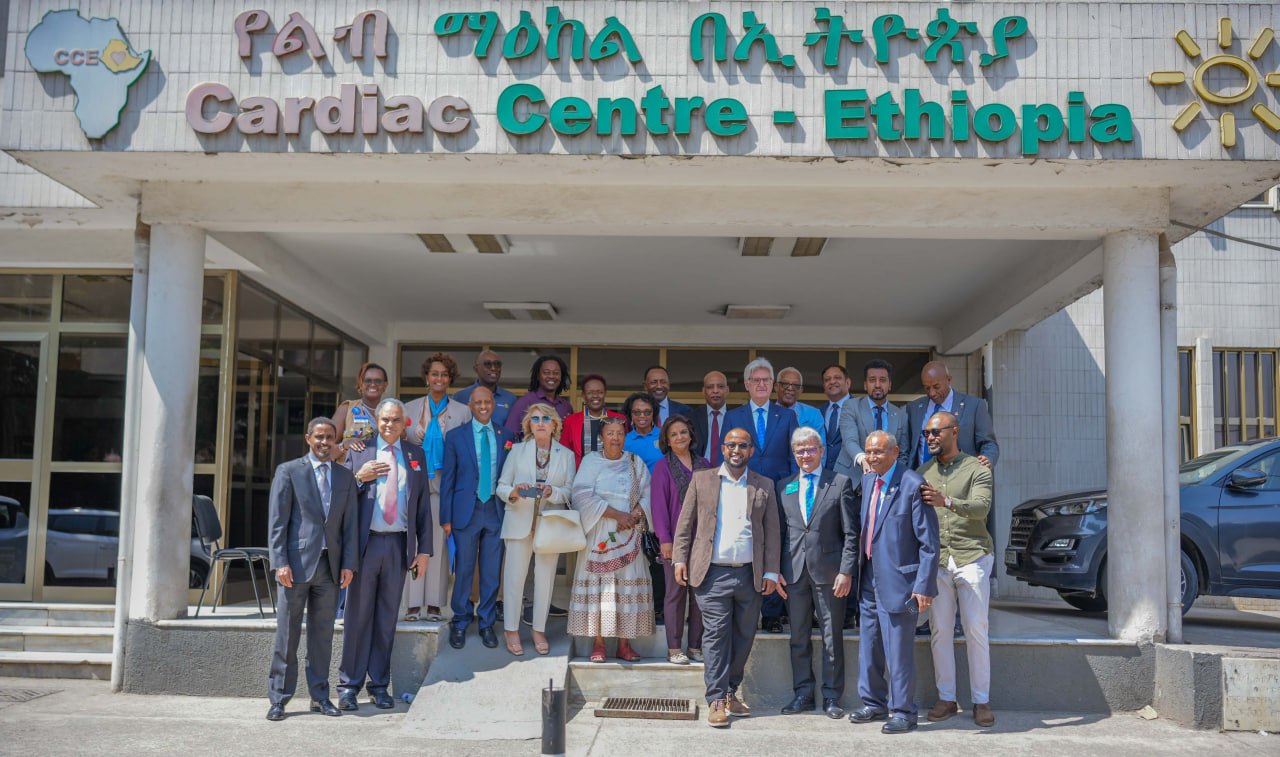
Beyond his personal connection, Ambassador Lennartsson highlighted the growing collaboration between Rotary Sweden and Rotary Ethiopia, particularly through the “Rotary Doctors Sweden” initiative. This partnership has brought Swedish medical professionals to Ethiopia to support the diagnosis and treatment of non‑communicable diseases, and to strengthen the capacity of general practitioners and dentists in towns like Nekemte and Dembi Dolo.
Such cross‑border medical partnerships, he noted, are not only technical exchanges, but also bridges of understanding that align with Ethiopia’s broader goal of building a more equitable health system, especially in secondary and tertiary care. “When Rotary professionals from Sweden stand shoulder‑to‑shoulder with Ethiopian doctors and health workers, they are not just transferring skills — they are building trust and solidarity for the long term,” he said.
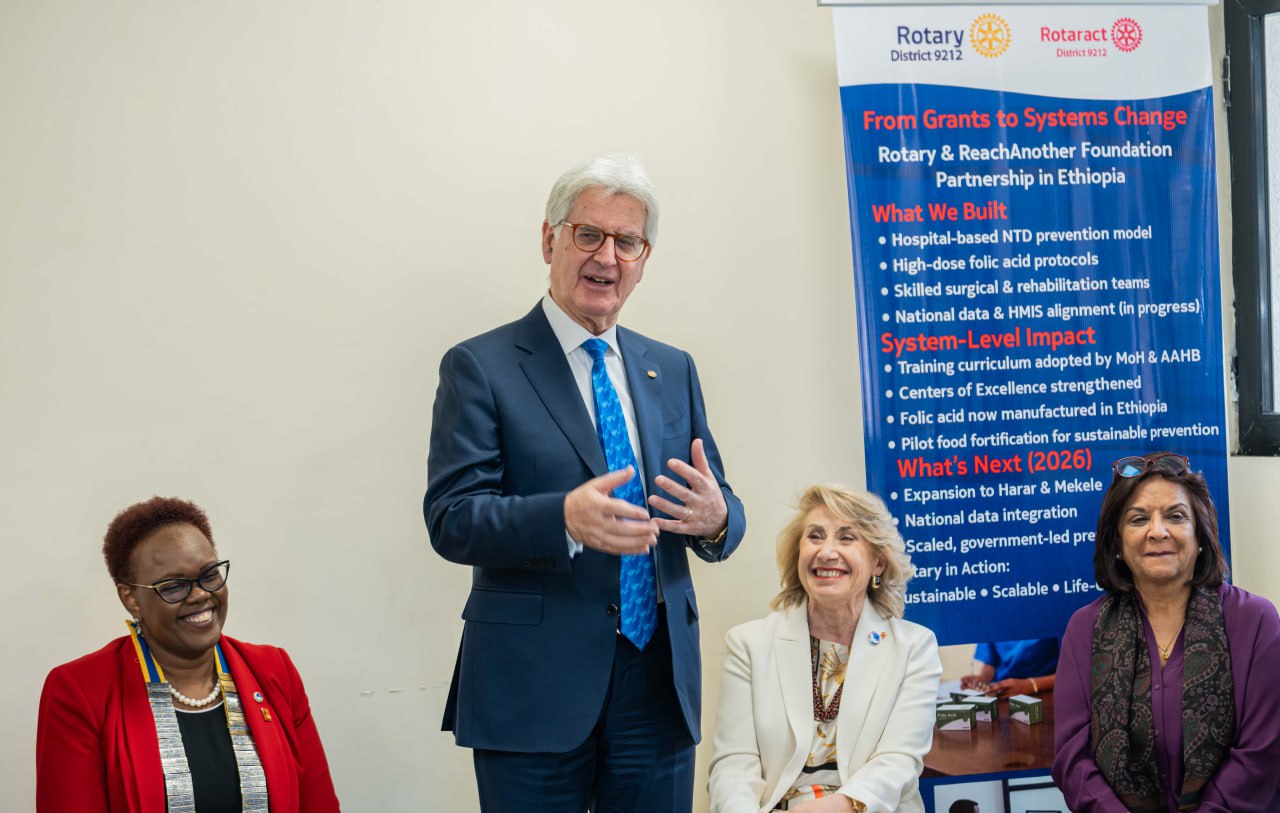
The RI President’s Agenda in Addis Ababa
RI President Francesco Arezzo’s three‑day visit to Ethiopia, from 27 to 29 January 2026, was not merely ceremonial, but a substantive working programme that underscored Rotary’s role as a convener and catalyst for development. Accompanied by RI Director Daniel Tanase, President Arezzo’s agenda included project visits, high‑level meetings, engagements with Rotary leaders across District 9212, and interactions with the broader Rotary family in Ethiopia.
At the National Palace, RI President Arezzo held extended discussions with President Taye Atske Selassie, who warmly welcomed him as a guest of the nation and as a long‑time friend of Rotary Ethiopia. The two leaders spoke at length about how Rotary’s values — integrity, service, peace, and fellowship — can be aligned with Ethiopia’s national development priorities.
President Taye emphasized that Rotary Ethiopia is a “unique organization with distinct values” and that, over the past 70 years, it has made “significant contributions to eradicating polio and improving health services.” He noted that while the government has primary responsibility for health, education, and peace-building, its work is strengthened when partners like Rotary contribute not only funding, but time, expertise, and community mobilization.
They also discussed the importance of expanding Rotary’s footprint beyond Addis Ababa — into secondary cities, rural districts, and conflict‑affected regions where the need for health and educational services remains high. President Taye expressed appreciation for Rotary’s ability to operate at both the national level and the grassroots, ensuring that aid and development projects “reach the last mile.”
Strengthening Health, Education, and Peace
During the talks, several key areas of cooperation were highlighted:
Health: Building on the success of polio eradication, future collaboration will focus on strengthening primary health care, expanding access to essential medicines, supporting maternal and child health, and combating non‑communicable diseases. The Ministry of Health’s commitment to continued partnership with Rotary, the Gates Foundation, UNICEF, and WHO signals that Ethiopia intends to use polio‑eradication infrastructure as a platform for broader health system resilience.
Education: Rotarians have long supported education through scholarships, school construction, and teacher training. Going forward, the focus will be on STEM education, vocational training for youth, and improving learning outcomes, especially for girls and children in remote areas. President Arezzo encouraged Rotary Ethiopia to scale up its educational projects and to form partnerships with technical and vocational institutions.
Peace-building and Community Resilience: In a country that has experienced conflict and displacement, community‑based peace-building is a priority. Rotary Ethiopia’s work in inter‑religious dialogue, youth leadership, and community service projects provides a practical model for restoring trust and social cohesion. The RI President expressed strong support for expanding Rotary’s peace and conflict resolution programmes in Ethiopia, including the Rotary Peace Fellowship and community‑mediation initiatives.
A Model of Resilient Infrastructure and Sustainable Transition
Behind the symbolism of anniversaries and high‑level meetings lies a practical question: how can service organisations like Rotary maintain impact over decades, through political and economic shifts? The answer, Rotary Ethiopia’s leaders argue, lies in three things: local ownership, financial sustainability, and adaptive leadership.
Rotary Ethiopia is not a project‑driven NGO that arrives and departs; it is a network of locally rooted clubs whose members are Ethiopian professionals, business leaders, and community figures. This local ownership ensures continuity even when international attention shifts. At the same time, the District has worked to diversify funding sources, combining Rotary International grants with local fundraising, corporate partnerships, and in‑kind contributions.
President Arezzo urged District 9212 to continue investing in sustainable models, such as social enterprises and blended‑finance projects, rather than relying solely on donations. For example, health projects that also generate income (e.g., through mobile clinics with user fees for non‑essential services) can become self‑sustaining over time, freeing up grant funds for the most vulnerable.
He also stressed the importance of succession planning and youth engagement. As an older generation of longtime Rotarians retires, the future of service in Ethiopia depends on bringing in younger professionals, women, and diverse voices into Rotary leadership. District Governor Wairimu Njage echoed this call, highlighting initiatives that support youth clubs and young professionals in Rotary.
A Proud Moment for Ethiopian Rotarians
For many Rotarians in Ethiopia, the visit of the RI President was more than a protocol event; it was a moment of pride in a 70‑year legacy. The 70th anniversary ceremony at the National Palace was attended by dozens of club presidents, members, former district governors, and partners.
District Governor Wairimu Njage, who has led the preparations for the anniversary since assuming office, described the visit as “historic” and “a powerful recognition of what Rotary Ethiopia has achieved against the odds.” She also reminded colleagues that the anniversary is not an end point, but a milestone in an ongoing journey: “What we celebrate is not just the past, but the commitment to serve the next 70 years.”
Rotarians shared stories of projects that have changed lives: a mother in Harar who lost her child to polio but now advocates for vaccination; a school in Gondar built and maintained by multiple Rotaract and Rotary clubs; a water point in a drought‑prone village that has reduced the distance women walk for water by hours each day.
These stories, when woven together, form the real impact of Rotary: not just numbers, but transformed lives, healthier communities, and a culture of service that inspires others to give their time and talent.
The Road Ahead: 70 Years and Beyond
As the visit concluded and President Arezzo departed for his next destination, a clear vision for the next chapter of Rotary Ethiopia emerged. The 70th anniversary is not just about looking back, but about looking forward with purpose.
The immediate priorities include:
- Scaling up health projects, especially in rural and underserved areas, using the polio infrastructure as a foundation.
- Deepening partnerships with the Ministry of Health, the Ethiopian Public Health Institute, and international agencies on immunization, disease surveillance, and outbreak response.
- Expanding the scope of Rotary in education and youth employment, with a focus on skills development and entrepreneurship.
- Strengthening Rotary’s role in peace-building and conflict transformation, especially in regions affected by recent conflicts.
The legacy of 70 years is that Rotary Ethiopia has proven that sustainable, people‑centered development is possible when communities, professionals, and institutions work together with a shared purpose. As President Taye Atske Selassie observed, it is not just about the projects built, but about the values promoted: service, integrity, peace, and unwavering commitment to the common good.