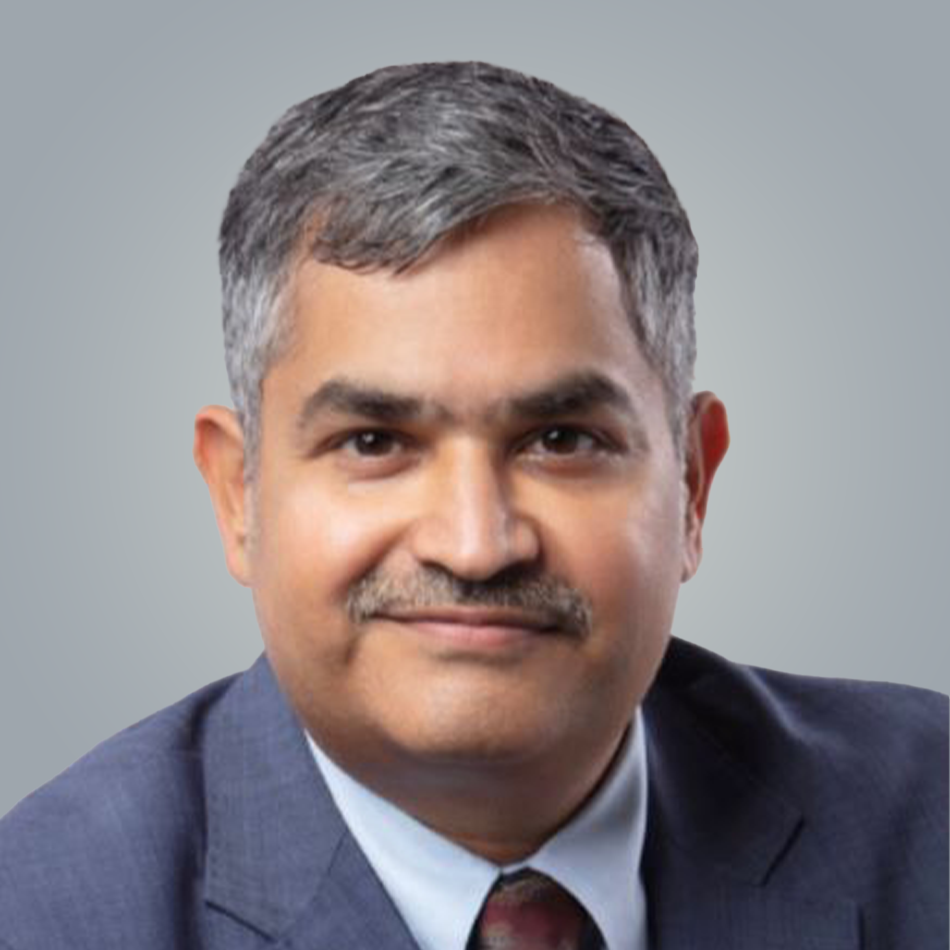
Hilleman Laboratories is stepping into a critical gap in global epidemic preparedness, and its latest work on a more deployable Ebola vaccine could be a game-changer for Africa and other vulnerable regions. In this exclusive interview with Capital, Dr. Raman Rao, MD MBA, Chief Executive Officer of Hilleman Laboratories, explains how the company is leveraging flexible “biosecure ballroom” manufacturing, cutting-edge process innovation and strategic partnerships to make life-saving vaccines more affordable, more stable and easier to deploy in low- and middle-income countries.
With more than two decades of experience in vaccine R&D and manufacturing across leading global pharma and biotech firms, Dr. Rao now oversees a portfolio that spans dengue, norovirus, zika, polio and other high-impact infectious diseases. As Co-Chair of WHO’s Product Development for Vaccines Advisory Committee and a board member of major global health organisations including PATH and the International Vaccine Institute, he sits at the intersection of science, policy and access. In the conversation that follows, he discusses how CEPI’s latest funding, Singapore’s agile lab infrastructure and a network of industry partners are being mobilised to ensure that an improved, more thermostable Ebola vaccine can reach frontline health workers and at-risk communities before the next major outbreak strikes. Excerpts;
Capital: How does the flexible “biosecure ballroom” design enable rapid pivots between vaccine targets?
Raman Rao: Our Singapore hub is built for agile manufacturing, allowing us to be able to reconfigure suites and equipment for different vaccine or biologics programs without rebuilding the facility. In practical terms, that flexibility comes from compact, configurable layouts and portable, skid-mounted, single-use systems, which reduce changeover time and lower cross-contamination risk.
The facility is also designed for parallel production in controlled, isolated suites, so one vaccine program can continue while another is introduced or scaled. This is an important capability when responding to fast-moving outbreak needs.
Capital: What manufacturing changes are you implementing to improve the Ebola vaccine (Zaire strain)?
Raman Rao: The work Hilleman Laboratories is doing, funded by CEPI, is focused on addressing challenges in the manufacturing process for the existing Ebola vaccine to increase the yield and improve thermostability, specifically targeting a shelf life at 2–8°C (enabling it to be stored in a regular refrigerator for several months) subject to regulatory review and public health requirements.
Because the existing vaccine must be stored at ultra-low temperatures around -70 degrees improving thermostability is key to making it easier to deploy in outbreak settings.
Capital: How will CEPI’s $30M funding address affordability barriers for LMICs, especially amid outbreaks like the 2025 DRC incident?
Raman Rao: CEPI’s funding is designed to tackle the two biggest cost drivers simultaneously. First, it will help us to make manufacturing improvements that increase the quantity of vaccine produced, streamline the process and reduce production costs so as to increase supply to tackling the cold chain logistics. Second, the funds help us drive breakthrough innovation that would enable storage at 2–8°C for months, which substantially reduce the operational cost and difficulty of deployment, especially in outbreak settings.
Capital: What role will Hilleman, SK bioscience, and IDT Biologika play in scaling production for large outbreaks?
Raman Rao: The roles are complementary. Hilleman Laboratories (with the support of MSD and CEPI) is leading key development work and the clinical development activities for the updated vaccine. SK bioscience and IDT Biologika develop the updated drug substance process and the associated drug product work needed to improve manufacturability and supply resilience.
The aim is to ensure we’re greater than the sum of all parts and that we make a vaccine that is easier to manufacture at scale so that if the world faces a large outbreak, including scenarios comparable to the 2014–16 West Africa epidemic, we can respond quickly and effectively.
Capital: How might Singapore’s lab infrastructure support global efforts like Ebola stockpile sustainability?
Raman Rao: Singapore provides a strong base for end-to-end development capabilities. From R&D and process development through GMP pilot-scale manufacturing in a system designed for resilience and rapid reconfiguration.
For stockpile sustainability, that matters because the goal is not only scientific success, but a pathway to reliable, repeatable production and faster deployment, which is exactly what improved supply and thermostability enhancements will enable.
Capital: In light of recent African Ebola outbreaks, what preventive strategies for frontline workers could this updated vaccine enable?
Raman Rao: A more deployable, easier-to-store vaccine would support expanded preventive vaccination for healthcare workers in at-risk areas and consistently on the frontlines to any disease outbreak.
Practically, if refrigeration (2–8°C) storage is achieved as intended, it will make it easier to pre-position doses closer to where risk is highest, and build a stockpile. It’ll also help us to run preventive campaigns, or break chains of transmission without the constraints and costs of ultra-cold freezers.
Capital: What challenges remain in regulatory approval and Phase 3 trials for the thermostable version in African settings?
Raman Rao: To move forward, first we’re going to collect the clinical evidence, which is based on the Phase 3 immunobridging trial in African countries where the current vaccine is approved, so that we can accurately compare immune responses and understand expected effectiveness. Second, they’ll be a regulatory review for the updated process, formulation and new thermostability.
These efforts are well worth it as this will increase the amount of available vaccines at better cost, and with improved thermostability it’ll be easier to use the vaccine where needed.