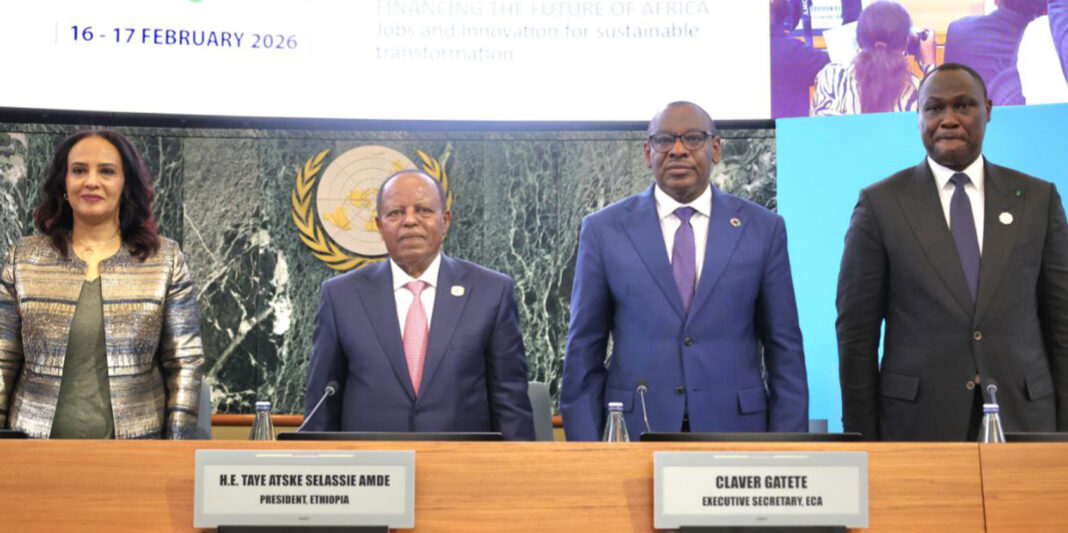
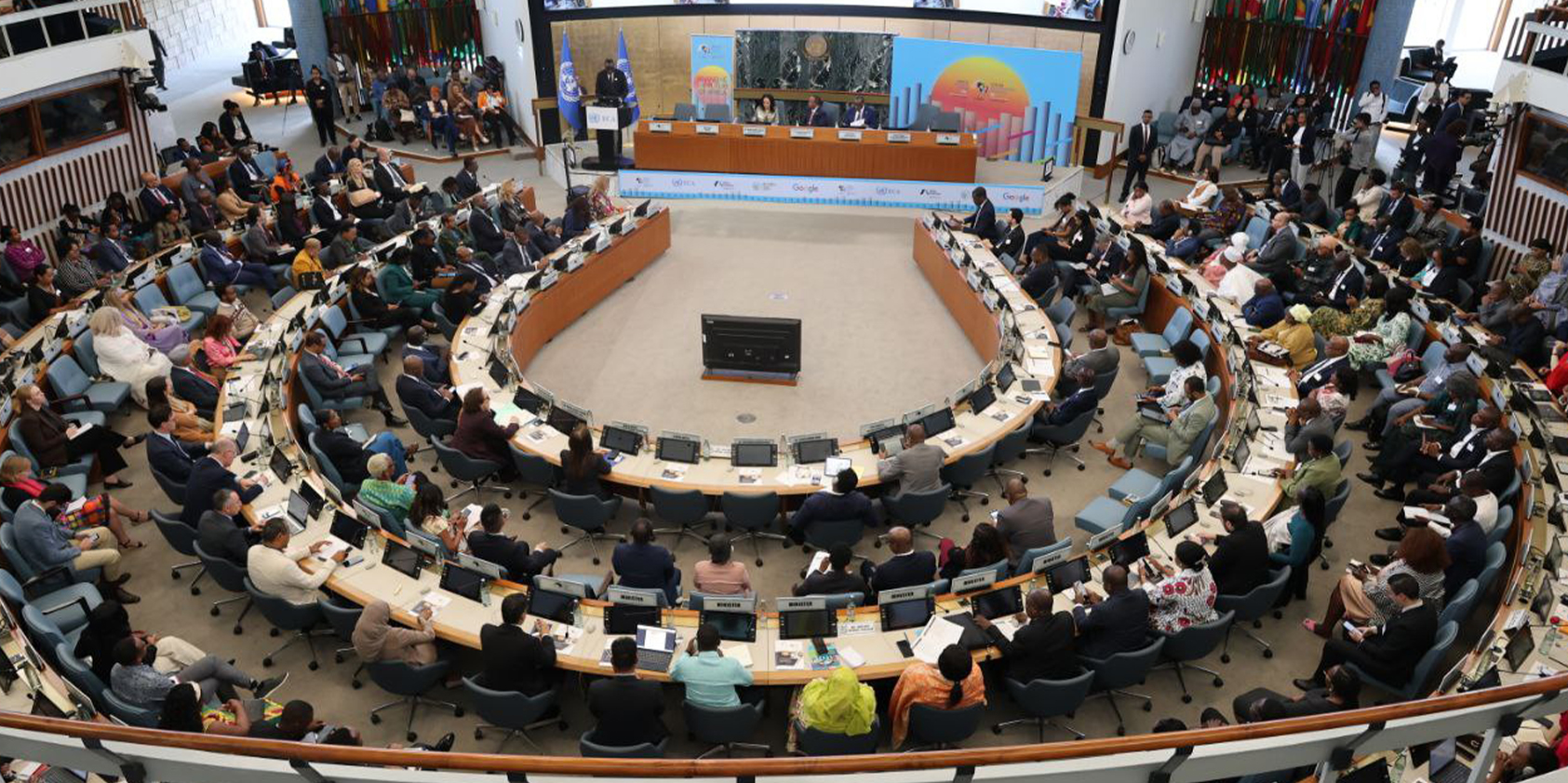
Top financial institutions and business leaders meeting in Addis Ababa warned that for the African Continental Free Trade Area (AfCFTA) to succeed and transform the continent into an industrial hub, the primary obstacles are not just capital, but “Non-Tariff Barriers” (NTBs) and fragmented regulatory systems.
At the recently held 9th Africa Business Forum, representatives from the Trade and Development Bank (TDB), UNCTAD, and the Africa Business Council stated that the “true demon” facing continental trade is not a lack of money. Rather, it is the invisible walls—varying quality standards, inconsistent industrial policies, and bureaucratic hurdles—that prevent small African markets from merging into a single, attractive investment zone.
Admassu Tadesse, Group President and Managing Director of the Trade and Development Bank, noted that investors always seek large markets.
While a few countries like Ethiopia and the Democratic Republic of Congo have vast domestic markets, most African nations are too small individually to attract significant investment, making market scale a major persistent bottleneck.
“Investors and lenders can only come efficiently when our markets are sufficiently large, seamless, and integrated,” Admassu stated.
Explaining why addressing non-tariff barriers is so critical, he noted: “When we established cement factories across five countries, the work was easy in the larger countries, but the obstacles in the smaller ones were extremely exhausting.”
This market fragmentation leads investors to lose hope and focus only on large countries, leaving smaller nations trapped in a cycle of investment scarcity.
Samaila Zubairu, President and Chief Executive Officer of the Africa Finance Corporation (AFC), explained that Africa is currently “exporting jobs” along with its raw materials, describing this as a value-addition crisis.
Highlighting the “value gap” that has harmed the African economy, Samaila pointed out that Africa exports USD 5.7 billion worth of cocoa beans, while the global chocolate industry is valued at over USD 217 billion.
Despite the continent having 400 million head of cattle, it exports raw hides to Italy and Spain while importing dairy products. Furthermore, while Africa sends USD 12 billion worth of raw gemstones to India and Thailand, the global finished jewelry market is valued at USD 400 billion.
“We must change our mindset,” said the Council representative, emphasizing that all financial support should lean toward industrial construction and value addition. He further warned that it will be impossible to fully implement the AfCFTA without strengthening our own private sector.
According to UNCTAD data, African countries pay interest rates on debt repayments that are 4 to 8 times higher than those paid by Germany or the United States.
This disparity means Africa pays an 11.6% average financing cost—8.5 points higher than US rates—squeezing budgets, with many countries spending more on interest than on health or education.
Currently, only 22 African countries have formal credit ratings; the remainders are perceived as high-risk simply due to a lack of available data.
Ola Brown, Founder and General Partner of HealthCap Africa, argued that the narrative of “political risk” in Africa is exaggerated. She contended that it is unfair to focus solely on Africa, especially at a time when government intervention in technology companies is increasing in Europe and the United States.
Experts at the forum urged Africa to utilize domestic capacity and long-term capital to solve its financial challenges.
Brown added that it is essential to support Small and Medium Enterprises (SMEs) and focus on equity rather than debt.
The Trade and Development Bank (TDB) and Afreximbank noted that they are looking beyond traditional Western financial hubs for alternatives. By participating in Japanese and Chinese debt markets, they have been able to access financing at a lower cost than in London or New York.
“At the very least, we must fix the African side of things that is within our hands, because we have better control over that,” emphasized Admassu.
Claver Gatete, UN Under-Secretary-General and Executive Secretary of the Economic Commission for Africa (ECA), revealed during the forum that Africa currently possesses over USD 1.1 trillion in domestic institutional capital.
This capital—held in pension funds, insurance, and sovereign wealth—represents a massive, untapped reserve that could shift the continent’s economic trajectory. However, despite this internal wealth, Africa still faces a significant infrastructure financing gap and loses billions of dollars annually to illicit financial flows.
The central theme of the forum, “Financing the future of Africa: Jobs and Innovation for a Sustainable Transition,” highlighted that a lack of money is not the primary bottleneck for growth. In his briefing to heads of state and business leaders, Gatete asked, “The real question is: where will the world’s next growth engine come from?”
He concluded “global capital has not disappeared; rather, it has become increasingly selective, looking for scale, security, and future market potential.”
Quote:
According to UNCTAD data, African countries pay interest rates on debt repayments that are 4 to 8 times higher than those paid by Germany or the United States.