Recent foreign exchange auction outcomes have produced puzzling contradictions, sparking debate among financial experts and raising questions about the National Bank of Ethiopia’s visibility into actual market demand.
As previously reported, in a special foreign currency auction held on February 21, the National Bank of Ethiopia (NBE) offered 500 million USD to commercial banks. However, 44.7 million USD remained unsold, as participating banks submitted bids totaling only 455.3 million USD.
Sector experts described the undersubscription as “an unprecedented occurrence” in Ethiopia’s forex auction system.
The outcome appeared to contradict the widely held perception of persistent foreign currency shortages in the country. Analysts were left searching for explanations, with some pointing to possible liquidity constraints within the banking sector, while others questioned how demand could fall short when foreign currency is typically in high demand.
The uncertainty deepened just ten days later. During the regularly scheduled biweekly auction on March 3, the central bank offered 70 million USD, but banks submitted bids totaling 177 million USD—more than double the amount available.
The sharp contrast in market behavior within such a short timeframe has raised concerns about the reliability of signals emerging from the forex market and the banking system.
Tilahun Girma, a finance consultant at I Xcel Financial, Management, and IT Consultation Company, said speculation about liquidity shortages was expected but stressed that the central bank’s priority remains short-term price stabilization.
“Price stabilization is a priority for the central bank until the market can regulate demand and supply by itself,” he said. However, he questioned whether the central bank currently has a sufficiently robust system to accurately measure forex demand.
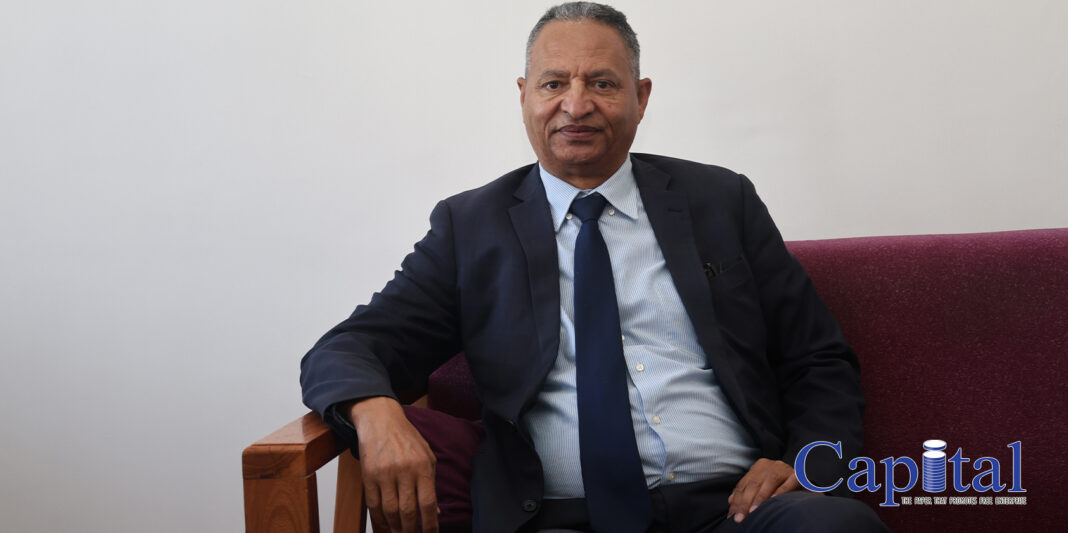
Meanwhile, Eshetu Fantaye, a veteran financial industry expert and former bank president, emphasized that the lack of transparent market data makes it difficult to interpret the divergent auction results.
“To agree with the claim that banks lacked liquidity, we need clear information,” Eshetu told Capital. “If I were a bank leader concerned about maintaining equity, I would preserve liquidity in my payment and settlement account to participate in the forex auction. But we don’t have the data to confirm whether liquidity shortages caused the lower demand during the February 21 auction.”
Financial analysts have raised a central question: If the country faces a severe foreign currency shortage, why did banks not purchase the entire amount offered by the central bank?

One banking expert who heads the international banking department (IBD) at a mid-sized bank suggested that the 44.7 million USD left unsold might indicate that the market was temporarily less pressured, possibly due to recent foreign currency injections that reduced speculative demand.
Eshetu noted that properly answering such questions would require comprehensive data on letters of credit and foreign currency requests across the country’s 32 commercial banks.
“But no one is trying to find out how much that is,” he said, highlighting the information gap that continues to obscure the real dynamics of the forex market.
According to his estimates, meeting Ethiopia’s foreign exchange needs would require between 4 billion and 6 billion USD over the next 12 to 18 months.
“If the market is supplied with a substantial amount of foreign currency early in the reform process, it can curb expectations, speculation, and excessive demand,” he argued.
Both Eshetu and banking professionals interviewed by Capital stressed the importance of stronger data systems and market monitoring mechanisms.
Eshetu recommended that the central bank establish a digital portal linking forex demand and supply data across banks, allowing regulators to better assess market conditions.
“Otherwise, the forex market will continue to provide non-informative signals,” he warned.
He added that while banks internally track foreign currency needs based on client requests and trade financing demands, the absence of centralized visibility leaves the broader market opaque.
Bankers also cautioned that without a clearer understanding of market dynamics, pressure on the parallel foreign exchange market could intensify. While the black market rate briefly stabilized after the February 21 auction, it has reportedly begun rising again following the March 3 auction, which revealed demand exceeding the central bank’s supply.
Eshetu also pointed to the Ethiopian Petroleum Supply Enterprise as a major driver of forex demand, noting that banks working with the enterprise process significant foreign currency payments for fuel imports.
He added that the birr’s 1.2 percent appreciation following the February auction may have attracted stronger participation in the subsequent sale, though the currency reportedly weakened again after Tuesday’s auction.
Tilahun noted that selective market interventions are common during economic reform periods, particularly in the early stages of exchange rate liberalization.
“We need to understand the NBE’s motive—stabilizing the market in the short term,” he said. “Such intervention is expected during the early phase of a free-floating exchange rate, as seen in other countries undergoing similar transitions.”
He added that banks generally determine their forex needs based on letters of credit and client demand, and this information is accessible to the central bank through existing reporting systems.
Nevertheless, he acknowledged that speculation remains a factor in auction volatility, as banks cannot see each other’s bids.
“Forex price volatility will continue to depend on demand,” Tilahun said, adding that long-term stability will require policies that address both inflation and structural imbalances in foreign currency supply and demand.