In a historic milestone for Ethiopia’s export sector, Mohan Plc has successfully completed the nation’s first merchant trading transaction through the newly operational Dire Dawa Free Trade Zone (DDFTZ), a practice that was previously prohibited under the country’s regulatory framework.
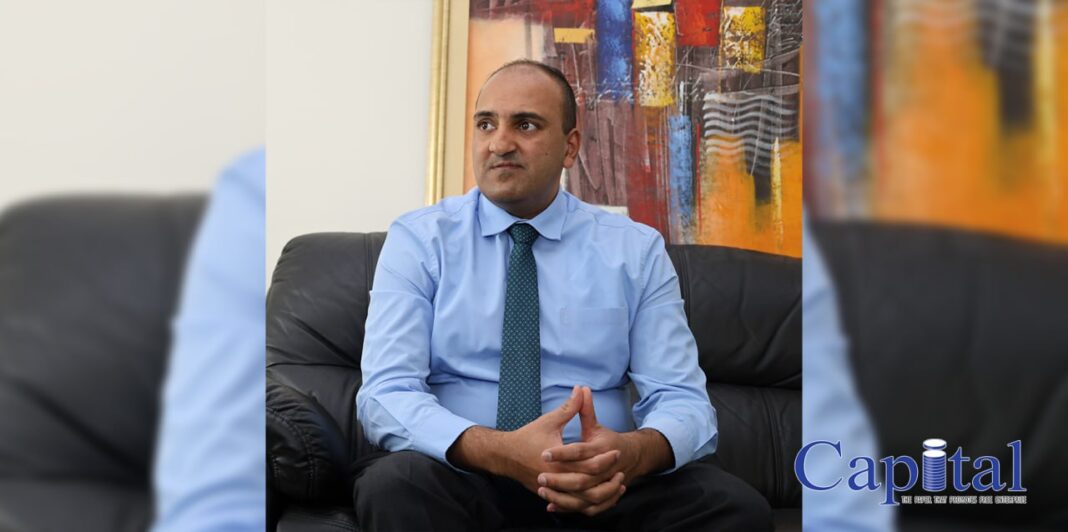
Harsh Kothari, Chief Executive Officer of Mohan, a leading manufacturing and trading conglomerate in Ethiopia, described this achievement as transformative. He stated that it positions Ethiopia to engage in merchant trade as a service-based export activity, thereby diversifying the nation’s foreign exchange earning mechanisms.
As a pioneering investor in the DDFTZ, Mohan Plc is operating in what Harsh refers to as a dynamic commercial hub located outside Ethiopian customs jurisdiction.
“Technically, merchandise entering the zone does not constitute importation into Ethiopia, and businesses operating within the facility are treated as extraterritorial entities,” he explained.
The DDFTZ, which officially launched in August 2022, integrates banking, customs clearance, government services, and administrative operations within a single, coordinated framework, offering comprehensive operational freedoms supported by an enabling legal regime.
“Consequently, we have executed Ethiopia’s inaugural merchant trading transaction—a first in the nation’s commercial history,” Harsh stated.
He encouraged Ethiopian investors to take advantage of the facility, where administrative processes—including banking, customs clearance, licensing, and services from the Industrial Parks Development Corporation—are efficiently consolidated.
Historically, Ethiopia’s export portfolio has been limited to domestically produced agricultural commodities and manufactured goods.
“However, we can now export third-country products to international markets without utilizing local resources or importing goods into Ethiopian territory,” Harsh told Capital.
In this landmark shipment, Mohan facilitated the export of kitchenware from Spain to India, with all documentation and banking operations processed through the Dire Dawa Free Trade Zone. According to trade experts, the DDFTZ allows businesses to engage in international commerce beyond traditional domestic constraints.
“Leveraging my commercial networks, I connected a kitchenware buyer in India with a Spanish supplier. The merchandise was shipped directly from Spain to India, while all transactional documentation and financial flows were processed through Ethiopia,” Harsh explained, illustrating the merchant trade mechanism.
Through this transaction, Ethiopia effectively exported goods beyond its domestic production base. “We anticipate continuing such operations, as the government has institutionalized this framework through the DDFTZ,” he expressed with optimism.
Harsh noted that major global trading hubs—such as Dubai, Singapore, and Hong Kong—have achieved commercial prominence through merchant trade, often without relying on nearby seaports.
He characterized Ethiopia’s initiative as a significant strategic advancement, demonstrating that ongoing economic reforms are gaining momentum and positioning the nation for global competitiveness.
“This transaction carries symbolic significance as it showcases Ethiopia’s institutional capacity and its emerging global competitiveness,” he remarked.
He also highlighted the potential for expansion, including the bundling of Ethiopian commodities with foreign products. For instance, Ethiopian coffee exporters could combine beans from other regions with local production, generating revenue from products not cultivated domestically.
“Regardless of the availability of local resources, we can become suppliers of diverse products and respond to global demand across multiple categories,” the Mohan CEO asserted.
He emphasized that as recent economic reforms continue to demonstrate synergistic effects, the scope of such transactions will significantly expand.
“This achievement represents just one aspect of the extensive trading opportunities that lie ahead.” He acknowledged the crucial role of regulatory authorities, stating, “Without their institutional support and enlightened approach, this historic transaction would not have materialized.”
Ethiopian business leaders have long advocated for such trading mechanisms.
Addisu Alemayehu, a spices exporter and owner of Dabase Business Groups, recalled several instances where such schemes could have significantly benefited both his business and the national economy.
He described a past opportunity to supply a commodity that was unavailable in Ethiopia but accessible in other African nations to Asian buyers. Despite his extensive efforts, the National Bank of Ethiopia informed him that the country lacked the necessary policy for transferable letters of credit, a crucial tool for merchant trade.
“About five years ago, I secured three major contracts that required transferable letters of credit. Learning about this milestone at the free trade zone is momentous news for me and my fellow exporters,” Addisu told Capital.
He shared an example involving an Indian buyer looking for paradise seeds, a medicinal herb. After sourcing the product from Côte d’Ivoire and arranging a deal through his Addis Ababa-based company, he discovered that such transactions were prohibited under Ethiopian regulations at the time.
As a result, the transaction, which would have generated $3 per kilogram in revenue, was abandoned. A similar opportunity involving purple tea, which offered a $4 per kilogram margin, also fell through due to policy constraints.
Addisu praised the new development as a significant step forward for Ethiopia’s trade sector.
“Dubai has become a global trading hub, and Ethiopia could follow a similar path within Africa. We have built strong relationships with commodity buyers over the years, and with other African nations now producing goods that Ethiopia was historically known for—such as sesame seeds—we can leverage these networks for exports under this new framework,” he explained.
He urged government authorities to promote the new system widely, allowing exporters to use their international connections to generate foreign currency through service-based trade, managing documentation and transaction flows. “In my view, this scheme should not be limited to Dire Dawa,” he emphasized.
Merchant trade, also known as intermediary trade, involves a business purchasing goods from a supplier in one jurisdiction and selling them to a buyer in another, with the merchandise shipped directly from the supplier to the buyer—never entering the intermediary’s domestic territory. This business model enables companies to take advantage of global market opportunities without utilizing domestic resources.