Austria, Vienna
The Austrian Federal Government has announced a comprehensive overhaul of its foreign policy toward the African continent, shifting from traditional development aid to a “whole-of-nation” partnership.
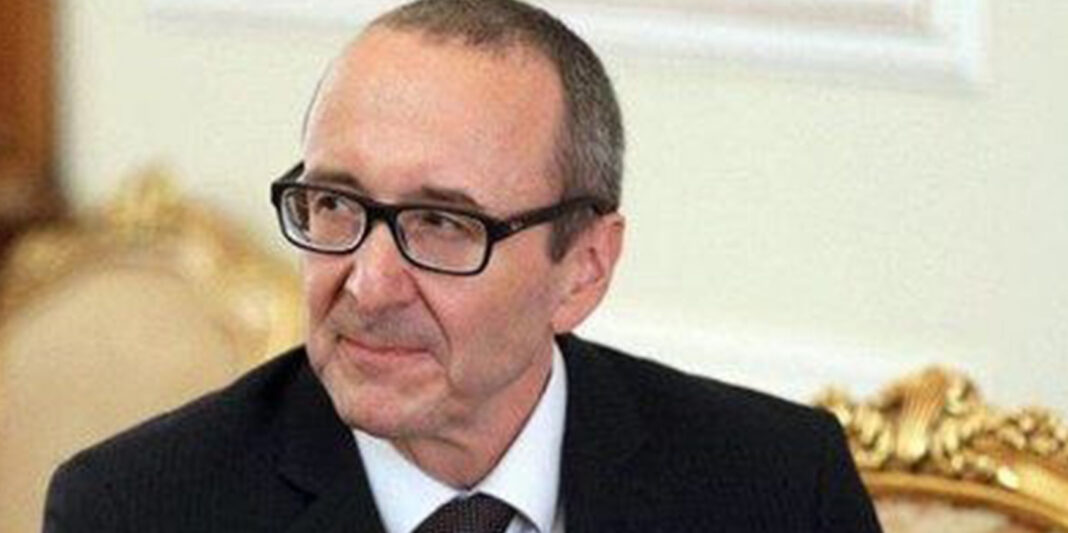
Stefan Scholz, Head of the Department for Sub-Saharan Africa and the African Union at the Austrian Ministry of Foreign Affairs, stated that this policy shift is driven by changes in the global balance of power, the relocation of supply chains, and domestic budget deficits, necessitating a departure from conventional development aid spending.
Speaking at the Austria-Africa Media Fellowship Programme, Scholz explained, “We are moving away from a recipient-donor approach toward interdependent, multi-sectoral, and comprehensive partnerships.” He elaborated, “Due to the budget deficits we are all facing, development cooperation will not increase significantly over the next decade. Therefore, we must now make our activities across various sectors much more effective.”
Instead of creating new, rigid bureaucracy, Austria’s new approach integrates ten sectoral strategies from various ministries into a single framework. These strategies span areas from foreign security policy and humanitarian aid to industrial strategy, hydrogen development, and climate protection.
This initiative further distinguishes itself by incorporating the Austrian Parliament, the Constitutional Court, trade unions, and industrial federations into a unified structure.
“This means Africa is a major reform project for us, unprecedented in Austria,” Scholz explained. “Beyond inter-governmental coordination, we aim for a comprehensive approach that involves the entire nation.”
A primary driver for this policy shift is the significant imbalance in Austria’s foreign trade. Scholz highlighted that Austria’s export volume to the entire African continent is only about 50 percent of its exports to neighboring Slovenia, a nation with a population of approximately two million.
“There is a huge gap,” Scholz admitted. “Until now, we viewed Africa solely as a developing continent. Austrian businesses previously did not recognize the economic benefits of engaging in Africa’s private sector development. Now, however, Austria aims to change this through de-risking.”
To bridge this gap, the Austrian government is implementing plans to enhance the competitiveness of its businesses. These measures include eliminating double taxation, accelerating investment protection and social security agreements, and launching a €30 million Austria-Africa SME Investment Fund, managed by the Ministry of Finance, to support Austrian small and medium enterprises entering the African market.
Scholz emphasized that Austria’s new strategy is built on the principle of African Leadership, aligning directly with the African Union’s Agenda 2063 and regional integration master plans, rather than imposing Western interests.
This strategy was unveiled during comprehensive briefings and discussions held for journalists from various African countries at the recent Austria-Africa Media Fellowship Programme in Vienna. Organized by the International Press Institute (IPI) in cooperation with the Austrian Federal Ministry for European and International Affairs, the session at the Austrian Ministry of Foreign Affairs also provided insights into Austria’s communication philosophy, diplomatic priorities, and its campaign for a non-permanent seat on the United Nations Security Council (UNSC) for the 2027–2028 term.
Officials stated that instead of extracting raw materials, Austria now aims to share its institutional strengths. For instance, while Austria lacks its own mineral reserves, it is home to some of the world’s oldest mining and technical universities. Scholz noted that Austria is actively working to train talented African students, enabling indigenous populations to manage their own mining and refining processes.
Additionally, Austria seeks to share its renowned “dual education” vocational training system. This system allows 14- and 15-year-old youths to combine school education with paid on-the-job apprenticeships, fostering domestic entrepreneurship. This geopolitical shift comes at a time when African countries are heavily impacted by the global energy crisis—a crisis Scholz summarized as the “4Fs”: Finance, Fuel, Food, and Fertilizer.
In response, Austria plans to export its specialized expertise in renewable energy, environmental technology, and infrastructure. Under the new strategy, the country is moving away from projects focused only on specific nations, shifting instead toward broad regional connectivity corridors—such as green technology infrastructure partnerships like the one with Ethiopia. This approach aims to help African nations strengthen their economic benefits and regional integration.
To ensure this framework remains dynamic and continuously evolving, the Austrian Foreign Ministry has conducted 121 meetings with its African partners and is organizing “listening forums” with civil society and youth groups through its embassies.