The Ta’sis (Sudan Founding Alliance) alliance announced ahead of its meeting with the five-party mechanism that it firmly rejects any political or negotiation arrangements outside established international frameworks, declaring that any peace process bypassing its involvement will be nothing more than a futile “public relations project.”
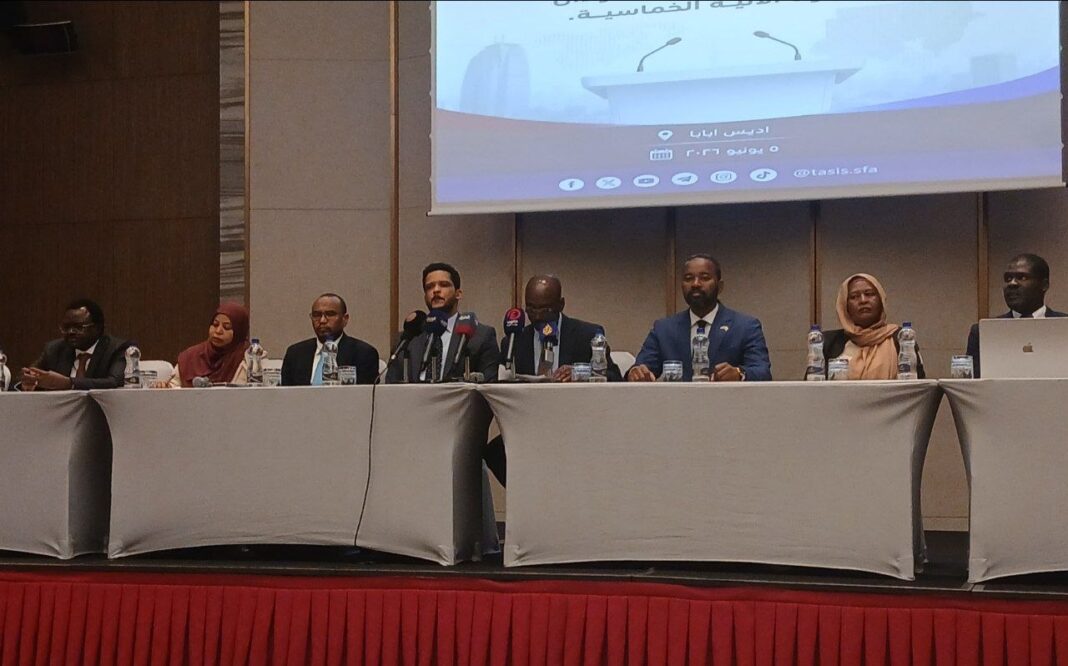
Prior to the start of the anticipated consultation forum with the five-party mechanism on the Sudanese crisis, the alliance reflected its firm stance during a press conference it held in the Ethiopian capital, Addis Ababa.
The alliance’s official spokesperson, Ahmed Tagad Lissan, forcefully denied rumors circulating about any direct or indirect contact or meetings with the Sudanese army or what he described as the “de facto authority” in Port Sudan, calling the allegations entirely unfounded and reaffirming the group’s strict commitment to international peace initiatives.
Central to the alliance’s demands is an absolute veto on the participation of the Islamic Movement, the National Congress Party, or any of their political fronts in future settlements. Linking its political engagement directly to the framework established by the Quartet on Sudan, the Ta’sis alliance is demanding an immediate three-month humanitarian truce through the Jeddah platform as a prelude to reaching a permanent ceasefire.
The alliance argues that addressing the country’s catastrophic humanitarian situation must take precedence over forming dialogue committees, asserting that moving directly to political talks before addressing these conditions is entirely premature.
Beyond the immediate ceasefire demands, the alliance clarified its stance on Sudan’s future government structure and its own geopolitical weight.
While the alliance defended the conceptual framework of forming a parallel government, spokesperson Lissan noted that securing official recognition is not their priority at this stage; instead, they are leveraging an extensive network of diplomatic relationships with international systems, as well as regional and international powers.
On the other hand, the alliance criticized the lack of impartiality among certain members of the five-party mechanism, specifically targeting the African Union’s representative to Sudan, Mohamed Baalish.
However, it maintained that the African Union remains the most appropriate platform for sponsoring Sudanese dialogue, provided that the participating parties are selected based on objective criteria appropriate to the nature and complexities of the conflict.
Backing the alliance’s firm position, leadership body member Advisor Mohamed Al-Mukhtar Al-Nour held the Islamist movement responsible for the continuation of the war. He argued that the Rapid Support Forces (RSF) did not initiate the conflict but rather found themselves confronted by it due to the political developments that followed the October 2021 coup.
Al-Nour concluded by reminding mediators of the realities on the ground, noting that the Ta’sis alliance controls vast areas of Sudanese territory and stating that any attempt to marginalize or exclude them represents an attempt to disregard the true balance of power and forcibly impose political agendas.