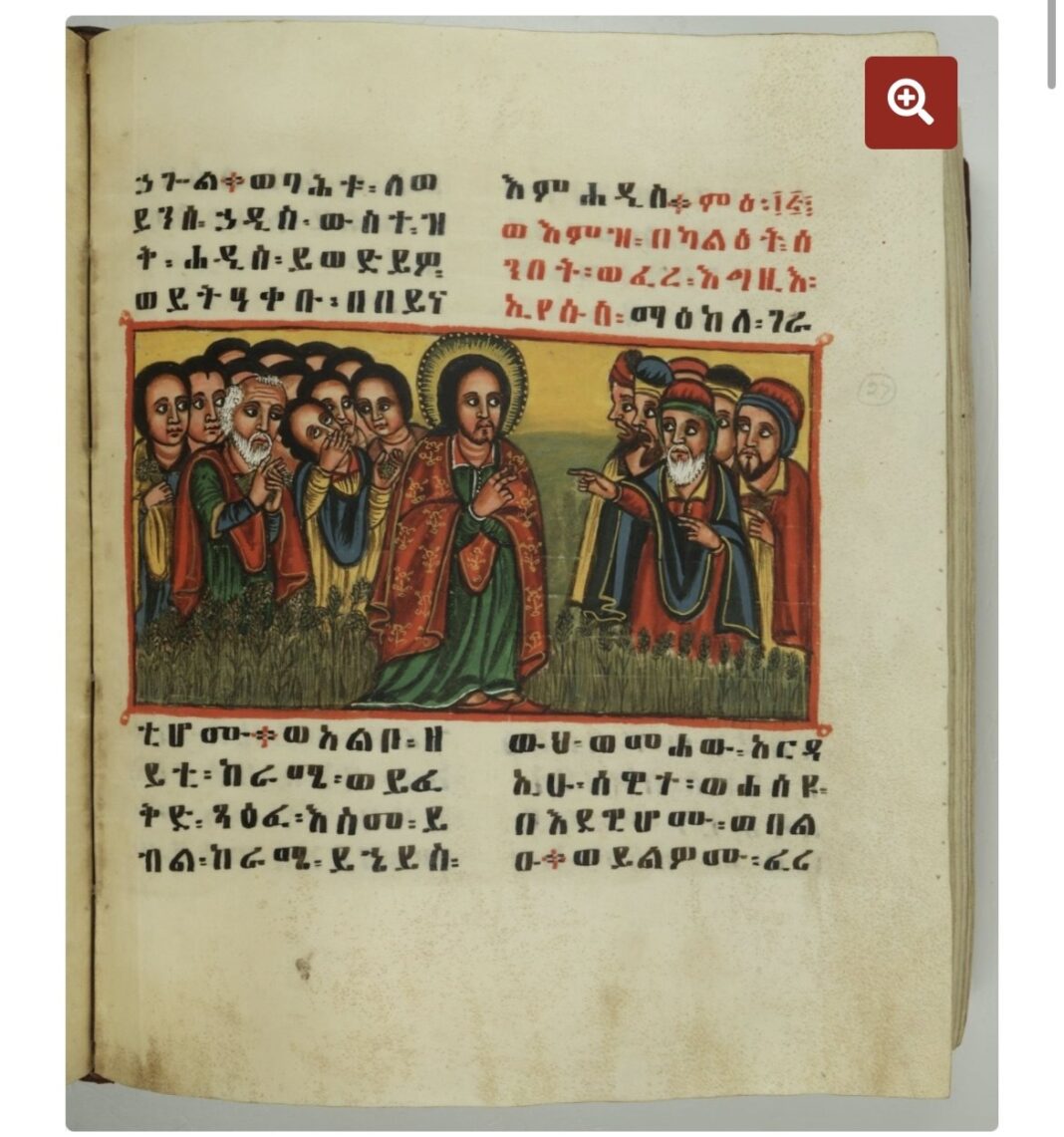
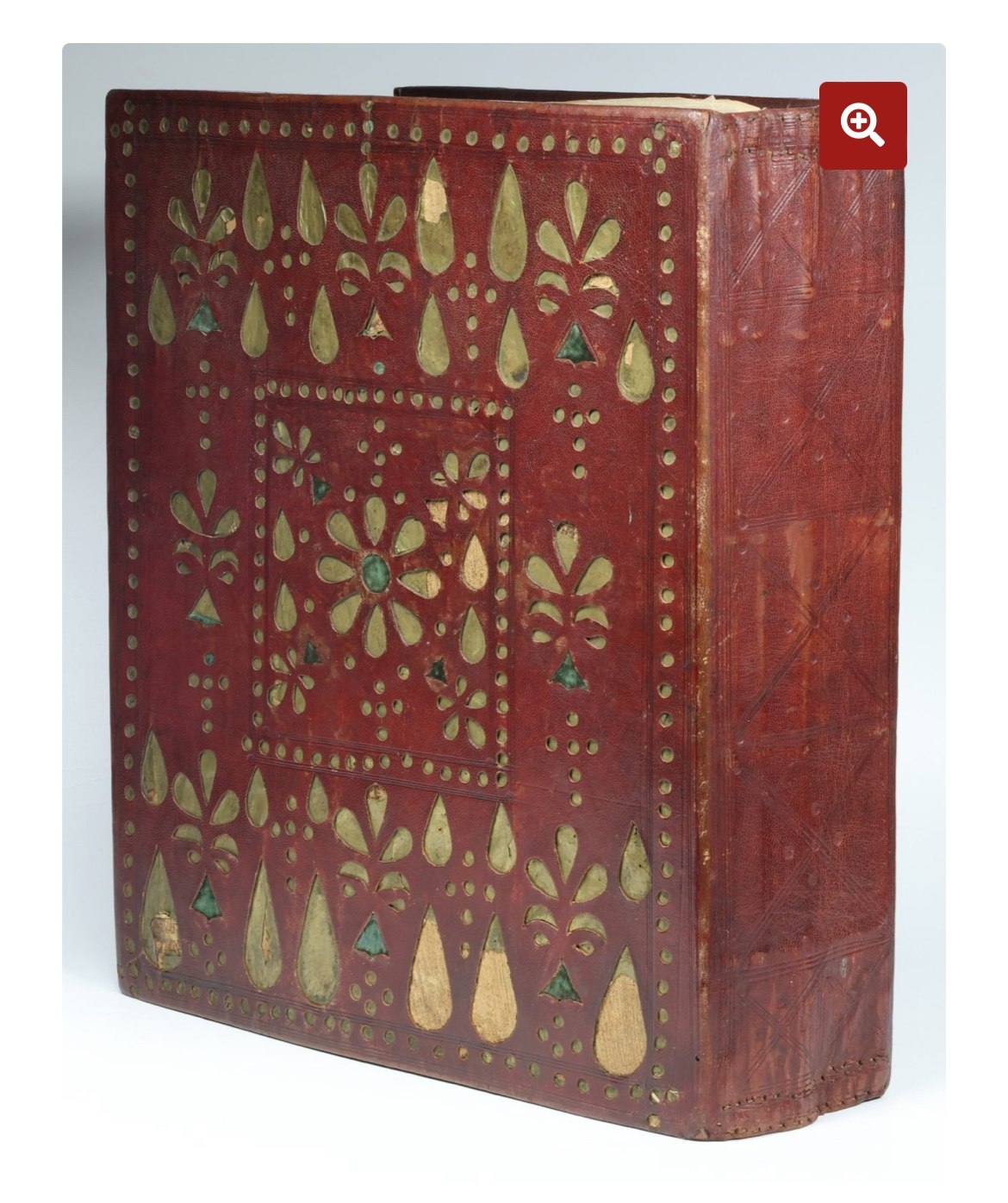
The Ethiopian Heritage Authority has confirmed to Capital that it has initiated high-level discussions to block the commercial auction of a sacred, richly illustrated ancient manuscript once linked to Emperor Tewodros II. The artifact was scheduled to be auctioned from September 13 to 18, 2026, coinciding with exhibition events in Abu Dhabi.
Known as the “Gondarine Gospel,” the manuscript was listed for sale by “Inlibris,” a rare book and manuscript dealership based in the United Arab Emirates. With a starting guide price of 250,000 Euros (£214,550), the precious holy book has ignited renewed global controversy over the ongoing trade of cultural assets looted during the colonial era.

Prepared between 1730 and 1740, the manuscript is written in Ge’ez on vellum and stands as a magnificent testament to Ethiopian religious art. It contains the complete text of the Gospel of Luke, most of the Gospel of John, and 235 detailed paintings depicting Old and New Testament historical events, miracles, and the resurrection.
During the 1868 Battle of Magdala, British troops raided the mountain fortress of Emperor Tewodros II, plundering numerous sacred books, crosses, and royal treasures from northern Abyssinia.
While Inlibris acknowledges the historical circumstances of how the manuscript was removed, it has defended its right to sell it. According to the auction organizers, the artifact possesses a chain of ownership spanning over a century and a half. Following the 1868 campaign, it came into the possession of Robert Cornelis Napier, 1st Baron Napier of Magdala, and subsequently passed through a succession of commercial, institutional, and private collections, including the Pitt Rivers Museum and the Schøyen Collection.
Dr. Alula Pankhurst, a renowned British-Ethiopian historian and grandson of the activist Sylvia Pankhurst, noted that strong moral arguments dictate that looted cultural heritage must not be treated as commercial merchandise. Pankhurst urged Inlibris to cancel the sale and consult with Ethiopian authorities to ensure the artifact returns to its rightful home at the National Museum of Ethiopia.
In response to the mounting backlash, Inlibris suggested it could sell the manuscript back to Ethiopian institutions at a “preferential price” as a “gesture of goodwill.” However, the firm maintained that the transaction must be treated as a standard commercial purchase rather than an acknowledgment of any title defect or formal restitution claim.
Abebaw Ayalew (Prof), Director General of the Ethiopian Heritage Authority, firmly rejected the dealer’s preconditions and condemned the auction process.
The Director General told Capital that a formal letter had been dispatched to the auction organizers demanding an immediate halt to the sales process and the initiation of unconditional repatriation procedures.
The confrontation comes as Ethiopia continues to score major victories in recovering its dispersed heritage. This week alone, 17 ancient spiritual parchment manuscripts that had left the country under various circumstances were successfully returned to Ethiopia.
Abebaw stated that efforts to recover other heritage items will be intensified, emphasizing that many more Ethiopian artifacts are expected to return in the near future. According to the Authority, over the past seven years, more than 67 heritage items that had been illegally smuggled out or taken abroad have been successfully repatriated.