In Nairobi’s bustling Jamhuri estate, Muluken Wega Abudi manages a thriving neighborhood enterprise. Having lived and worked in this vibrant community for over twenty-six years, he has resided in Kenya longer than many of the country’s younger citizens. Over nearly three decades, he has raised a family, established strong social ties, and contributed consistently to the local economic fabric. Yet, when describing his civic and legal reality to Capital, the community representative from Horn of Africa Refugees Voice pointed to a profound institutional paradox: “We refugees are called ‘domestic taxpayers.’”
“We pay our taxes diligently on our small businesses,” Muluken explained with evident frustration. “The revenue authorities register us, inspect us, and tax us under the formal category of domestic taxpayers. Yet, the moment we ask for the legal security that should accompany those taxes, the system treats us as unauthorized outsiders.”
Recent data published by the United Nations High Commissioner for Refugees (UNHCR) indicates that Kenya currently hosts more than 850,000 registered refugees and asylum seekers. Among this displaced population, approximately 42,000 are Ethiopian nationals, making Ethiopia the country’s second-largest source of refugees after Somalia. While international humanitarian discourse frequently frames refugee assistance through the lens of remote, sprawling camps such as Dadaab and Kakuma, a substantial and growing proportion of refugees has moved into Kenya’s major urban centers to build self-reliant livelihoods.
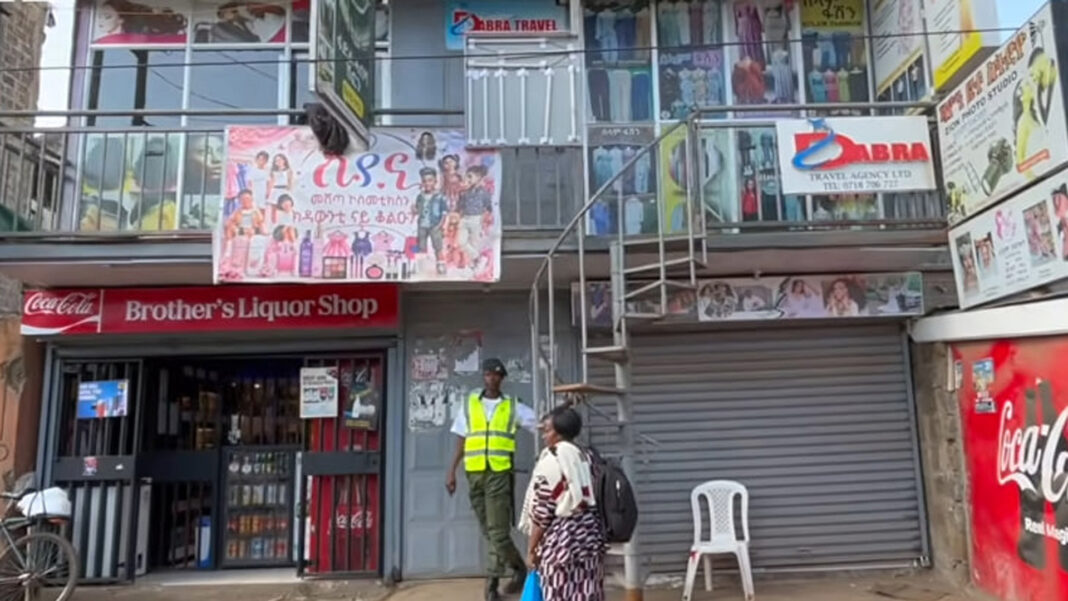
Over several decades, commercial corridors have organically expanded across Nairobi neighborhoods, including Jamhuri, Eastleigh, Yaya Centre, and Kiamaiko. Driven by the grit and entrepreneurial drive of displaced persons from across the Horn of Africa, these commercial clusters teem with diverse enterprises: medical and dental clinics, beauty salons, dry cleaners, retail textile shops, wholesale grocery distributors, and cultural restaurants. These businesses not only serve refugee communities but also provide affordable consumer goods, specialized services, and employment opportunities to thousands of Kenyan citizens.
However, despite their deep integration into local supply chains and their steady contributions to municipal and national revenues, these entrepreneurs find themselves trapped in an agonizing regulatory dilemma, where their fundamental struggle for economic survival collides with rigid commercial and immigration laws.
Presidential directive and market turmoil
The delicate equilibrium governing urban refugee commerce was abruptly shattered on September 2, 2026, when President William Ruto delivered a high-profile directive aimed at the informal economy. Addressing a large delegation of construction, micro, small, and medium enterprise (MSME) traders at State House in Nairobi, the president ordered all foreign nationals engaged in small-scale retail and street-level vending to cease operations immediately by September 7.
“We did not improve investor confidence so that street vendors could come to Kenya,” President Ruto declared firmly. “The investor confidence we have built is meant for substantial international investors to come to Kenya, not street vendors, hawkers, and micro-traders.”
The head of state argued that micro-capital and retail enterprises must be protected as an exclusive economic preserve for Kenyan citizens. Foreign nationals residing in the country, he asserted, should restrict their commercial activities to large-scale, capital-intensive investments that expand national manufacturing capacity and generate formal wage employment, rather than competing directly with local proprietors in neighborhood markets.
The speech sent shockwaves through Kenya’s vast informal and semi-formal economic sectors, where thousands of displaced families have spent decades building enterprises from scratch. Official records show that by mid-2026, approximately 14 percent of Kenya’s 857,000 registered refugees resided in urban areas. For these urban dwellers, self-employment is rarely an ambitious corporate choice; it is often the sole viable mechanism to pay rent, afford healthcare, and feed their children in an environment where formal humanitarian stipends are nonexistent.
Muluken noted that the political rhetoric suffered severe distortion as it trickled down to the public: “The president’s speech was widely misunderstood on the streets. The official policy intent was to ensure that foreign-owned businesses meet statutory investment guidelines. However, when the message reached the public, many interpreted it as an open directive for all foreign-owned small businesses to shut down immediately and for the operators to leave the country.”
The fallout from this misinterpretation was immediate and destabilizing. Neighborhoods that had coexisted peacefully for decades experienced sudden surges of hostility, intimidation, and attempted looting. While nationals from East African Community (EAC) member states, such as Rwanda and Burundi, faced varying levels of scrutiny, non-EAC nationals—most notably Ethiopians and Eritreans—found themselves acutely vulnerable to xenophobic backlash and street-level harassment.
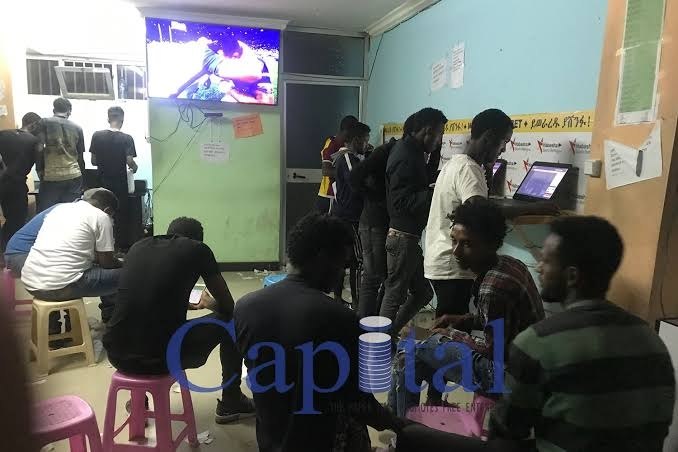
In Jamhuri, home to hundreds of Ethiopian- and Eritrean-owned shops and cafes, community leaders mobilized rapidly. Muluken explained that elders and business representatives established round-the-clock coordination with local police commanders, administrative chiefs, and neighborhood youth leaders to protect commercial centers and prevent violent looting.
Even so, administrative and police pressure escalated quickly. Before formal operational guidelines could be issued, joint night patrols involving local police and administrative officers conducted sweeps through residential areas under the pretext of document verification. Approximately 28 Ethiopian and Eritrean nationals were detained and taken to the Jamhuri police station. While community negotiations and legal interventions secured the release of several individuals, 12 remained in detention to face formal immigration proceedings.
“For an entire day, our thriving commercial centers turned into ghost towns,” recalled a local shopkeeper who spoke on the condition of anonymity. “Roll-up metal shutters remained padlocked, grocery shelves stayed dark, and families locked themselves inside their homes in fear.”
The 90-day grace period and licensing barriers
To prevent severe economic disruption and address mounting humanitarian concerns, the Kenyan government announced a temporary suspension of mass closures, instituting a 90-day regularization window. State House Spokesperson Hussein Mohamed clarified that the transition period is designed to allow foreign traders to regularize their immigration status, secure necessary work permits, and register their enterprises in full compliance with national laws.
“Anyone doing business in Kenya is expected to comply with the applicable refugee, work permit, registration, and licensing requirements. Over the next 90 days, the government will conduct an orderly regularization process to facilitate compliance,” Mohamed announced, warning that strict enforcement measures will resume without exception once the deadline passes.
Despite this administrative reprieve, refugee advocates emphasize that achieving formal compliance within 90 days is practically impossible for the vast majority of urban refugees. A comprehensive 2026 study on refugee economic inclusion in Kenya documented a bureaucratic maze characterized by opaque, complex, and extraordinarily expensive application procedures. A major institutional barrier is the legal requirement that applicants hold a formal corporate job offer before a Class M work permit can be issued. This creates an impossible Catch-22 for self-employed entrepreneurs, who cannot sponsor their own micro-enterprises under current investment statutes.
Financial costs present an equally insurmountable hurdle. While statutory application fees appear modest on paper, the cumulative financial burden—including legal documentation, translation, travel, and administrative overhead—places formal permits out of reach. “Whether the government grants a grace period of 90 days or 90 years, the real-world cost of acquiring these permits is financially prohibitive,” explained an Ethiopian restaurant owner in Nairobi. “Securing a formal business permit can require upwards of 500,000 Kenyan shillings. How can a modest vegetable vendor or small cafe owner afford such sums?”
The formalization dilemma and long-term uncertainty
The fundamental injustice felt by urban refugees stems from the fact that they do not operate in the dark. The vast majority of refugee-run medical clinics, retail stores, barbershops, and bakeries hold Single Business Permits issued by Nairobi City County. They pay annual commercial licensing fees, daily municipal market cess, and personal income taxes assessed directly by the Kenya Revenue Authority (KRA).
This dynamic creates a profound institutional contradiction: while the state’s fiscal machinery officially registers, assesses, and collects revenue from refugee entrepreneurs under domestic taxpayer categories, the immigration and trade licensing systems simultaneously classify them as unauthorized operators lacking the legal right to work.
Facing the looming expiration of the 90-day grace period and terrified of losing their life savings, some refugee business owners have begun exploring proxy ownership arrangements. Under this informal practice, refugees register their businesses, commercial bank accounts, and trading licenses under the names of trusted Kenyan friends or business partners to shield their capital from confiscation.
Community leaders warn that while proxy registrations offer temporary protection against administrative crackdowns, they ultimately drive refugee entrepreneurs deeper into legal vulnerability, exposing them to financial exploitation, property disputes, and total loss of recourse.
Urban refugees are not asking for special privileges; they are pleading for institutional coherence. Recognizing urban refugees as legitimate economic contributors by creating accessible, affordable micro-enterprise permits would allow the Kenyan government to expand its formal tax base, eliminate illicit extortion networks, and uphold its international humanitarian commitments. Until national policy reconciles the gap between tax collection and commercial legalization, thousands of hardworking entrepreneurs will remain trapped in economic limbo—welcomed as taxpayers, but rejected as workers.