Ethiopia has been omitted from the World Economic Forum’s (WEF) 2026 Travel & Tourism Development Index, a report that highlights mixed progress for African nations even as the global tourism sector achieves unprecedented levels of growth.
The latest WEF index evaluates 110 economies based on factors crucial for sustainable and resilient tourism development. These include infrastructure, connectivity, tourism services, ICT readiness, natural and cultural resources, and the broader policy environment. Notably, Ethiopia is not among the economies assessed in the 2026 edition.
This exclusion means the index provides no 2026 score or ranking for Ethiopia, making direct comparisons with other African economies featured in the report impossible.
While Ethiopia was excluded from this global assessment, Sub-Saharan Africa demonstrated more modest improvements compared to several other regions. The WEF report indicates that the region’s tourism development conditions advanced, particularly in areas such as ICT readiness, tourism prioritization, and cultural resources. However, challenges persist concerning tourism demand and the sector’s socioeconomic impact.
Among the African economies included in the index, Mauritius, South Africa, and Egypt ranked highest, with Morocco, Tanzania, and Kenya also showing strong performance. This reflects a broader recovery and expansion of tourism across Africa, though the pace of improvement varies significantly between countries.
Globally, the WEF reports that 92% of the 110 assessed economies improved their scores between 2024 and 2026, with the average score increasing by approximately 2%.
Japan secured the top position in the 2026 index, followed by the United States and Spain. Australia, France, Germany, the United Kingdom, China, Switzerland, and Italy completed the top 10. Japan’s ascent to the leading position is attributed to strong growth in international tourism, including a record 42.7 million international visitors in 2025.
The WEF noted that international tourist arrivals reached a record 1.5 billion in 2025. Concurrently, the global travel and tourism sector contributed an estimated $11.6 trillion to global GDP and supported 366 million jobs.
The report also identified Asia-Pacific as the fastest-improving region, with its average index score rising by 3.6%. Seven of the 10 most-improved economies were from this region, including Laos, Malaysia, and Thailand. Albania recorded the most significant overall improvement, with its score increasing by 7% from 2024.
Fourteen of the index’s 17 pillars also showed improvement between 2024 and 2026, with cultural resources experiencing the strongest growth, followed by tourism infrastructure and air connectivity.
Despite its absence from the WEF’s 2026 index, Ethiopia is increasingly integrating digital technology and artificial intelligence into its tourism development strategy.
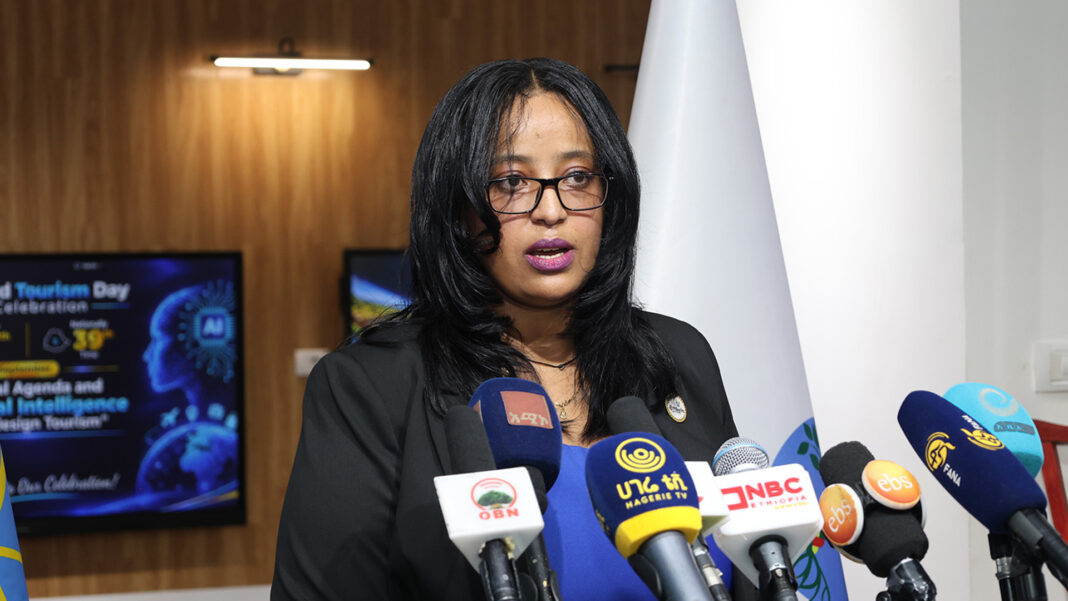
Tourism Minister Selamawit Kassa, speaking ahead of World Tourism Day, emphasized Ethiopia’s use of artificial intelligence to promote its tourism assets, attract visitors, and enhance tourism services.
She highlighted that the newly launched Tourist Information Center provides visitors with information via a digital platform, while the Visit Ethiopia website has been upgraded with AI capabilities to offer more organized information and services.
According to the minister, Ethiopia welcomed over 1.6 million foreign visitors during the concluded 2018 Ethiopian fiscal year, an increase of more than 300,000 visitors compared to the previous year. She also reported a 21% increase in foreign-exchange earnings from tourism.
The government is also focused on expanding conference tourism. Selamawit noted that the number of international events held in Addis Ababa has risen from approximately 40 annually to 220.
Her remarks align with the global tourism industry’s growing adoption of digital technologies for destination promotion, visitor information, and service delivery.
The theme for World Tourism Day 2026, observed on September 27, is “Digital Agenda and Artificial Intelligence to Redesign Tourism,” placing technology and AI at the forefront of discussions about the sector’s future.