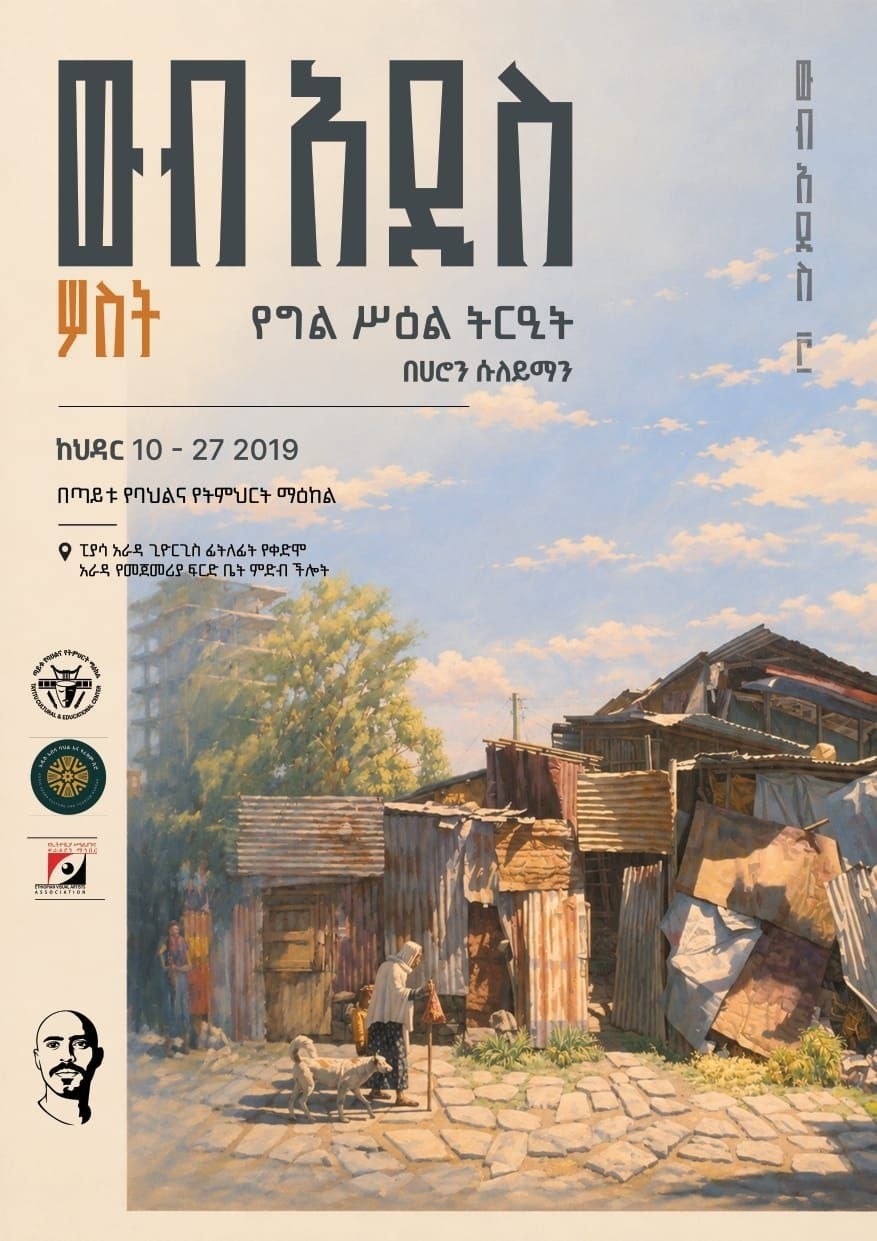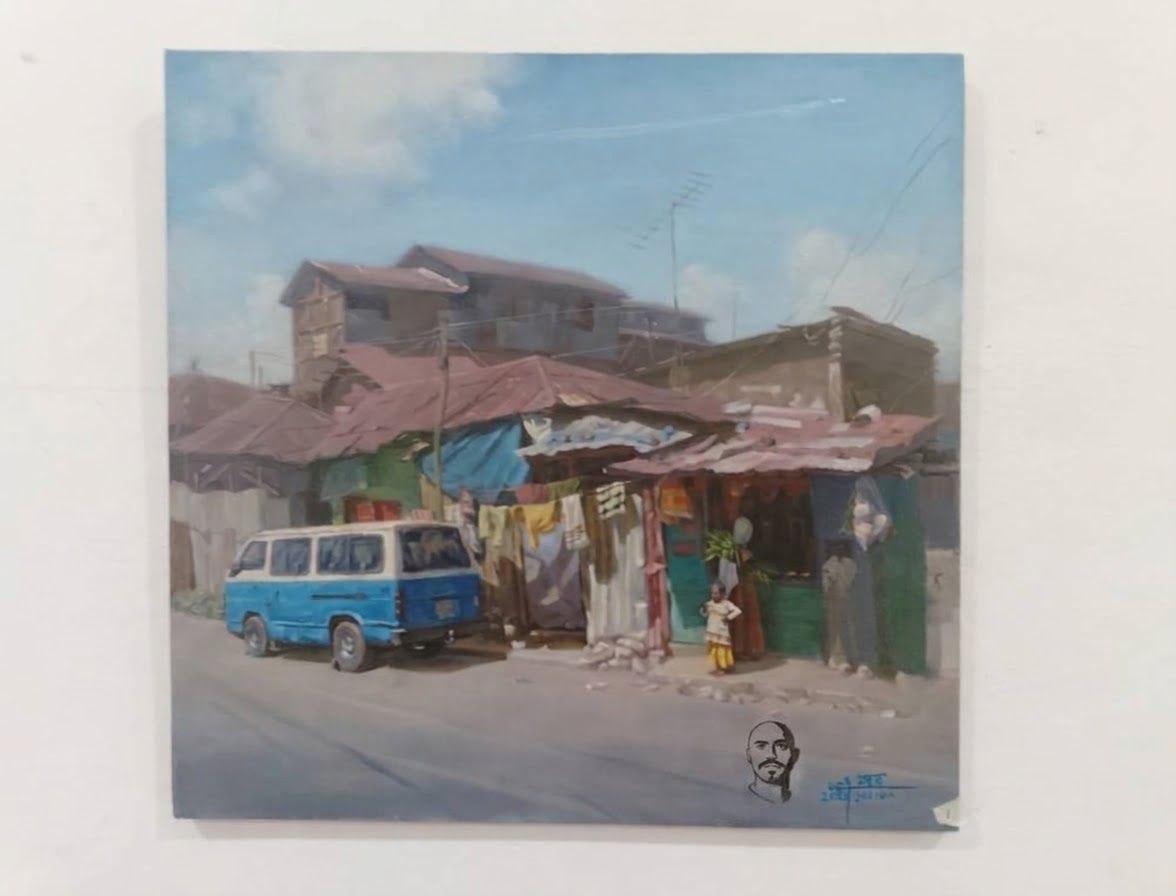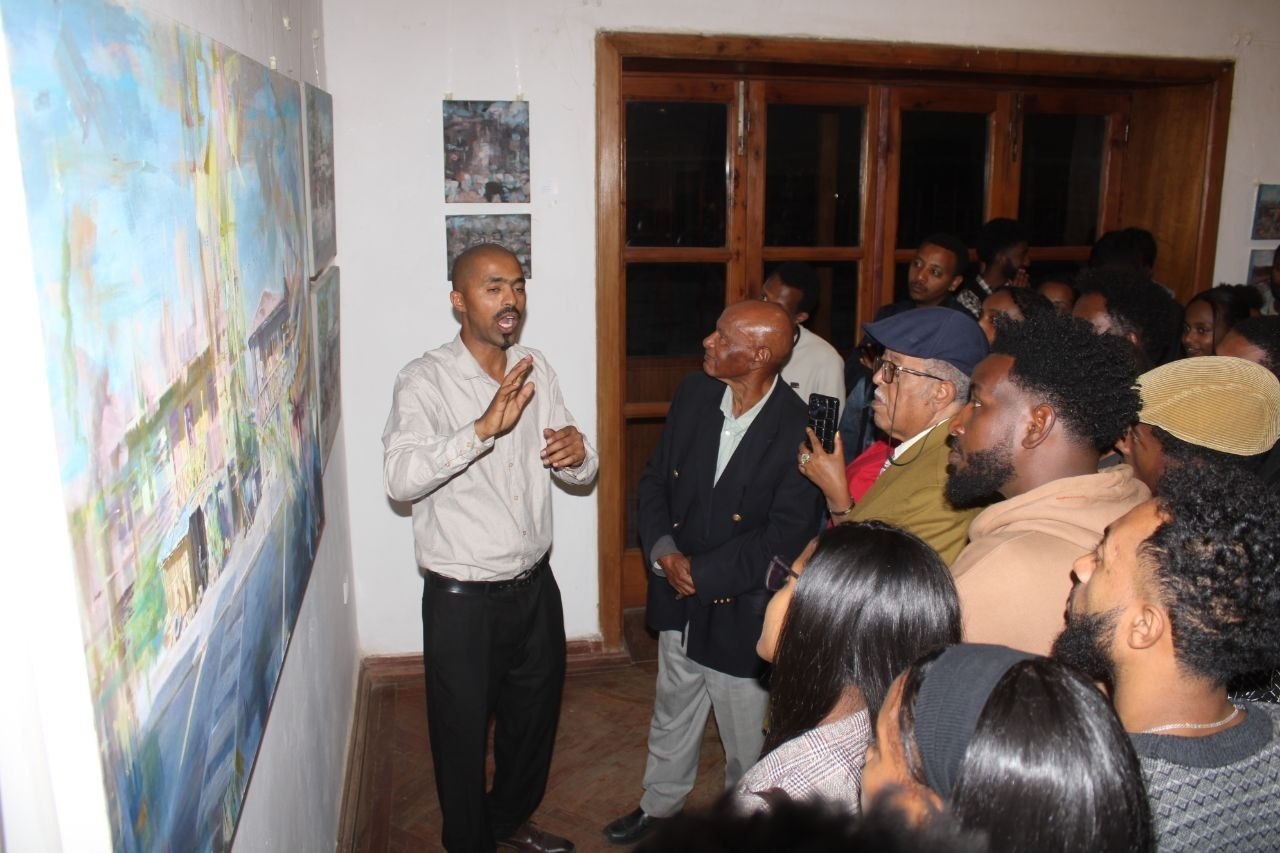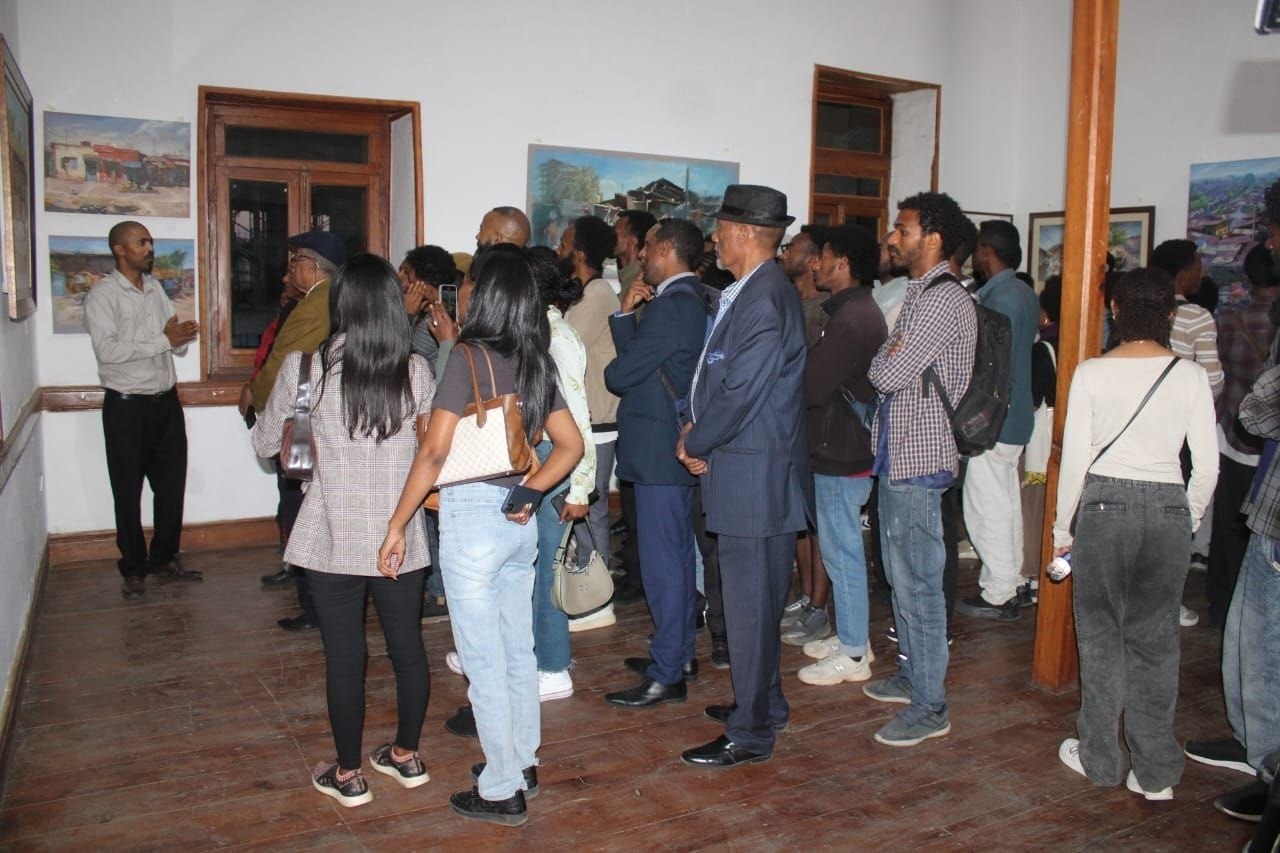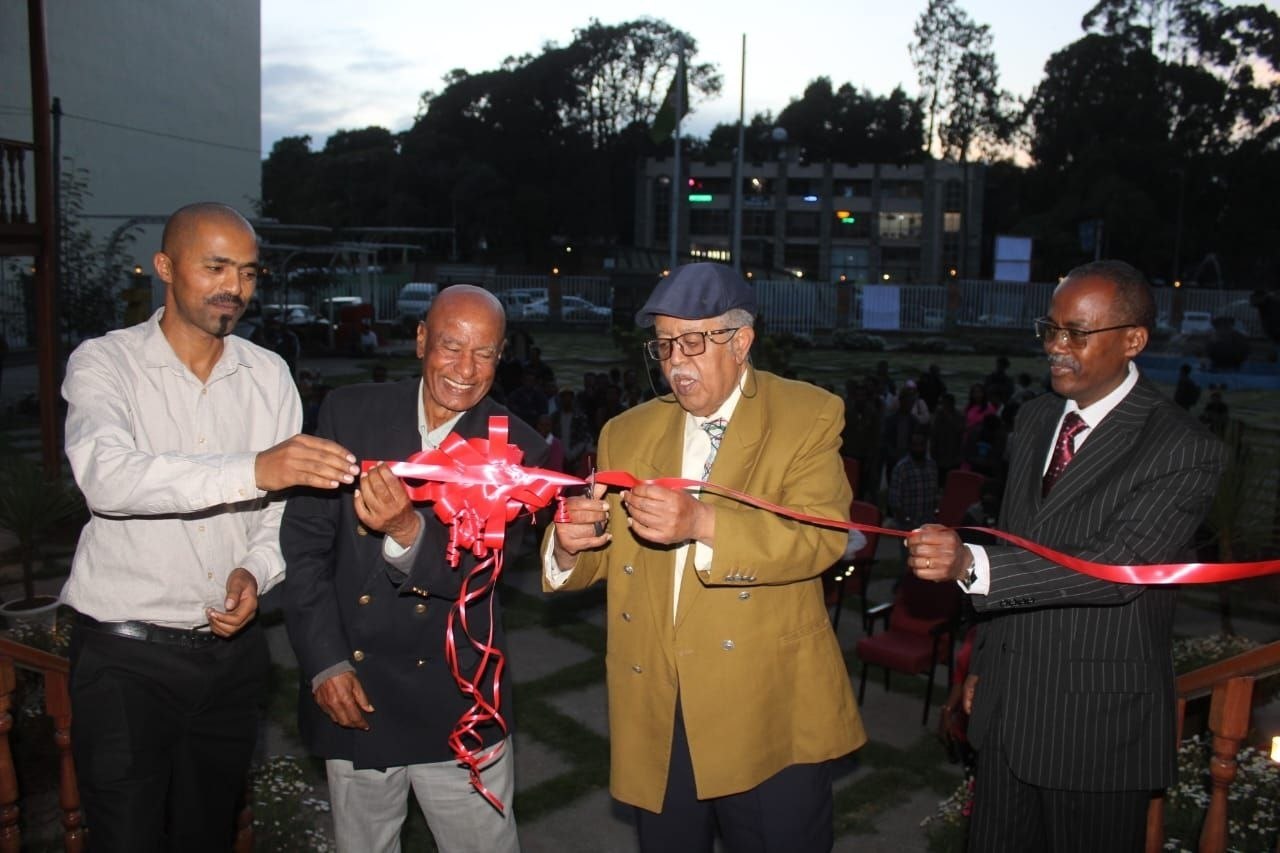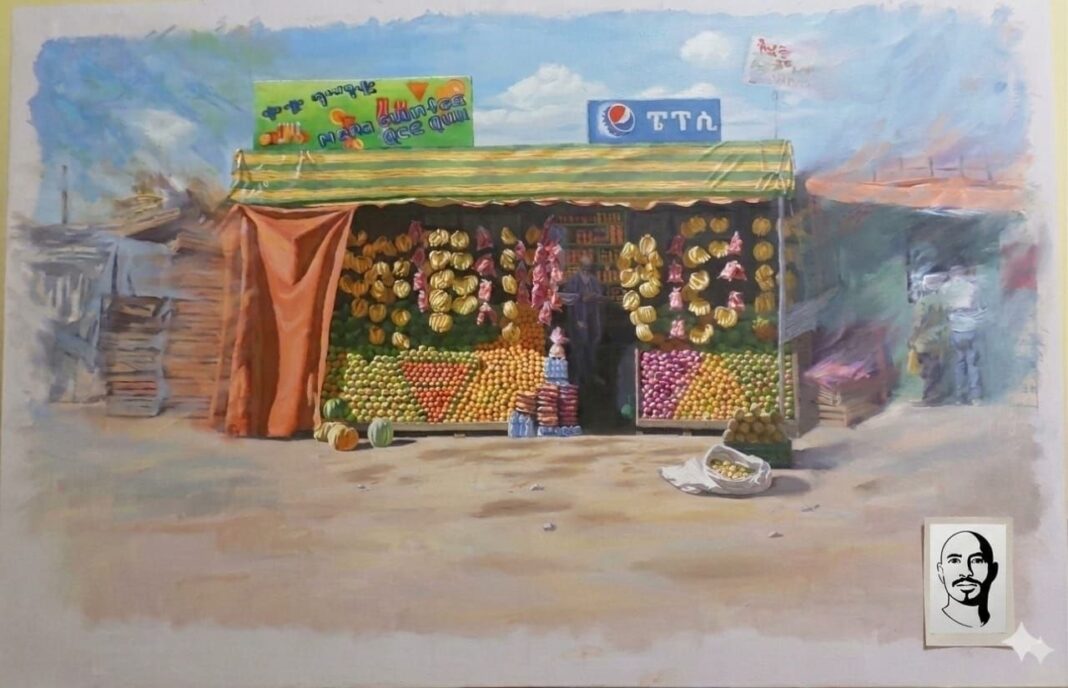
Ethiopian artist Haron Suleiman is using his latest exhibition, “Wub Addis III,” to preserve the memories, heritage and cultural identity of Addis Ababa’s historic neighbourhoods, transforming traditional houses, familiar streets and everyday commercial spaces into works of art.
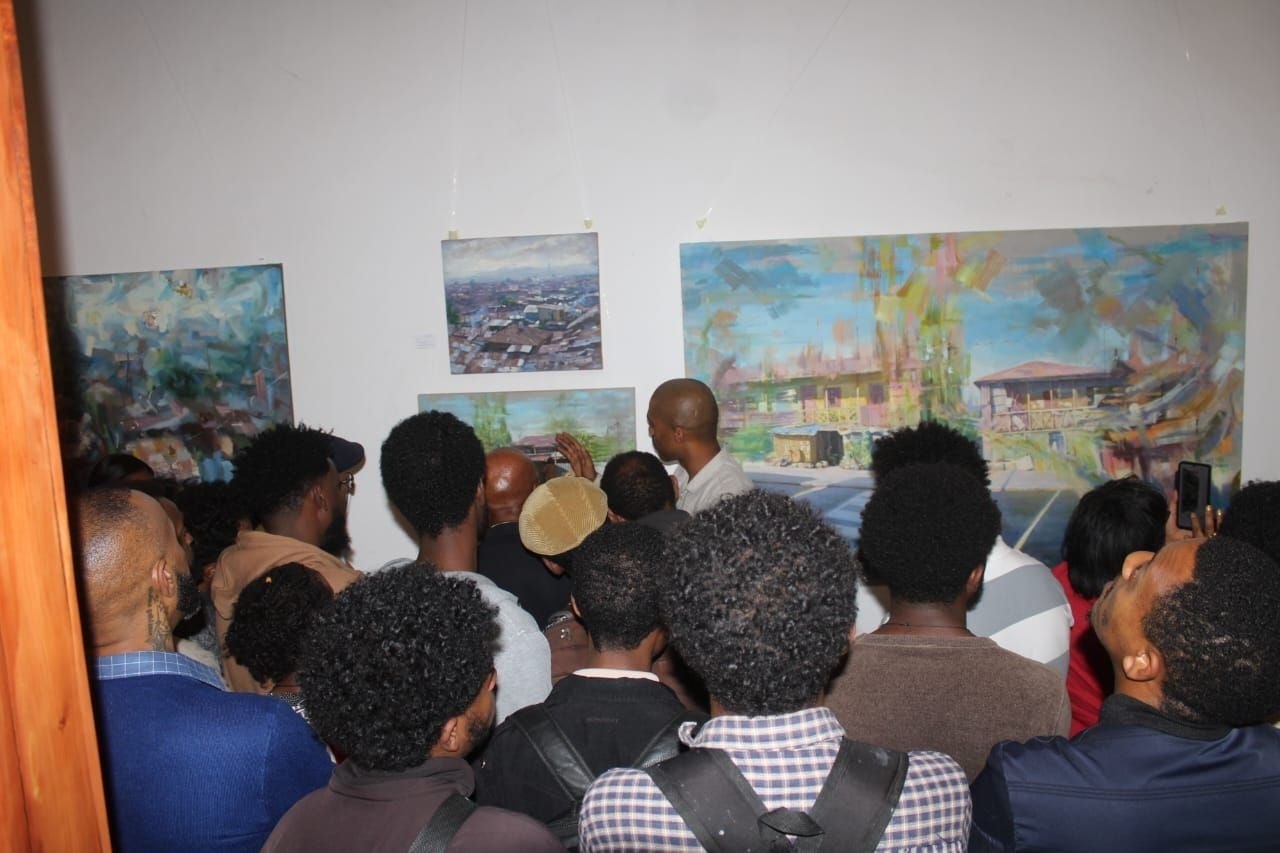
The third and final instalment of his solo exhibition series features 49 paintings documenting the capital’s evolving urban landscape and highlighting the historical and emotional significance of places that have shaped generations of residents.
The exhibition opened in November at the Taitu Cultural and Educational Center, showcasing 39 oil and acrylic paintings alongside 10 watercolour works.
Born and raised in Addis Ababa, Suleiman said his strong attachment to the city’s older neighbourhoods, traditional houses, small businesses and familiar streets has been a major influence on his artistic career.
Through his paintings, he seeks to demonstrate that the beauty of Addis Ababa is not confined to modern buildings and newly developed areas, but is equally reflected in its historic neighbourhoods, traditional architecture and the memories associated with them.
The exhibition is the culmination of a three-part artistic project titled “Wub Addis,” meaning “Beautiful Addis,” through which Suleiman has explored different dimensions of the capital’s urban life and cultural landscape.
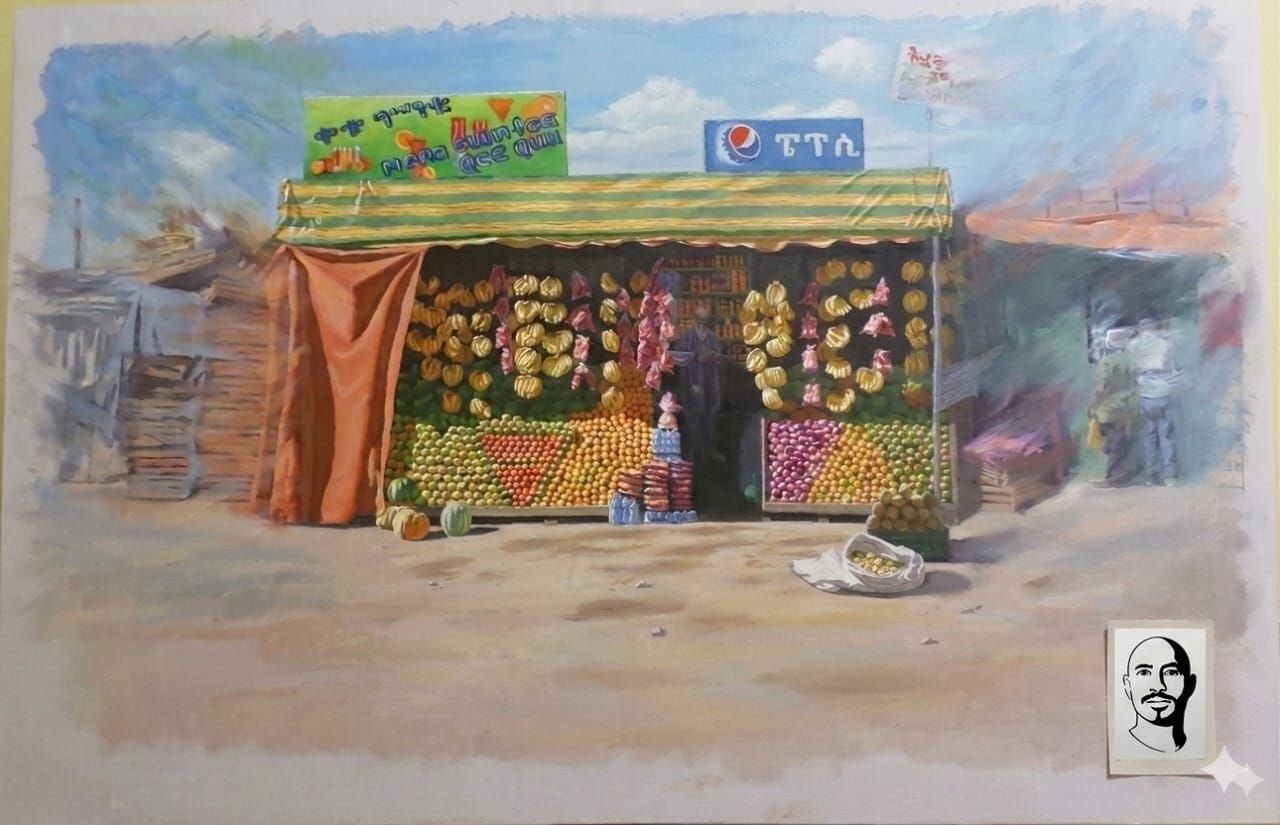
The first instalment, “Wub Addis I: Midday at the Market,” focused on informal marketplaces, locally known as gulits, capturing the daily activities of small-scale traders operating under the midday sun.
The second exhibition, “Wub Addis II: Doorstep,” shifted its focus to neighbourhood shops and small businesses, portraying shopfronts, fruit displays and merchandise as important features of the city’s everyday visual culture.
The final edition turns its attention to older residential neighbourhoods and traditional houses, particularly locations connected to the artist’s childhood. Some of the places depicted in the paintings have already disappeared or undergone significant changes as the city continues to expand and modernise.
Suleiman said documenting these places through painting was an effort to preserve their stories and memories for future generations. He believes that even ordinary structures, including ageing houses, traditional shops and familiar neighbourhood corners, carry historical and emotional value that should not be overlooked.
Producing the collection required extensive research, visits to different locations and preliminary artistic studies. According to the artist, researching and preparing a painting can take approximately one month, while completing a large, realistic work may require three to four months. Smaller paintings generally take between two and three weeks.
He also said financing the project independently over nearly 14 years had presented considerable challenges, with expenses covering transportation, research, studio rent and painting materials.
Beyond documenting Addis Ababa’s physical transformation, the exhibition also raises questions about the future of artistic practice amid the growing influence of artificial intelligence (AI).
Suleiman acknowledged that AI tools can provide useful support to artists, but cautioned against excessive dependence on the technology, particularly among young artists. He warned that overreliance on AI could undermine essential practical skills, including observation, drawing, colour study and the development of an independent artistic style.
He argued that human experience, emotion, empathy and originality remain central to meaningful artistic expression, emphasising that an artist’s understanding of society gives a painting significance beyond its visual appearance.
The exhibition has attracted considerable public interest, with Suleiman estimating that between 300 and 400 visitors attended daily shortly after its opening.
He also acknowledged the support of Addis Ababa’s culture, arts and tourism authorities in organising the second and third editions of the exhibition.
“Wub Addis III” is scheduled to remain open until December 6, 2026, at the Taitu Cultural and Educational Center.
Through the three-part project, Suleiman captures familiar urban scenes as a lasting visual record of Addis Ababa’s heritage, reminding residents that the city’s identity is shaped not only by its development and modernisation, but also by the neighbourhoods, buildings and everyday experiences that connect generations.