Prime Minister Abiy Ahmed has invited Sudan’s military, political, and civilian stakeholders to participate in an inclusive national dialogue hosted and facilitated by Ethiopia, as the conflict in the neighboring nation continues to deepen its humanitarian and political crisis.
In an official statement issued on Tuesday, November 24, Prime Minister Abiy urged all Sudanese factions to engage in a comprehensive political process aimed at ending hostilities, securing a lasting ceasefire, and establishing an inclusive transitional government.
The proposal comes as Sudan approaches the fourth year of a devastating conflict that erupted on April 15, 2023, between the Sudanese Armed Forces (SAF) and the paramilitary Rapid Support Forces (RSF).
Expressing deep concern over the situation, Abiy emphasized that the deep-rooted historical, cultural, and social ties between the two nations render the crisis a matter of profound domestic interest to the Ethiopian people. He described the suffering of Sudanese civilians as more than a regional security challenge—calling it a matter that touches the collective conscience of Ethiopians and demands a response rooted in solidarity and responsibility.
”What Sudan is witnessing in terms of war, destruction, and human suffering cannot be regarded by us merely as a political or security development in a neighboring country,” Abiy said.
The Prime Minister underscored that Ethiopia’s stance is guided by an unwavering commitment to Sudan’s peace, security, unity, and stability, alongside the fundamental right of the Sudanese people to chart their own political destiny. While noting that the conflict’s fallout extends far beyond Sudan’s borders to destabilize the wider region, he stressed that Addis Ababa’s primary focus remains the protection of civilian rights to dignity and safety.
The proposed Ethiopian initiative aims to provide a neutral platform for Sudanese stakeholders to negotiate free from external pressure, working toward a political settlement that reflects the interests of the country’s diverse population. Grounded in mutual respect and constructive engagement, the talks would focus on halting the bloodshed, bridging political divides, and cementing a permanent ceasefire.
Furthermore, the initiative seeks to foster broad-based political agreements leading to a transitional government capable of restoring state institutions, safeguarding national sovereignty, and laying the groundwork for sustainable peace.
Abiy emphasized that the ultimate objective is not the triumph of one faction over another, but the preservation of Sudan as a cohesive, functioning state.
”The goal is not the victory of one party over another, but the victory of Sudan, the restoration of the state, the cessation of bloodshed, and the opening of a path toward a future that embraces all its citizens,” he stated.
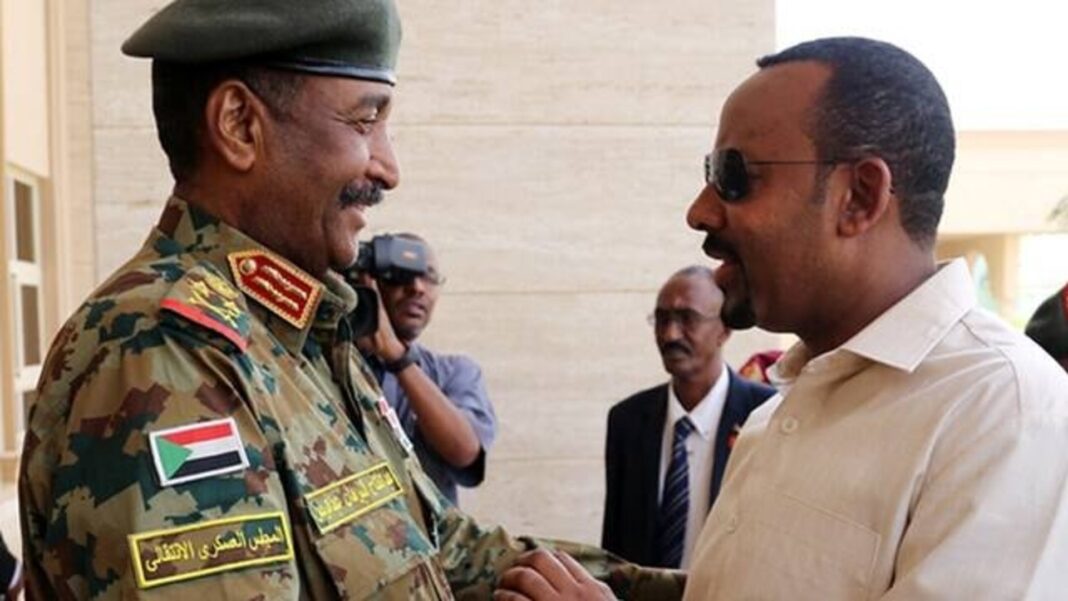
This proposal builds upon Ethiopia’s historic diplomatic engagement in Sudanese affairs, including its active mediation during the political transition that followed the December 2018 revolution. In 2019, Ethiopia played a pivotal role in bridging gaps between Sudan’s civilian opposition and military leadership, paving the way for a transitional accord backed by international partners.
Since the outbreak of hostilities in April 2023, Addis Ababa has consistently maintained that a peaceful, stable Sudan is vital for the security of the entire Horn of Africa.
To ensure the success of this new initiative, Abiy called upon regional bodies, international institutions, and development partners to ramp up humanitarian assistance and back genuine peace efforts. He urged the international community to coordinate responses and prioritize civilian needs over narrow political interests that risk prolonging the war.
Reiterating that any lasting solution must remain strictly Sudanese-led, Abiy affirmed Ethiopia’s readiness to facilitate rather than impose an external framework.