
Saturday, November 21, 2026
Home Blog Page 1070

Hibret Insurance reports strong performance despite industry challenges

0

Hibret Insurance, celebrating three decades in the insurance industry, has announced impressive results for the last fiscal year, overcoming significant challenges including unethical business practices and regulatory pressures. The company reported a total premium revenue of approximately 1.96 billion birr for the fiscal year ending June 30, 2024, a substantial increase from 507 million birr in the previous year.

During the 30th regular general meeting of shareholders held on November 8, 2024, Wondwossen Teshome, Chairman of the Board of Directors, acknowledged the hurdles faced by the industry but emphasized that the year was ultimately a success for Hibret Insurance. He highlighted that while fixed vehicle premium rates set by the National Bank of Ethiopia and African Re posed challenges, escalating competition and unethical practices within the industry also contributed to difficulties.

The meeting addressed concerns regarding rising operational costs and declining prices in spare parts and medical services, which have further strained the insurance landscape. Despite these challenges, Hibret Insurance’s motor class of business continued to dominate its portfolio, accounting for 63.08% of total premiums as of June 30, 2024.

The report indicated that non-life insurance generated approximately 1.7 billion birr of the total premium revenue, with fire and general accident classes following at a distant second with a share of 10.27%. Other classes such as liability, engineering, aviation, accident & health, and marine contributed lesser amounts to the overall portfolio.

In terms of financial growth, Hibret Insurance’s paid-up capital reached one billion birr, reflecting an increase of 221 million birr from the previous year. The company also reported a profit per share rise to 47.99%, despite an overall growth rate in the insurance sector averaging 23.72%.

Additionally, Hibret Insurance paid out compensation amounting to 693 million birr during the current fiscal year, marking a significant increase of 49.57% compared to the prior year. Established in November 1994 by 87 Ethiopian founders with an initial capital of 25 million birr, Hibret Insurance has evolved significantly since merging with Lion Insurance Company SC in 2002.
Pre-fab manufacturing plant set to revolutionize Ethiopia’s construction industry

0

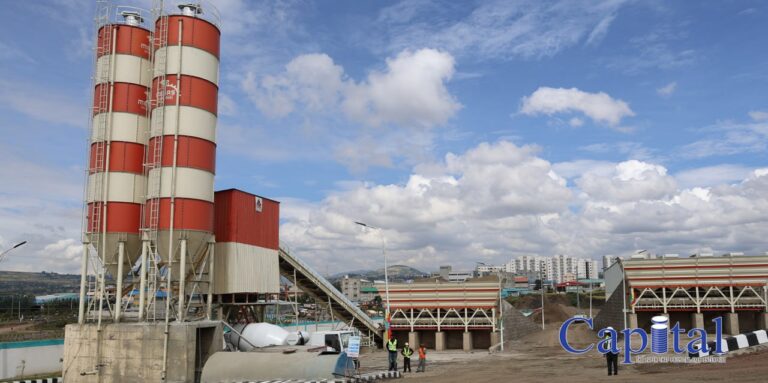
A new manufacturing plant dedicated to producing pre-fabricated building materials is set to transform Ethiopia’s construction sector. The Federal Housing Corporation (FHC) has announced that the facility, which aims to address ongoing challenges in the industry, has officially commenced production after an investment of 1 billion birr.

The newly inaugurated plant is part of a broader initiative to enhance housing development and provide reliable, high-quality materials to the construction sector while stabilizing input prices. The factory features Turkish-made machinery, installed by Turkish professionals, with Ethiopian experts receiving training to operate the equipment effectively.

Rashad Kemal, CEO of the Federal Housing Corporation, highlighted the factory’s capabilities during its inauguration. “This production center includes two units for reinforcement compounds, each with a capacity of 100 cubic meters per hour,” he stated. The facility is expected to produce approximately 202,752 cubic meters of reinforcing compound annually, generating projected sales exceeding 2.29 billion birr.

The plant’s footprint has expanded from 4 hectares to 14 hectares, consolidating various workshops for wood, metal, glass, aluminum, and elevators into one centralized location. Preparations are also underway for the installation of a pre-fabricated manufacturing unit within the same center. This addition is anticipated to be a significant turning point for Ethiopia’s construction industry, enabling the construction of tall and uniform buildings with improved quality.

Ethiopian Securities Exchange set to launch by end of November

0

The Ethiopian Securities Exchange (ESX), a significant milestone in the country’s financial landscape, is slated for official launch at the end of November 2024. This development marks a historic step as part of Ethiopia’s national economic reform efforts aimed at enhancing public-private sector collaboration.

Established in October 2023, the ESX operates under the provisions of the Capital Market Proclamation No. 1248/2021, which facilitates cooperation between joint stock companies and the private sector. The initiative has garnered substantial interest, with a successful capital raising effort that exceeded expectations.

Tilahun Esmael Kassahun, CEO of the Ethiopian Securities Exchange, announced during a recent press conference that the market plans to raise 631 million birr but has already secured over 1.5 billion birr—240% more than initially anticipated. “We have seen participation from 48 domestic and foreign investors across various sectors,” Tilahun stated, highlighting key investors such as FSD Africa, the Trade and Development Bank Group (TDB), and the Nigerian Exchange Group (NGX).

The ESX aims to create new investment opportunities, encourage entrepreneurship, and promote sustainable development across multiple sectors of the economy. The exchange will operate from the former state-owned television station building in Addis Ababa, where buyers and sellers will convene for transactions.

In addition to the ESX headquarters, the building will also house the Ethiopian Capital Market Authority and Ethiopian Investment Holdings, further consolidating key financial institutions in one location.

Africa faces urgent climate finance needs ahead of COP29

0

As the world prepares for the upcoming COP29 climate conference, a new report highlights the pressing need for increased climate finance in Africa. The study, conducted by the Oxford Smith School of Enterprise and the Environment, underscores that developing countries, particularly those in Africa, require substantial financial support to combat the impacts of climate change and achieve sustainable development goals.

The report reveals that a justifiable target for climate finance could range from $0.3 trillion to $9.5 trillion annually, with a median estimate of $1.7 trillion. This funding is crucial for addressing the unique challenges faced by African nations, which are among the most vulnerable to climate-related disasters despite contributing minimally to global emissions.

Brian O’Callaghan, the author of the report, emphasizes that many African countries are grappling with extreme weather events, rising temperatures, and economic instability exacerbated by climate change. “The impacts of warming are disproportionately felt in Africa, where communities are heavily reliant on climate-sensitive sectors like agriculture,” he stated.

The report also highlights significant gaps in previous negotiations regarding climate finance commitments. Key variables such as the time value of money and mechanisms to recover missed financial targets have been largely overlooked. The absence of these considerations complicates efforts to secure adequate funding for climate initiatives.

In response to these challenges, the African Union and various stakeholders are advocating for a collective quantified goal (NCQG) for climate finance that reflects the urgent needs of developing countries. The NCQG aims to establish a framework for mobilizing financial resources effectively and equitably.

As COP29 approaches, there is a growing call for developed nations to fulfill their commitments made under international agreements, including the pledge of $100 billion per year in climate finance by 2020. With many African countries still awaiting support, the need for accountability and action has never been more critical.

The upcoming conference presents an opportunity for African leaders to push for a more robust and fair climate finance framework that prioritizes their unique circumstances and fosters resilience against future climate impacts. As negotiations unfold, stakeholders hope that this will lead to tangible commitments that can significantly enhance Africa’s capacity to address climate change and promote sustainable development across the continent.