Saturday, November 21, 2026
Home Blog Page 1085

IMF applauds global sovereign debt roundtable for progress in addressing financial challenges

0

The Global Sovereign Debt Roundtable (GSDR) forum has made strides in assisting nations dealing with financial difficulties, which the International Monetary Fund (IMF) applauds.

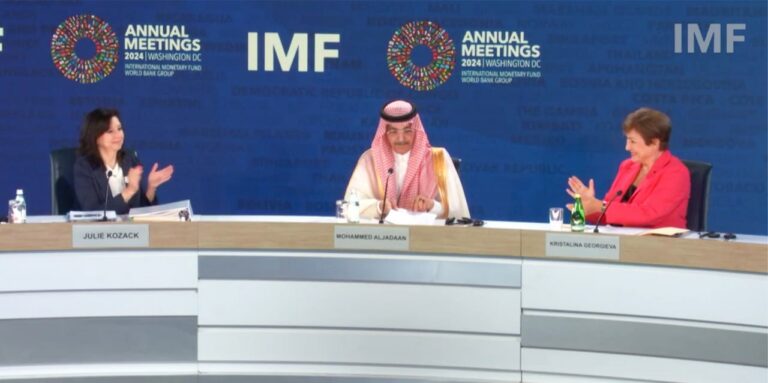
In her Global Policy Agenda for the year, IMF Managing Director Kristalina Georgieva stated that the Fund has made tackling debt vulnerabilities and assisting international efforts to achieve prompt and predictable debt resolution a top priority, and that these efforts are now paying off.

“As evidenced by the recent milestone achievements by Ghana and Ethiopia, the Common Framework is delivering faster and more predictable debt treatments, though further efforts are needed to support efficient resolution of debt crises,” she said.

According to the Managing Director, progress has been underpinned by enhanced cooperation among stakeholders at the GSDR, which has helped build consensus on technical issues, such as comparability of treatment and timelines for restructuring processes.

In April, the IMF Board endorsed important reforms to promote the Fund’s capacity to support countries undertaking a debt restructuring, including the establishment of a credible official creditor process “that has already expedited the IMF’s ability to respond.”

She said that the ongoing review of the Debt Sustainability Framework for LICs aims at ensuring assessments remain aligned with current and emerging debt vulnerabilities.

On her Global Policy Agenda, she stated that the global economy has proven resilient, and a soft landing is within reach, while inflation has moderated due to tight monetary policy and fading supply shocks, and growth is expected to remain steady.

“But uncertainty remains significant, with risks tilted to the downside; medium-term growth prospects are lackluster; public debt has reached record highs and is expected to approach 100 percent of GDP by 2030; and geoeconomic fragmentation threatens to undo decades of gains from cross-border economic integration,” she added.

Transformative changes—the green transition, demographic shifts, and digitalization, including artificial intelligence—are posited as poised to reshape the global economy, creating challenges but also opportunities.

During the IMF and the World Bank annual meeting that was held from October 21st to yesterday, the World Economic Outlook report was released with the title: ‘Policy Pivot, Rising Threats.’

It said that global growth is expected to remain stable yet underwhelming.

At 3.2 percent in 2024 and 2025, the growth projection is virtually unchanged from those in both the July 2024 World Economic Outlook Update and the April 2024 World Economic Outlook.

However, notable revisions have taken place beneath the surface, with upgrades to the forecast for the United States offsetting downgrades to those for other advanced economies—in particular, the largest European countries.

Likewise, in emerging market and developing economies, disruptions to production and shipping of commodities—especially oil—conflicts, civil unrest, and extreme weather events have led to downward revisions to the outlook for the Middle East and Central Asia and for sub-Saharan Africa.

The latest forecast for global growth five years from now—at 3.1 percent—remains mediocre compared with the pre-pandemic average.

Persistent structural headwinds—such as population aging and weak productivity—are holding back potential growth in many economies.

The report stated that global headline inflation is expected to fall from an annual average of 6.7 percent in 2023 to 5.8 percent in 2024 and 4.3 percent in 2025, with advanced economies returning to their inflation targets sooner than emerging market and developing economies.

According to the research, Ethiopia’s GDP is expected to expand by 6.1 percent in 2024 and 6.5 percent in the following year, a 0.1 percent decrease from the July projection.

Niger and Rwanda have risen to the top with 9.9 percent and 7.0 percent growth in the current year, respectively, while the sub-Saharan average is 3.6 and 4.2 percent for this year and 2025.
IMF to release first evaluation report on Ethiopia’s Macroeconomic Reform

0

Washington DC, USA

The first evaluation report on Ethiopia’s macroeconomic reform will be released in the next few days, the International Monetary Fund (IMF) reveals. It said that authorities need to keep dealing with any issues that come up in the foreign exchange markets.

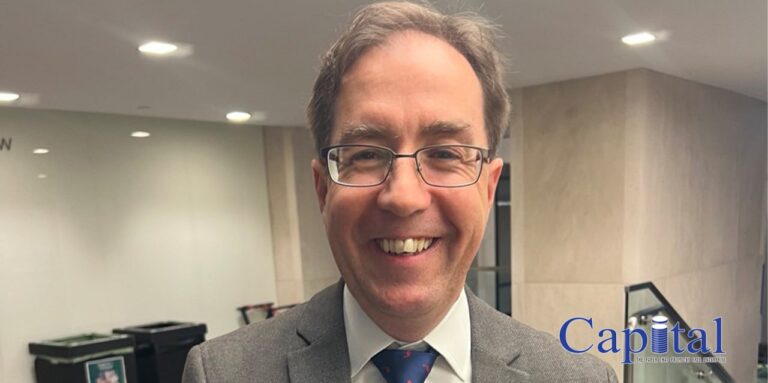
According to IMF Mission Chief for Ethiopia Alvaro Piris Chavarri, Ethiopia’s three-month-old reform initiative got off to a great start.

He told Capital, “I believe the program has gotten off to a great start, and the authorities have acted decisively in a well-prepared way.”

“Although there is obviously still more to be done, I believe the exchange rate reform has gone well. There are still many obstacles to overcome, but this is a great beginning,” he continued.

“We visit periodically in the context of our program; we have just completed the first review, so that report will be published in the next few days,” according to the mission chief, who just traveled to Ethiopia.

Piris claims that the IMF’s fundamental assessment is that things have gotten off to a great start and that the key takeaway is to maintain the momentum and steer the reform program in the right direction.

The next evaluation is scheduled to start shortly and is likely to be completed by the board by January.

He said the program’s following phase centers on reforming monetary policy and starting to expand on the revenue mobilization efforts that were taken initially.

“There is a lot of work to be done, but I think the agenda is well laid out already, so it’s a question of sticking to the course,” he says. “So these are two key areas in the program, but certainly they need to keep dealing with any issues that come up in the exchange rates, in the foreign exchange markets, and also the state-owned enterprises reforms in the program are also important.”

Piris stated that talks are still ongoing with regard to debt restructuring and negotiations with lenders, including private creditors.

“I don’t have any specific remarks on their progress. We are not involved directly in the discussions. Naturally, our contributions are limited to our macroeconomic and debt sustainability analyses. Thus, such conversations are still going on,” he told Capital.

IMF Managing Director Kristalina Georgieva met with Ethiopian Finance Minister Ahmed Shide and National Bank of Ethiopia Governor Mamo Esmelealem Mihretu at a side meeting of the IMF and World Bank Group annual conference that ended yesterday.

Mamo declined to provide specifics but told Capital that the conversation with the Managing Director and others about the ongoing macroeconomic change was productive.

From September 17 to 26, 2024, an IMF staff team headed by Alvaro Piris traveled to Addis Ababa to discuss reform progress and the policy goals of the authorities in relation to the first evaluation of Ethiopia’s economic program funded by the IMF’s Extended Credit Facility (ECF).

After the visit, the IMF Executive Board authorized the payment of USD 340.7 million to Ethiopia on October 18. This amounts to around 10% of the ECF’s USD 3.4 billion.

On July 29, the IMF Executive Board authorized a total of SDR 2.556 billion, or around USD 3.4 billion, to promote macroeconomic reform; of that sum, USD 1 billion was transferred right away.

Ethiopia is undergoing significant changes as a result of the macroeconomic reform, including the opening up of the foreign exchange market.

BRICS Summit welcomes new members amid calls for global cooperation

0

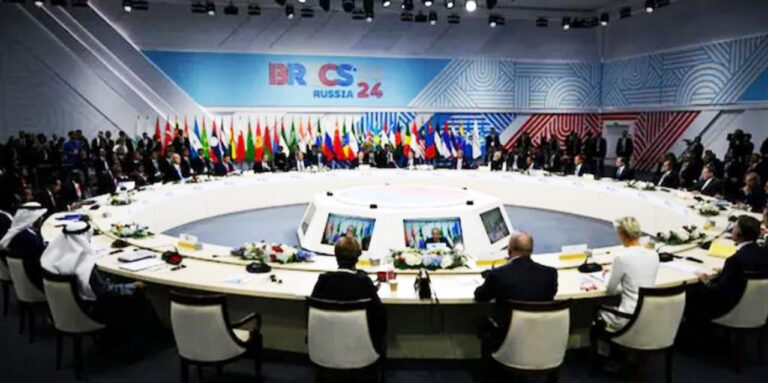
The XVI BRICS Summit, held from October 22 to 24 in Kazan, has marked a significant turning point in the bloc’s expansion, as leaders from Brazil, Russia, India, China, and South Africa welcomed new member states. This strategic move aims to bolster the group’s influence on the global stage and reinforce its commitment to multilateralism and equitable development.

During the summit, the BRICS leaders emphasized the importance of inclusivity and cooperation, noting that the admission of new members reflects a growing interest from countries in the Global South. The summit’s theme, “Strengthening Multilateralism for Just Global Development and Security,” resonated throughout discussions, highlighting the need for a more representative international order.

The expansion is expected to enhance BRICS’ capacity to address global challenges, including economic disparities and climate change. Leaders reiterated their commitment to fostering partnerships with emerging markets and developing countries (EMDCs), believing this will contribute to a more balanced multipolar world.

“By inviting new members, we are not only strengthening our strategic partnership but also paving the way for a more inclusive economic globalization,” stated a BRICS spokesperson. The expansion initiative is seen as a vital step toward ensuring that the voices of emerging economies are heard in global decision-making processes.

The Kazan Declaration, issued at the summit, commended the new member countries for their commitment to collaboration and mutual respect. It also reaffirmed the bloc’s dedication to reforming global governance structures to better reflect contemporary realities.

As the BRICS nations prepare for future challenges, the inclusion of new members is anticipated to enhance their collective bargaining power, particularly in sectors such as trade, finance, and sustainable development. The summit concluded with a commitment to ongoing dialogue and cooperation, reinforcing BRICS’ role as a leading platform for emerging economies in shaping a fairer global landscape.

The next steps will involve integrating new members into existing frameworks and ensuring their active participation in BRICS initiatives, setting the stage for a more united front in addressing pressing global issues.

Austrian companies show interest in investing in Ethiopia

0

Ethiopia is attracting attention from Austrian investors, with seven companies expressing interest in establishing a presence in the country. According to the Austrian Ambassador to Ethiopia, these businesses range from individual entrepreneurs to small and medium-sized enterprises, as well as larger corporations, all motivated by a desire for international cooperation and a commitment to Ethiopia’s growth.

The Ethiopian government has been actively liberalizing sectors previously closed to foreign investors, including banking, telecommunications, logistics, and retail. These reforms are significant steps toward creating a more open and inviting business environment for international partners.

Ambassador Simone Knapp emphasized the importance of familiarizing Austrian companies with Ethiopia’s business landscape. “We want Austrian companies to look at the business environment here,” she stated during the “Austrian-Ethiopian Business Forum,” which aimed to strengthen economic relations between the two countries. The ambassador noted that the diplomatic relationship between Austria and Ethiopia dates back over a century, with formal ties established in 1905.

Ambassador Knapp introduced several companies interested in investing in Ethiopia. Two of these firms operate in the health sector: one specializes in producing implantable hearing aids, while the other supplies medical laboratory and pharmaceutical products globally. Additionally, two companies focus on plastics; one is a supplier of high-quality plastic products, including pipes and piping systems, while the other is a leading producer of woven plastic packaging.

State Minister of Finance Semerita Sewasew highlighted the Ethiopian government’s commitment to fostering public-private partnerships. “We have established a framework that enables the private sector to participate in developing and delivering social and economic infrastructure services,” she said. Semerita emphasized the importance of listening to the private sector’s voice as Ethiopia navigates its various social and economic reforms.

The growing interest from Austrian companies reflects Ethiopia’s potential as an investment destination. As reforms continue and sectors open up to foreign investment, the collaboration between Austria and Ethiopia could pave the way for enhanced economic growth and development in both nations.
