The Sudanese Rapid Support Forces renewed its assault on the city of al-Obeid on Wednesday and stepped up drone and land attacks across the country this week following losses on several fronts, according to witnesses. The RSF has found itself on the back foot lately in its war with the Sudanese army, a conflict that began in April 2023, drawing in foreign powers and creating what the United Nations considers the world’s worst humanitarian crisis. But on Wednesday, witnesses in al-Obeid said the strategically important city in the Kordofan region was targeted by eight drones, triggering army air defenses. Two people were killed and others were injured, according to medical sources. … In a long RSF campaign for control of al-Obeid, the city has suffered drone attacks and siege tactics that had decimated its power, fuel, food, and water supplies, threatening a severe humanitarian crisis. The city is estimated to currently contain half a million inhabitants, including about 100,000 people previously displaced by the conflict. (Reuters)
Game theory

Game theory is a framework for analyzing strategic decision-making when the outcome depends on the actions of multiple participants.
Young Artists turn UNFPA’s mandate into ‘Painting Choices’ exhibition
Ten young artists from Addis Ababa University’s Alle School of Fine Arts have translated themes of health, rights and personal choice into original paintings at an exhibition opened in Addis Ababa on Wednesday.
Titled “Painting Choices,” the exhibition was organised by UNFPA Ethiopia in collaboration with Laphto Contemporary Art Gallery to mark International Youth Day 2026. The exhibition will remain open to the public through Aug. 19 at Laphto Contemporary Art Gallery, located on the first floor of Laphto Mall.
Opening the exhibition, Taiwo Oluyomi, Officer-in-Charge and Deputy Representative of UNFPA Ethiopia, said the initiative sought to give young artists the opportunity to interpret the organisation’s mandate through their own perspectives.
“Today is for you,” Oluyomi told the participating artists, thanking them for transforming issues linked to health, rights and choices into visual art.
He said the idea for the exhibition followed a visit earlier this year by UNFPA Executive Director Dr. Diene Keita to Hamlin Fistula Hospital in Addis Ababa. During the visit, Keita witnessed the experiences of women receiving care and observed how art had captured their resilience and dignity in ways that words could not fully convey.
“She left with a recommendation: that we do the same for UNFPA’s work—that we hand our mandate to artists and let them paint it,” Oluyomi said.
The participating artists were asked to explore UNFPA’s thematic areas, including sexual and reproductive health, gender-based violence, youth development, access to comprehensive services and the use of data for development. Their works, Oluyomi said, went beyond simply illustrating UNFPA’s programmes.
“These young artists did not simply illustrate our mandate. They interrogated it. They questioned it. They made it personal,” he said.
According to Oluyomi, the paintings represent individual perspectives and statements on development issues, rather than conventional communication materials.
“The paintings you will see today are not illustrations— they are perspectives. Statements. Conversations waiting to happen,” he said.
He added that art should be considered a central component of development communication, rather than merely a form of decoration.
“Data tells you what is happening—but art makes you feel why it matters,” Oluyomi said.
The opening ceremony included remarks from UNFPA Ethiopia leadership, a presentation by the jury and an award ceremony recognising the top three works.
The exhibition also highlights the role of young people in shaping public conversations around social and development issues. Marking International Youth Day, Oluyomi said the initiative demonstrated that young people were already contributing important stories and ideas, rather than simply representing the future.
“Young people are not just the future. They are telling the most important stories, right now,” he said.
The exhibition is open daily until Aug. 19 at Laphto Contemporary Art Gallery.
AGRA, Mastercard Foundation launch youth-focused agriculture programme
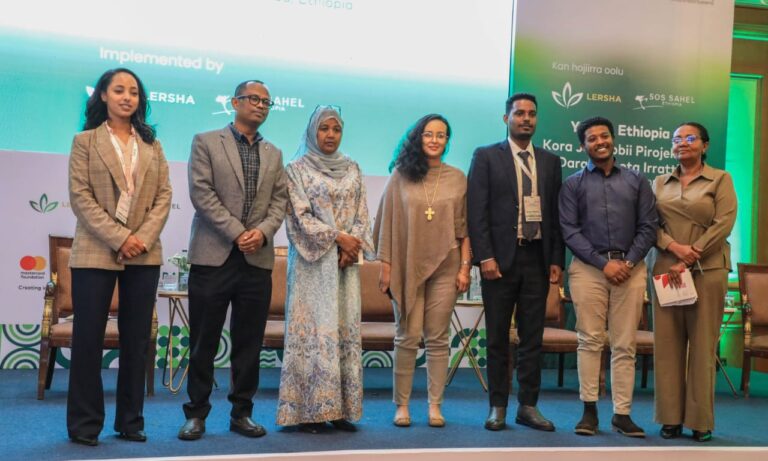
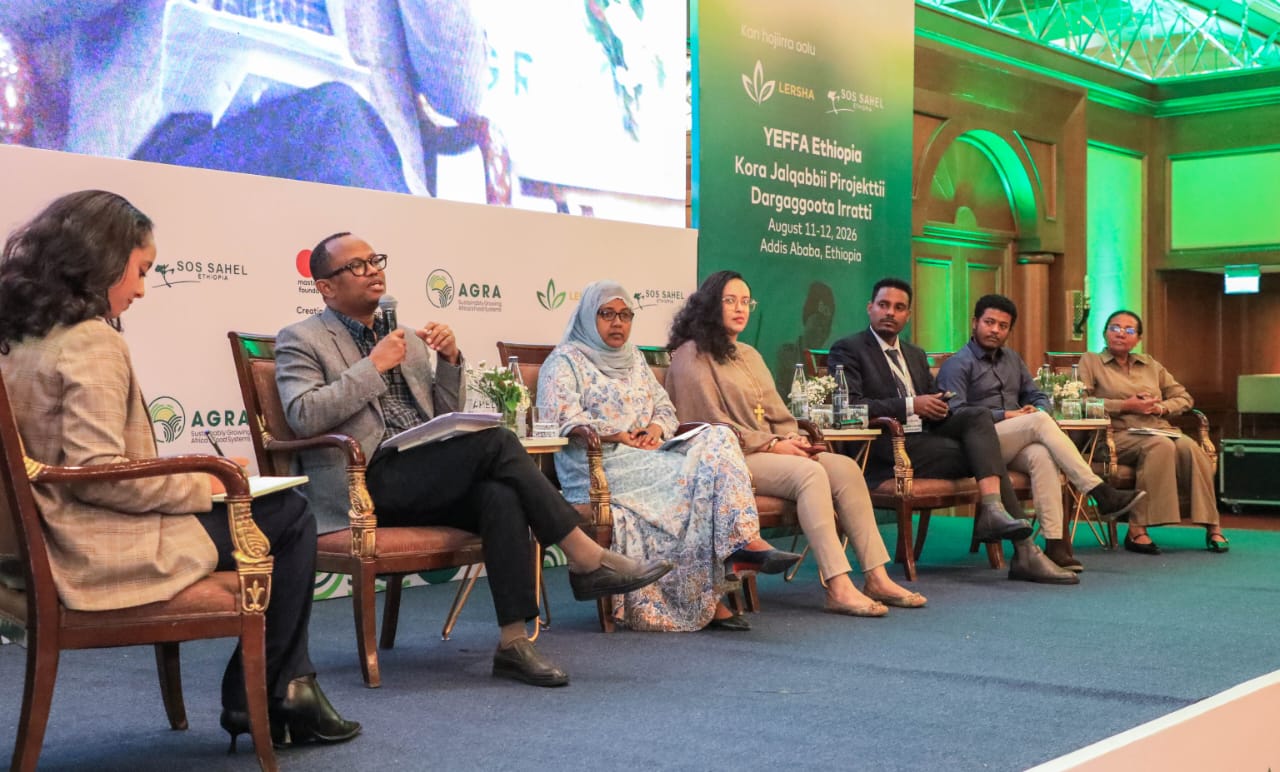
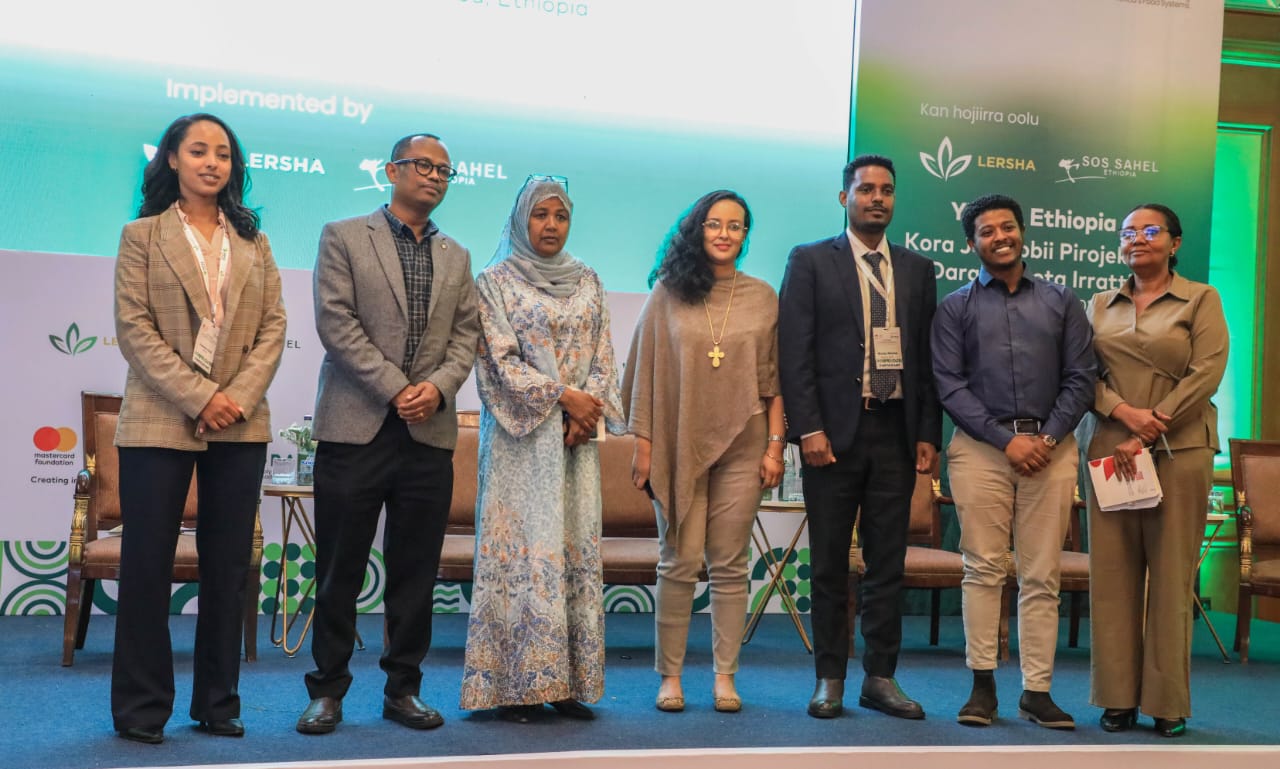
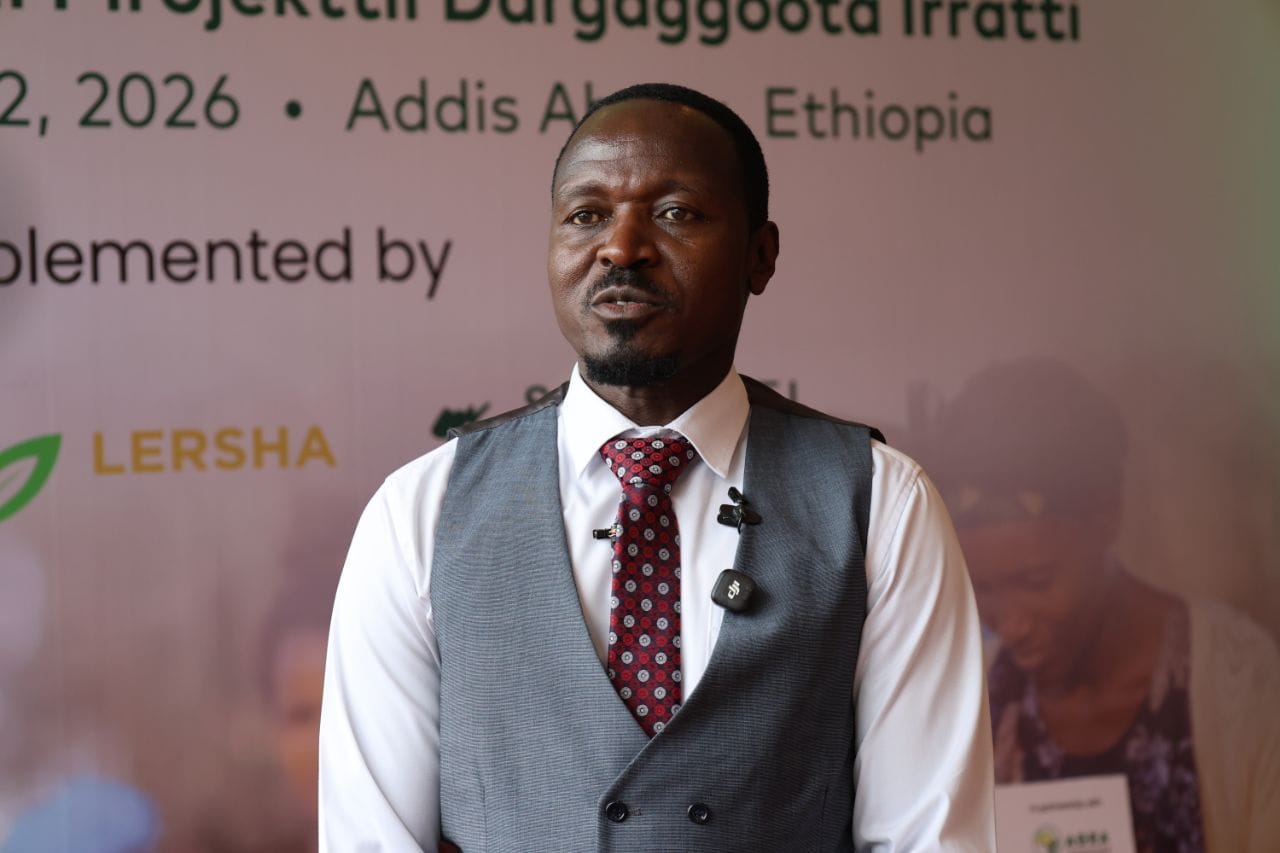
AGRA Ethiopia and the Mastercard Foundation have launched a youth entrepreneurship programme aimed at expanding employment, skills, finance and market access in Ethiopia’s agriculture sector.
The Youth Entrepreneurship for the Future of Food and Agriculture Ethiopia programme, known as YEFFA Ethiopia, will focus on wheat and horticulture value chains in selected districts of Oromia Region. The initiative is part of a wider Pan-African partnership between AGRA and the Mastercard Foundation designed to create dignified work opportunities for young people in agrifood systems.
The programme was launched in Addis Ababa on Aug. 12 and will be implemented from March 2026 to March 2030 in 14 districts across North Shewa, East Shewa and West Shewa zones, as well as Sheger City Administration. AGRA, SOS Sahel Ethiopia and Green Agro-Solution Plc are among the implementing partners.
YEFFA Ethiopia aims to reach 80,000 economically disadvantaged young people, including 64,000 young women, through training, entrepreneurship support, market linkages, technology access and financial inclusion interventions.
Yihenew Zewdie, Country Director of AGRA Ethiopia, said the programme was designed to address persistent barriers that limit young people’s participation in agriculture, including limited access to finance, technology, skills, markets and business-development services.
“Empowering youth in agriculture is not just about creating jobs; it is about building a sustainable future for Ethiopia,” Yihenew said at the launch.
He said horticulture, in particular, could make a significant contribution to agricultural transformation if it received stronger investment and policy support.
Agriculture remains a major source of employment and income in Ethiopia, but young people seeking to establish agribusinesses often face high input costs, limited land access, weak market connections, climate-related shocks and restrictive credit conditions.
The YEFFA programme will prioritise the modernisation of wheat production and marketing, while also seeking to expand youth employment in fruit and vegetable value chains. Its implementation is expected to support young people working as producers, aggregators, service providers, traders, processors and other agribusiness entrepreneurs.
The initiative comes as Ethiopia works to raise agricultural productivity, improve food security and reduce import dependence. Wheat production has been a policy priority, while horticulture has been identified as a potential source of employment, export earnings and value addition.
The programme also places emphasis on the inclusion of young women, persons with disabilities, refugees, internally displaced people and returnees. Under the wider Young Africa Works strategy, the Mastercard Foundation aims for 70 percent of employment opportunities to benefit young women.
Mefthe Tadesse, Mastercard Foundation Ethiopia Country Director, said young people must be central to Africa’s development agenda.
“At the Foundation, young people are at the centre of everything we do,” he said. “We believe that Africa’s future will be shaped by the aspirations, ideas and leadership of its young people.”
Since the launch of its Young Africa Works strategy in Ethiopia in 2019, the Mastercard Foundation says it has enabled 1.27 million young people to access employment opportunities, with young women accounting for 49 percent of beneficiaries. The Foundation had committed USD 664 million through 38 partnerships in Ethiopia, according to its 2024 update.
The wider YEFFA partnership between AGRA and the Mastercard Foundation is a USD 350 million, five-year programme running from September 2023 to August 2028. Across Africa, it seeks to reach 10 million unemployed and underemployed young people and support 1.5 million into dignified and fulfilling work.
For Ethiopia, the key challenge will be translating the programme’s targets into sustainable businesses and employment in rural areas. That will require coordinated action from government, financial institutions, private companies and development partners to improve access to land, credit, agricultural inputs, training, technology and reliable markets.