Friday, November 20, 2026
Home Blog Page 1178

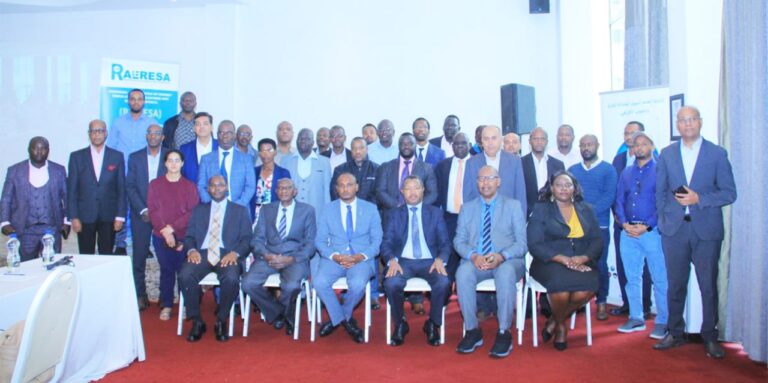
COMESA workshop aims to harmonize electricity tariffs and boost investment in energy sector

0

The COMESA region’s standardized power rates and cost assessments have been evaluated by members and a consultant in an effort to increase investment in the energy industry and foster sustainable collaboration.

Through enhanced regulatory frameworks, member nations of the Common Market for Eastern and Southern Africa (COMESA) and the African Development Bank (AfDB) have been striving to fortify the sustainability of the electrical sector in Eastern and Southern Africa.

The effort aims to create laws that are efficient, transparent, and legally binding to promote cross-border commerce in electricity and improve access to energy throughout the area.

Mohamedain Seif Elnasr, CEO of the Regional Association of Energy Regulators for Eastern and Southern Africa (RAERESA), commented on the Addis Ababa workshop centered on validating the framework and preliminary reports for harmonized electricity tariffs and cost assessments, emphasizing that the workshop’s main goal is to validate project deliverables in order to move forward.

The goal of the workshop, according to the CEO of RAERESA, a COMESA specialized agency, is to assess a few project deliverables related to the harmonization of regulatory frameworks and instruments for harmonized energy regulation in COMESA.

He went on, “We are here to validate some of the reports, including the cost reflectivity assessment and the harmonized comparison of regulatory tariffs in the region.”

The initiative, named ‘Regional Harmonization of Regulatory Frameworks and Tools for Improved Electricity Regulation in COMESA,’ aims for effective, transparent, uniform, and enforceable regulatory frameworks in the region with the ultimate objective of stimulating cross-border electricity trade and improving energy access in the COMESA region.

“We are collaborating with the African Development Bank to develop those deliverables as well as other deliverables that have already been validated, such as key performance indicators for regulatory principles and for utilities to improve utility efficiency,” he states. “In the end, we will have a harmonized system, and we are striving for regional integration,” he continues.

The CEO told Capital that in order to achieve regional integration, countries must minimize their differences with one another and work together. Harmonization is thus crucial and plays a significant role in this process.

“When people collaborate, they can lower operating costs and gain from one another. For instance, there is currently an energy deficit in parts of our region. If they are integrated, they can swiftly import energy from the areas that have excess supply.” Thus, one advantage of integration is that.

In order for COMESA member nations to cooperate and fully utilize their energy resources, he continued, “we’re working together regionally.” According to the CEO, member nations have abundant resources for energy, including gas and oil, renewable energy, and other resources that may be used to improve the energy mix. “They don’t rely on one thing when they have a diverse energy mix.”

A report on the cost of power assessment and the harmonized comparison of COMESA electricity tariffs was presented during the workshop. Data for analyzing the harmonized costs, harmonized tariffs for the COMESA area, and cost-effective evaluation were also covered.

“The cost-effectiveness is crucial, as the COMESA Council of Ministers determined in 2017 that cost-reflective tariffs are necessary to promote investment in the energy sector,” the CEO stated.

Reports including the regulatory principles and the key performance indicators, the report for utility, and the regulatory key for power indicators and regulatory principles have been validated.

The cost-reflective tariff has also been stated as key to attracting investment in the energy sector.

“Sometimes investors ask for cost-reflective tariffs, and if the country doesn’t have them, they might not come. That is why there’s an energy gap here and there. So, when countries migrate to cost-reflective tariffs, that is a very good opportunity for investors to come and invest in the energy sector,” Mohamedain said.

The project comprises three key components, including: (i) the Elaboration and Adoption of Regional Electricity Regulatory Principles and Regulatory and Utility Key Performance Indicators based on the AfDB’s flagship Electricity Regulatory Index for Africa for the COMESA region; (ii) Harmonized Comparison of Electricity Tariffs and Cost Reflectivity Assessment Framework Tool; and (iii) the development of an Information and Database Management System.

CRISIL Limited of India was engaged as a consultant to implement components of the project, among which is the development of a framework for cost reflectivity assessment of tariffs and for harmonized comparison of tariffs across the region. The assignment has been ongoing since February 2023, leading to the validation workshop for the deliverables developed by the consultant.
Africa Celebrates Unity and Economic Prosperity at Upcoming Pan-African Event in Addis Ababa

0

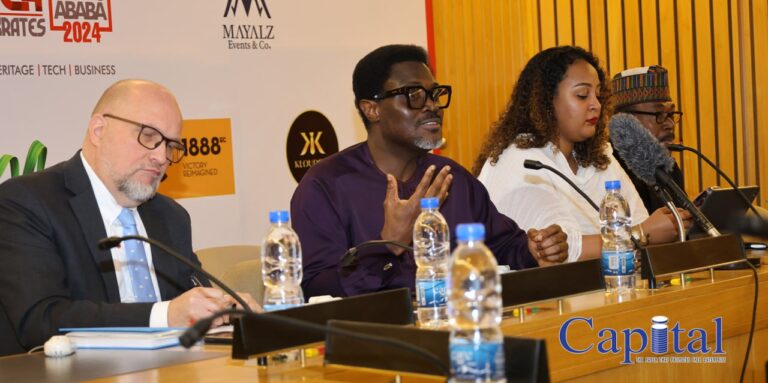
Africa Celebrates, a premier Pan-African event designed to celebrate Africa’s unity in diversity and promote economic prosperity through arts, culture, heritage, technology, and business, will be held in Addis Ababa from November 6 to 10.

According to the organizers, Legendary Gold Limited and Mayalz Events in collaboration with the African Union Commission and the United Nations Economic Commission for Africa (ECA), the event will be presented at the African Union and ECA headquarters in Addis Ababa.

This year’s theme, “Educate an African fit for the 21st century,” underscores the importance of resilient awareness systems in advancing integration and prosperity across the continent.

Africa Hall to reopen after $57 million refurbishment project

0

It is anticipated that the historical African Hall, one of Addis Ababa’s landmarks, will be reopened in October after a USD 57 million refurbishment project.

The United Nations Economic Commission for Africa (UNECA) has had its permanent offices in Africa Hall since 1961. It holds a significant position in the development of the continent’s economy, pan-Africanism, and sustainable future.

However, due to its old age, the United Nations General Assembly agreed in 2015 to repair the building exactly as it was when the Ethiopian government presented it to the UN.

The project manager of the ECA’s Africa Hall, Antoni Biao, recalled that in 2008, during the celebration of the organization’s 50th anniversary at the location, UN members noticed that the hall required some renovations.

As a result, the UN began considering the possibility of carrying out renovations in order to restore, modernize, and revitalize the building and make it shine once more, just as it did when it was first opened in 1961 and when the Organization of African Unity was established in this hall in 1963.

The proposal calls for the huge rehabilitation work, sponsored by the 193 member nations, to turn it into a cutting-edge meeting facility and museum.

Several significant gatherings in the history of Pan-Africanism, including the liberation of Africa from colonialism, have taken place at Africa Hall. With the intention of drawing the UN to Africa and unifying African nations, Emperor Haile Selassie of Ethiopia conceived of and donated the Hall to serve as the ECA’s headquarters.

Additionally, it is the birthplace of the Organization of African Unity (OAU), which was founded in 1963 at the Hall and is currently known as the African Union.

According to Getachew Kassa, the supervisor of the Africa Hall Project at the ECA, “The Hall stands as a living symbol of African history, culture, and the noble aspirations of African people for peace and unity on the continent, which is free of colonialism,” when the project started in October 2022.

According to the project manager, updating and modernizing the structural and technical amenities of the Hall is part of the remodeling project.

Africa Hall is now more contemporary, secure, and useful thanks to renovations that have strengthened the structure’s resilience to earthquakes, improved building accessibility, and created additional security features.

He claimed that a number of firms from various nations were participating in the project; most of them were international, but the majority also employed locals. The UAE-based ALEC, which renovated the Minilik Palace a few years ago to open it to the public, is the principal contractor at the ECA, located at the heart of the city in front of Jubilee National Place.

“We did not want to drastically alter the building’s architecture, including some components like the tiles and stones, because we would like to retain the building’s ingrained legacy. The dome is another crucial component,” the project manager said.

“We included the new element in the project to ensure that it complies with the latest standards, including security, safety, and comfort features,” he continued.

According to Antoni Biao, the restoration “respects the original design principles, including the stained-glass triptych titled ‘The Total Liberation of Africa,’ created by Honorable Laureate Maitre Artiste Afewerk Tekle.”

“This artwork has been repaired such that it will last for a further 75 to 100 years. The company that completed the first work is the same one performing it now. The son of the individual who finished the renovation 65 years ago is currently working on it. Therefore, in order to ensure that we are conserving properly and employing the identical procedures, we have been attempting to utilize the same company and power,” he stated.

When the building was first constructed, Atelier Thomas Vitraux (Valence) completed the artistic glazing in the Hall; currently, his son’s company is in charge of maintaining it.

“We made the facade more translucent and open. Why? The front of this edifice is somewhat exposed to the continent due to the Emperor’s involvement, which is one of the most significant architectural elements of this structure,” the project manager said.

The project manager recalled Haile Selassie’s speech at the building’s inauguration: “We are very happy to have a conference hall here in Addis Ababa, allowing the African people to discuss their future in Africa without having to go to London or to any other places,” he said during the building’s inauguration.

“The Emperor said in his speech that ‘this decision shall not be taken behind closed doors. So for that reason, this rule is open to the continent.’ So it is surrounded by the floor of Africa with that marvelous campus alignment,” the project manager added.

He clarified that the meeting rooms are close together, if you notice most of them, if not all of them. Natural light does not exist. “In this instance, the reason this hall was accessible to the continent is due to the architect’s interpretation of the Emperor’s wish, which is a very good point, as our leaders continue to make decisions in front of the people.”

A visitor center and a permanent exhibition area have also been included in the remodeling project with the intention of opening up the ancient building to African people and tourists from across the world.

The UN wants the public to value this building, which is another crucial aspect of this project. According to Antoni Biao, “We are building a visitor center similar to the ones in New York, Geneva, and Nairobi.”

The architecture of the structure said to be one of the origins of pan-Africanism will be on display in a permanent exhibition.

The main focus of the show will be the building’s architectural history, followed by its political and cultural past, which includes its Pan-Africanist legacy. In addition to a bookstore, gift shop, and a leisure center, member states and institutions will also be able to host short-term events, he said.

The project manager stated, “The Ethiopian government gave us a piece of land there to do a parking lot that will be dedicated to visitors as part of the renovation.”

Africa Hall was opened by Emperor Haile Selassie in February 1961 during the third session of the Conference for UNECA.

Since then, decisions made by African Heads of State have taken place there at a number of meetings. The artwork in the Africa Hall, which features the founding fathers of the OAU, has memorialized this.

Maître Afework Tekle created the 150-square-meter stained glass window in Africa Hall’s foyer, which serves as the building’s main landmark.

The artwork narrates the tale of ‘Africa Then,’ ‘Africa Then and Now,’ and ‘Africa Now and in the Future’ in three sections.

The structure was designed by Italian architect Arturo Mezzedimi, who mostly worked in East Africa and the Middle East. Luigi Varnero, a construction industry specialist, was the major constructor.

The project, which was completed in less than two years, came at a cost of five million birr, which was around five million US dollars at the time.

Experts claim that the founding of the ECA was one of the catalysts for Addis Ababa’s rise to prominence as a global diplomatic center, together with the African Union.

Blood Donation Drive Boosts National Blood Transfusion Service

0

Members of the Association of Tourism Service Provision Institutions, along with the Orotta National Referral Hospital, have voluntarily donated a total of 190 units of blood to support the National Blood Transfusion Service.

From 16 to 21 September, in celebration of World Tourism Day on 27 September, members of the Association of Tourism Service Provision Institutions contributed 120 units of blood. Mr. Solomon Girmay, Chairman of the Association, highlighted that this is the third time the members have participated in such an initiative, praising their strong commitment to the cause.

Additionally, on 21 September, staff members of the Orotta National Referral Hospital donated 70 units of blood as part of a program themed “Donating Blood to Save Lives with Renewable Blood.”

Mr. Negasi Yitbarek, program coordinator, noted that the hospital’s staff has pledged to donate blood twice annually.

Mr. Tewolde Yohannes, Manager of the Orotta National Referral Hospital, commended the staff for their life-saving efforts, which complement their professional contributions.

In related news, the National Blood Transfusion Service reported that on 20 September, members of Immigration and Nationality donated 37 units of blood, further enhancing the country’s blood supply.

Distributed by APO Group on behalf of Ministry of Information, Eritrea.
