Friday, November 20, 2026
Home Blog Page 1177

Gates Foundation report calls for targeted global health spending to save millions of children from malnutrition and disease

0

In its eighth annual Goalkeepers report, the Bill & Melinda Gates Foundation has urgently called on world leaders to increase global health spending in areas where it is most needed. The report emphasizes the critical importance of boosting children’s health and nutrition, particularly in light of the escalating global climate crisis.

Titled “A Race to Nourish a Warming World,” the report warns that without immediate global action, climate change could condemn an additional 40 million children to stunting and 28 million more to wasting between 2024 and 2050. The foundation argues that scaling up effective solutions now can prevent these dire outcomes while simultaneously building resilience to climate change and fostering essential economic growth.

According to the World Health Organization, an estimated 148 million children currently experience stunting—a condition that impairs physical and mental development—while 45 million suffer from wasting, which leaves them weak and emaciated. These conditions significantly increase the risk of developmental delays and mortality, representing the most severe forms of chronic and acute malnutrition.

Despite these alarming statistics, the report highlights a troubling trend: the total share of foreign aid directed towards Africa has decreased over the past decade. In 2010, African countries received 40% of foreign aid; this figure has now plummeted to just 25%, the lowest percentage in 20 years. This decline is particularly concerning given that more than half of all child deaths occur in sub-Saharan Africa, leaving millions at risk of preventable diseases.

Bill Gates, co-chair of the Bill & Melinda Gates Foundation, expressed his concern about the current global landscape, stating, “Today, the world is contending with more challenges than at any point in my adult life: inflation, debt, new wars. Unfortunately, aid isn’t keeping pace with these needs, particularly in the places that need it most.” He believes that global health can still achieve a resurgence even amidst competing challenges for government budgets.

Gates described malnutrition as “the world’s worst child health crisis,” exacerbated by climate change. He urged for sustained global health funding and immediate action to combat child malnutrition through support for the Child Nutrition Fund—a new platform aimed at coordinating donor financing for nutrition initiatives. He also called on governments to fully fund established institutions like Gavi, the Vaccine Alliance, and the Global Fund to Fight AIDS, Tuberculosis and Malaria.

“If we do these three things,” Gates asserted, “we won’t just usher in a new global health boom and save millions of lives—we’ll also prove that humanity can still rise to meet our greatest challenges.”

The report further outlines the catastrophic economic costs associated with malnutrition. According to the World Bank, undernutrition results in an annual productivity loss of approximately $3 trillion globally. In low-income countries, this loss can account for 3% to 16% (or more) of GDP—equating to a permanent recession at 2008 levels each year.

Gates emphasized that investing in nutrition is crucial for combating climate change’s impacts. “Malnutrition makes every forward step our species wants to take heavier and harder,” he stated. Conversely, solving malnutrition could facilitate progress on various fronts: reducing extreme poverty, enhancing vaccine effectiveness, and decreasing mortality rates from deadly diseases like malaria and pneumonia.

The Gates Foundation’s report serves as a clarion call for immediate action from global leaders to prioritize health spending targeted at combating malnutrition and its associated challenges. By addressing these issues head-on, there is hope not only for saving millions of children’s lives but also for fostering a healthier future for generations to come.
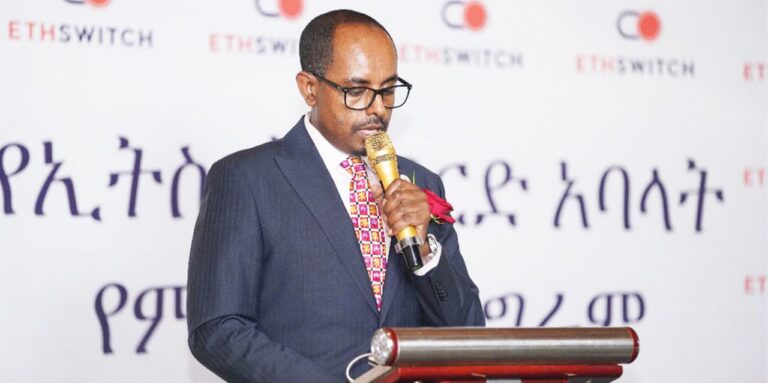
EthSwitch elects Solomon Desta as Chairperson of the Board

0

EthSwitch S.C. has announced the election of Solomon Desta, the Deputy Governor of the National Bank of Ethiopia, as the new Chairman of its Board of Directors. This appointment marks a significant step for EthSwitch as it continues to enhance its strategic direction in Ethiopia’s digital payment landscape.

Yilebes Addis, CEO of EthSwitch, expressed confidence in the newly elected board members during the announcement. He stated, “The members of the Board of Directors have been setting the strategic direction of our institution and carrying out critical activities to take it to a higher level, formulating various policies and guidelines, taking advantage of the opportunities available at the time and providing solutions to the challenges it faces.”

The contributions made by the Board of Directors have laid a solid foundation for EthSwitch’s activities and will inform the new strategies that are expected to be developed in the coming years. The board’s collective expertise is crucial as EthSwitch aims to streamline and enhance digital payment systems across Ethiopia.

Solomon Desta emphasized the importance of collaboration among board members, highlighting their collective knowledge and experience in implementing Ethiopia’s national digital payment strategy and financial inclusion initiatives. “We believe that the Digital Ethiopia 2025 strategy and EthSwitch’s initiatives will significantly contribute to the country’s economic growth,” he added.

EthSwitch has elected a total of 12 members to its Board of Directors, which includes representatives from various financial institutions such as ZamZam Bank (Melika Bedri), Oromia Bank (Teferi Mekonnen), Dashen Bank (Asfaw Alemu), and Zemen Bank (Dereje Zebene). This diverse representation underscores EthSwitch’s commitment to fostering collaboration within Ethiopia’s banking sector.

Ethiotelecom aims to expand hard currency mobilization through tariff reforms

0

Ethiotelecom, Ethiopia’s state-owned telecom provider, has announced plans to implement tariff reforms on select products and services in the near future. This move comes just a month after the government’s macroeconomic policy reforms, which included the floating of the Ethiopian birr.

Frehiwot Tamiru, the CEO of Ethiotelecom, stated that the tariff reforms will take into account the ability of customers to pay. She emphasized that while prices will not be increased across the board, there will be targeted improvements to certain products and services.

Over the past two decades, during which the birr has depreciated by more than 750%, Ethiotelecom has significantly reduced prices in the last six years, making its rates among the lowest in the world and highly affordable for users. With the current floating of the birr, the rates in foreign currency will become even more competitive.

In September 2018, Ethiotelecom announced a 40-50% tariff reduction and implemented various improvements. The latest reports show that the company charges lower prices compared to other telecom providers in the region.

“We held off on adjusting tariffs because we wanted the macroeconomic changes to stabilize and be healthy for our customers, as well as for the economy in general,” Frehiwot explained.

While the CEO acknowledged that the current tariffs for voice and data services are already low, she refrained from providing a specific timeline for the implementation of the new tariffs, stating that plans are in place to introduce them.

Ethiotelecom is also aiming to increase its foreign exchange earnings and provide competitive services to expand international revenue and foreign exchange-generating sectors in size and type. The company plans to raise its foreign exchange earnings to $282.85 million in the current fiscal year by upgrading its foreign exchange service, remittance services, and expanding partnerships.

In the 2024/25 fiscal year, Ethiotelecom has budgeted over $1 billion for digital infrastructure expansion. The company plans to add 5 million customers in the current fiscal year and generate 163.7 billion birr in revenue, a 74.4% increase from the previous year’s 93.7 billion birr.

Frehiwot stated that Ethiotelecom aims to build more than 1,000 mobile stations by 2024/25 and focus on providing technological innovations and solutions beyond just connectivity. Digital Ethiopia also plans to have 500 cities with 4G and 15 cities with 5G network coverage this year, with the number of users expected to increase from 78 million to 83 million, and Telebirr users from 47.5 million to 55 million.

As Ethiotelecom navigates the changing economic landscape, its tariff reforms and expansion plans demonstrate its commitment to providing affordable and competitive services while generating much-needed foreign exchange for the country.

Somali National Armed Forces and African Transition Mission in Somalia (ATMIS) train on Joint Operations Coordination

0

Twenty-six officers from the African Transition Mission in Somalia (ATMIS) and the Somali Security Forces (SSF) have completed a five-day training on planning and coordination of joint operations against Al-Shabaab.

The training for Joint Operations Centres staff equipped the officers with critical skills for effective operations to attain the Mission’s strategic objectives.

The Deputy SRCC for ATMIS, Sivuyile Bam emphasized the critical role of the training in addressing coordination challenges, enhancing communication with key stakeholders, and facilitating timely information sharing for mission operations.

“JOC staff are a critical component of the mission’s decision-making process, playing a key role in information management. This training is essential in managing coordination and communication challenges, which are the vital aspects of JOC operations. It will also ensure the prompt transfer of information for mission operations,” said Bam during the opening of the training on Sunday, also attended by ATMIS Deputy Force Commander in charge of Logistics and Support, Maj. Gen. Peter Kimani Muteti, and ATMIS Chief JOC, Col. George-Noble Hoenyedzi.

The Deputy Head of Mission for ATMIS asked the officers to diligently and professionally discharge their duties to achieve the Mission’s mandate.

The Acting Force Commander for ATMIS, Maj. Gen. Marius Ngendabanka, said the training will enhance the officers’ capacities and foster interactions between ATMIS troops and the Somali Security Forces.

“The JOC staff training is aimed at developing your capabilities to plan effectively and foster a common way of working between ATMIS and SSF while leveraging on situational awareness,” said Maj. Gen. Ngendabanka, who is also the Deputy Force Commander in charge of Operations and Planning, at the close of the training.

“I am glad that we now have a pool of knowledgeable personnel who can make a difference in our operations.”

The training covered ATMIS JOC’s Standard Operating Procedures, first aid, Medevac/Casevac, JOC functions, communication support and prevention of sexual exploitation and abuse.

Other topics included information security, crisis response, human rights and international law, information operations and cycle, including incident reporting.

Participants appreciated the training’s importance in boosting their capabilities and coordination during joint operations.

“I am grateful to ATMIS and the other stakeholders for organising this training for Joint Operation Centres staff deployed in the various sectors. The knowledge we have acquired will greatly enhance our coordination with Somali security Forces during operations,” said Major Kelvin Wandera from the Sector Two Joint Operation Centre.

The Chief of Sector Three Joint Operation Centre, Major Aman Wako, said: “The training will enhance our operational capabilities and improve the effectiveness of our operations in the sector.”

The Joint Operations Centres, launched in October 2022, play a vital role in enhancing collaboration among ATMIS, the SSF and other partners. These centers are part of a wider strategy to prepare the Somali forces to assume full security responsibility once ATMIS’ mission concludes.

Distributed by APO Group on behalf of African Union Transition Mission in Somalia (ATMIS).