Tuesday, May 12, 2026
Home Blog Page 177

Digital logistics disruptor rewires Ethiopia’s trucking chain

0

Ethiopia’s 800 million Birr trucking industry still runs largely on phone calls, paper documents and cash deals struck at crowded truck stations, leaving small shippers overpaying and many trucks running empty on key routes like the Ethiopia–Djibouti corridor. TOLO FREIGHT, a homegrown digital freight marketplace, is trying to change that by matching shippers, carriers and brokers through a multilingual app that separates load matching from cash settlement while digitizing contracts, tracking and documentation. Capital sat down with Muluken Terefe Mekuria, CEO and Technology Lead at TOLO FREIGHT, to discuss how the platform works, why it chose an “offline settlement” model for a cash-based market, and what its rise could mean for independent drivers and small exporters across Ethiopia. Excerpts;

Capital: What specific gap or frustration in Ethiopia’s trucking market pushed you to start TOLO FREIGHT?

Muluken Terefe: The frustration came from three of us seeing the same problem from completely different angles, and realizing the solution required all three perspectives.

I’m Ethiopian-American, I did my Master’s in Engineering at Morgan State, worked as a software engineer for US federal agencies, so I’ve seen how efficient logistics systems can be when the technology is right. My co-founder Amir lived the trucking industry from the inside. He started as a truck driver in the US, worked his way up to dispatcher, then became a broker. He knows what drivers need, what brokers actually do, where the friction points are. And Yonatan brings the security and business thinking, he’s a cybersecurity engineer who grew up in a business household, so he understands both the technical risks and the commercial realities.

When we looked at Ethiopia’s $800 million trucking market, we saw this massive disconnect. Amir would tell stories about how in the US, a broker can match a load in minutes using digital tools. Here, a small coffee exporter in Sidama might spend three days physically visiting truck stations, negotiating with brokers, trying to find trucks. Meanwhile, there are empty trucks heading back from Djibouti that same week ,they just have no way to find each other.

The inefficiency isn’t just inconvenient, it’s expensive. Trucks in Ethiopia run empty 30-40% of the time. Shippers pay premiums because they can’t compare prices. Small operators get squeezed because they don’t have broker relationships. We built TOLO to fix that information problem, combining my technology background, Amir’s operational expertise, and Yonatan’s security and business sense.

Capital: Can you walk through the moment you realized a digital freight marketplace was viable in a largely offline, cash-based ecosystem?

Muluken: That realization didn’t come from a single moment. It came from studying what worked and what failed in other markets, and then really understanding the Ethiopian context through our team’s different lenses.

We looked at Kobo360 in Nigeria, Uber Freight in the US, Lori Systems in Kenya. Amir analyzed them from an operator’s perspective, what would actually make a driver’s life easier? The common thread in African markets was that platforms failed when they tried to force digital payments on cash-based economies. The technology worked, but the business model didn’t fit.

The breakthrough insight, and this came from a late-night conversation between the three of us, was separating matching from settlement. Amir said: ‘Look, Ethiopian truckers will settle in cash, that’s how it works. Don’t fight it.’ So we said: what can we digitize? Discovery, pricing transparency, reputation tracking, documentation. The platform becomes valuable even if money never flows through it.

What gave us real confidence was the mobile penetration data combined with Amir’s ground-level observation: truckers already use phones constantly, to coordinate with brokers, to check in with dispatchers, to verify loads. They’re not technology-averse; they just need technology that fits their workflow.

Capital: Why did you decide to focus only on Ethiopia first instead of launching as a regional Horn-of-Africa platform from day one?

Muluken: Discipline. And learning from other startups’ mistakes. When you look at logistics startups that struggled in Africa, a common pattern is they tried to go regional too fast. Each country has different regulatory frameworks, different payment systems, different broker cultures. Amir always reminds us: ‘Even in the US, trucking culture varies state to state.’ If you spread yourself thin, you end up being mediocre everywhere instead of excellent somewhere.

Ethiopia alone is an $800 million trucking market with 120 million people. That’s not a small opportunity, that’s a massive market where we can prove the model, build density, and learn what actually works on the ground. We’re operating in four languages already, Amharic, Oromiffa, Tigrinya, and English, because Ethiopia itself is linguistically diverse. That’s complexity enough for now.

The Ethiopia-Djibouti corridor does give us natural exposure to cross-border logistics, and that’s intentional. We’re building the capabilities for regional expansion, customs tracking, multi-currency support, but we won’t flip the switch until we have product-market fit domestically.

Capital: In simple terms, how does TOLO FREIGHT work for a shipper and a trucker from the moment a load is posted to final delivery?

Muluken: For the shipper: You open the app, tap ‘Post Shipment,’ and enter your details, pickup location, destination, cargo type, weight, what kind of truck you need, and when. The system immediately shows you an algorithm-calculated price based on distance, fuel costs, and current demand. You can accept that price, or you can open it up for carriers to bid competitively.

Once you post, carriers see your load and can submit bids. You compare them, not just on price, but on their ratings, completion history, vehicle details. You pick one, and now you have a digital contract. The system generates a tracking number, and you can follow your shipment through every stage: assigned, picked up, in transit, delivered.

For the carrier: You register on the platform, upload your documents, license, insurance, tax ID, and make a small deposit. Then you see available loads in your area or along your routes. You can filter by cargo type, by destination, by price. When you see something you want, you bid on it or accept the posted price.

When you complete a delivery, you upload proof, photos and the recipient’s signature. The shipper confirms, and then payment happens directly between you and the shipper, however you’ve agreed, cash, bank transfer, mobile money. We take our commission from your deposit balance automatically.

The whole thing can happen in hours instead of days. No truck station visits, no endless phone calls to brokers.

Capital: The app runs in Amharic, Oromiffa, Tigrinya and English. How did language and UI decisions shape user adoption in different regions?

Muluken: This was non-negotiable from day one. If you’re building a platform for Ethiopian truckers, you have to meet them where they are linguistically.

Amharic was obvious, it’s the federal working language. But a huge portion of trucking activity happens in Oromia region, and many drivers there are more comfortable in Oromiffa. The Ethiopia-Djibouti corridor runs through Afar and historically has strong Tigrinya-speaking communities. And English matters for freight forwarders dealing with international shipments.

What we found is that language choice signals respect. When a driver in Jimma opens the app and sees Oromiffa as an option, there’s an immediate sense that this platform was built for them, not just translated as an afterthought. Adoption in regional areas accelerated once we had proper localization.

The UI decisions went beyond language. We designed for low-literacy users with heavy use of icons, color-coding for status, and voice feedback. A driver who can’t read well can still navigate the app because the visual language is intuitive, green means go, red means problem, the truck icon moves along the route.

Capital: Ethiopia is heavily cash-based. How did that reality shape your decision to use an “offline settlement model” instead of full online payments?

Muluken: We had a choice: we could either wait for Ethiopia’s payment infrastructure to mature, or we could build something that works today. We chose the second.

Look at the reality on the ground. A trucker completing a delivery in Dire Dawa often gets paid in cash, right there at the delivery point. That’s how the industry has always worked. If we forced digital payments, we’d be asking shippers to prepay into an escrow system they don’t trust yet, and asking carriers to wait for settlement when they need fuel money today.

Our model accepts that cash will dominate for now. What we do is create all the trust infrastructure around that cash transaction: verified identities, documented agreements, reputation scores, proof of delivery. The payment happens offline, but everything around it is recorded and enforceable.

The deposit system is how we make this sustainable as a business. Carriers deposit funds upfront, minimum 1,000 Birr, and we deduct our commission from that balance. It’s elegant: we don’t need to process the shipper payment to earn our revenue.

Capital: How does the commission-deduction from deposits practically work, and what early behaviors have you seen from carriers in response?

Muluken: The mechanics are simple. When a carrier registers, they deposit at least 1,000 Birr, into our commercial bank account. That balance shows in their app dashboard. Every time they complete a verified delivery, we automatically deduct of the job value from that balance.

So if a carrier completes a 20,000 Birr job, we deduct 1,000 Birr from their deposit. They get a notification showing the deduction and their new balance. When the balance gets low, the app prompts them to top up.

What we’ve seen behaviorally is interesting. Active carriers tend to maintain higher balances than the minimum, often 3,000 to 5,000 Birr, because they don’t want to be caught unable to accept a good job. There’s a psychological shift: the deposit stops feeling like a fee and starts feeling like working capital that enables their business.

We’ve also seen the deposit act as a quality filter. Carriers who aren’t serious, who might flake on jobs, tend not to deposit in the first place. The ones who do are signaling commitment, and their completion rates reflect that.

Capital: Traditional “delala” brokers are often seen as a problem in the trucking chain. Why did you choose a “transform, don’t eliminate” strategy toward them?

Muluken: Because elimination isn’t realistic, and honestly, it’s not even desirable. Brokers, delala, have been the connective tissue of Ethiopian trucking for decades. They have relationships, local knowledge, and trust that took years to build. A shipper in a small town doesn’t just need a truck; they need someone who knows which driver is reliable, which routes are passable this season, how to handle that specific customs officer at the checkpoint.

If we positioned TOLO as the enemy of brokers, we’d face massive resistance. They’d tell truckers not to use us. They’d spread distrust. We’d be fighting the very people who control the market’s information flow.

Instead, we said: brokers can use TOLO to be better brokers. On our platform, a broker can access loads from across the country, not just their local station. They can manage multiple shipments simultaneously instead of juggling phone calls. They build a verifiable reputation that travels with them. The good brokers see TOLO as a tool that amplifies their value.

What gets disrupted isn’t the broker role, it’s the information asymmetry that allowed bad actors to exploit shippers. Transparency raises the floor for everyone. We’re not trying to kill the delala, we’re trying to make the delala digital.

Capital: What specific value does TOLO bring separately to shippers, carriers, and brokers, and which group was the hardest to convince?

Muluken: For shippers: price transparency and speed. Before TOLO, you had no idea if the price a broker quoted was fair. Now you see an algorithm-calculated rate, you can compare bids, you can see what similar shipments cost. And you can find a truck in hours instead of days.

For carriers: access and predictability. An independent trucker used to be limited to loads they could find at their local station or through their personal broker network. Now they see opportunities from across the country. They get documented payment terms. They build a reputation that opens doors to better jobs.

For brokers: scale without overhead. A broker on TOLO can manage more shipments than they could with phone calls alone. They can build a digital track record that differentiates them from unreliable competitors. The platform becomes their competitive advantage.

The hardest group to convince? Honestly, large shippers. Not because they don’t see the value, but because they have existing relationships. A big agricultural exporter has brokers they’ve worked with for years. They’re not switching for a price improvement; they need to trust that the platform is reliable at scale. That’s why we invested heavily in the tender/RFQ system for volume shippers, they can run their existing processes through TOLO and see the benefits before fully committing.

Capital: How does your platform change price transparency and bargaining power for small shippers outside major truck stations?

Muluken: This is where TOLO makes the biggest difference, and it’s something all three of us feel personally passionate about.

If you’re a small shipper in, say, Hawassa or Bahir Dar, you’ve historically been at a massive disadvantage. You don’t know what the ‘real’ price is. You’re negotiating with a broker who has information you don’t have. You might pay 20% more than a shipper in Addis for the same route, simply because you don’t have alternatives.

TOLO gives that small shipper the same information a big Addis-based company has. They see the algorithm price. They see competing bids from multiple carriers. They see the market rate. Suddenly, the bargaining power shifts.

And it goes beyond price. A small shipper now has access to carriers from outside their immediate area. If local truckers are overcharging, they can post the load and attract bids from truckers who are passing through or returning empty from another job. Competition disciplines prices.

We’ve seen cases where shippers outside major hubs report 15-20% cost reductions, simply because they’re no longer operating in the dark.

Capital: Why is the Ethiopia–Djibouti corridor so central to your product roadmap, and what operational pain points are you solving there?

Muluken: The corridor is central because it’s where the highest-value pain points exist, and where solving them has the biggest economic impact.

Ethiopia is landlocked. About 95% of our international trade moves through Djibouti. That single corridor handles billions of dollars in imports and exports. Every inefficiency there ripples through the entire economy, it affects the price of goods on store shelves, the competitiveness of our exports, the viability of businesses that depend on imports.

The main points we’re addressing:

  • Documentation chaos: Bills of lading, customs declarations, certificates of origin, historically, these are paper documents that get lost, delayed, or disputed. We digitize and track every document.
  • Border delays: Trucks sit at checkpoints for days waiting for clearance. We track checkpoint status so shippers know where their cargo is and can anticipate delays.
  • Empty backhauls: Trucks that bring imports from Djibouti often return empty. We match them with export loads, improving utilization and reducing per-shipment costs.
  • Cost predictability: Duties, taxes, VAT, importers often get surprised by final costs. Our system calculates expected charges upfront, including Ethiopia’s 15% VAT.

Capital: How does TOLO handle customs, documentation tracking, and border bottlenecks at the corridor level in practice?

Muluken: When a cargo owner or freight forwarder creates an international shipment, the platform prompts them to upload all required documents: bill of lading, packing list, commercial invoice, certificate of origin if applicable, customs declaration forms. Each document is timestamped and stored. Everyone with access to that shipment, the shipper, the carrier, the forwarder, can see document status in real time.

For tracking border progress, we currently rely on carrier-reported updates at key checkpoints. The driver marks arrival at Galafi, marks clearance completion, marks departure. We’re exploring integration with Ethiopian Customs Authority systems, but for now, the carrier-reported data is surprisingly reliable because their payment and reputation depend on accurate updates.

The system also tracks customs clearance stages: document submission, inspection, duty assessment, payment, release. If a shipment stalls at any stage for longer than normal, it flags for attention. This visibility alone reduces anxiety for shippers who previously had no idea where their cargo was or why it was delayed.

For bottleneck resolution, honestly, we can’t fix bureaucracy. But what we can do is give shippers data. If you know your shipment has been sitting at document verification for three days, you can make calls, escalate, or at least plan around the delay. Information is power.

Capital: What have been the biggest regulatory or bureaucratic hurdles in formalizing a digital freight marketplace in Ethiopia?

Muluken: The biggest hurdle has been operating in regulatory gray space. Ethiopia doesn’t have a specific licensing category for digital freight marketplaces. We’re not a trucking company, we don’t own trucks. We’re not a traditional broker, we don’t take custody of cargo. We’re a technology platform, but the regulatory framework hasn’t caught up to that concept.

What we’ve done is engage proactively with the Ethiopian Transport Authority. We’ve explained our model, shown them the platform, walked through how it improves transparency and formalization in an industry that’s historically been informal. The response has been cautiously positive, regulators see the potential for better compliance, tax collection, and accountability.

The other challenge is the formalization requirements on our platform itself. We require carriers to have business licenses, tax IDs, and insurance certificates. But a significant portion of Ethiopian trucking operates informally. This limits our addressable market in the short term, but it also positions us as a path to formalization. Carriers who want access to the best loads on TOLO have an incentive to get their documentation in order.

We’ve had to be patient. Building relationships with regulators, explaining our model repeatedly, demonstrating good-faith compliance. It’s slow, but it’s the right way to build a sustainable business.

Capital: How do the BASIC, PROTECTED, and PREMIUM service tiers change the way risk and insurance obligations are shared between shipper, carrier, and the platform?

Muluken: The tiers are essentially different risk-sharing agreements, and they let shippers choose the level of protection that fits their cargo value and risk tolerance.

BASIC is straightforward: full payment on delivery, standard liability. This works for low-risk, lower-value cargo where the shipper is comfortable with the carrier’s reputation and doesn’t need extra protection. The platform’s role is matchmaking and documentation, we’re not taking on risk.

PROTECTED adds meaningful safeguards: There’s basic cargo insurance included. And if the carrier is late, there’s 2% daily delay compensation. Here, the platform is actively managing risk, and we charge accordingly.

PREMIUM is for high-value or time-sensitive shipments: Comprehensive insurance. 5% daily delay compensation. And 24/7 dedicated support. This is for exporters shipping coffee worth hundreds of thousands of Birr, or importers bringing in critical equipment. The extra cost is worth the peace of mind.

What this tiering does is let us serve the whole market. A small shipper with a low-value load doesn’t need to pay for Premium protection. A big exporter shipping perishables absolutely does. Choice benefits everyone.

Capital: If TOLO works exactly as designed, how will the daily life of a typical independent driver and a small exporter be different from today?

Muluken: Let me paint you two pictures. The independent driver today: He wakes up, drives to the truck station, and waits. Maybe he has a broker contact who calls with a job, maybe not. He negotiates, often from a weak position because he needs work. He takes a job without knowing if he’ll get paid on time. After delivery, he chases payment. Then he drives back empty, burning fuel with no revenue, hoping to find another load at the next station. His income is unpredictable. His family doesn’t know when he’ll be home.

The independent driver with TOLO: He checks his phone at home over coffee. He sees three loads going his direction, with prices and shipper ratings. He picks the best one, accepts it, and heads out knowing the job is confirmed. When he’s near his destination, he already sees loads for the return trip, no empty backhaul. Payment terms are documented; he knows exactly what to expect. His income is steadier. He can plan his schedule. He can tell his family when he’ll be home.

The small exporter today: She has 30 tons of coffee to ship to Djibouti. She spends days finding trucks, visiting stations, negotiating with brokers who quote wildly different prices. She has no idea if she’s getting a fair deal. After the shipment leaves, she’s in the dark, is it at the border? Is there a problem? She finds out when the buyer in Djibouti calls to complain or confirm receipt.

The small exporter with TOLO: She posts her shipment in five minutes. Within hours, she has competitive bids from verified carriers. She picks one based on price, ratings, and vehicle suitability. She tracks the shipment from pickup through every checkpoint to delivery. Documents are digital and accessible. She can quote her overseas buyer an accurate timeline and price because she finally has visibility into her own supply chain.

Hub of Africa Fashion Week Marks 15 Years of Showcasing African Creativity

0

Hub of Africa Fashion Week (HAFW) returns to Addis Ababa from January 13–17, 2026, marking its 15th anniversary as one of the continent’s most influential fashion platforms. Hosted at the Hyatt Regency Addis Ababa, this year’s edition celebrates African creativity, craftsmanship, and innovation, bringing together designers, creatives, and industry leaders from across Africa and beyond.

Produced in partnership with NZ Communications, the 2026 event features a dynamic program blending fashion showcases, exhibitions, and thought-leadership sessions. The week opens with a luxury leather exhibition by SAMRA Leather, setting the tone for refined craftsmanship and premium African design.

Over its 15-year journey, HAFW has built a vital platform for emerging and established designers, fostering international visibility and industry growth. The event continues its collaboration with Waridi Schrobsdorff, Founder of Fashion Africa 254, who serves as strategic partner and board advisor, strengthening HAFW’s sustainability and global positioning efforts.

From January 15–16, the runway will spotlight a curated selection of designers from Ethiopia, Kenya, Nigeria, South Africa, Cameroon, and Russia. Audiences can expect show-stopping collections from influential names such as Naked Ape, MAFI MAFI, Mantsho, and Ejiro Amos Tafari, among others reshaping contemporary African fashion.

HAFW 2026 also continues its partnership with the British Council under the Creative DNA (CDNA) 3.0 Programme, empowering 10 emerging designers with international exposure and business development support. Their collections will be showcased on January 15, emphasizing the platform’s commitment to nurturing creative entrepreneurship across Africa.

Beyond the runway, HAFW 2026 focuses on dialogue and industry development. The event features The Core Round Table Talk, hosted by Linda Murithi, founder of The Core Fashion Kenya and The Fashion Tour, providing a collaborative space for 15 key stakeholders to explore the future of African fashion, sustainability, and international partnerships. The week concludes with The Fashion Tour, where participants will visit key design houses and creative hubs across Addis Ababa.

An international public relations expert from the UK will also join this year’s edition, helping participating designers refine brand narratives, enhance media engagement, and expand their international reach.

The New World Order

0

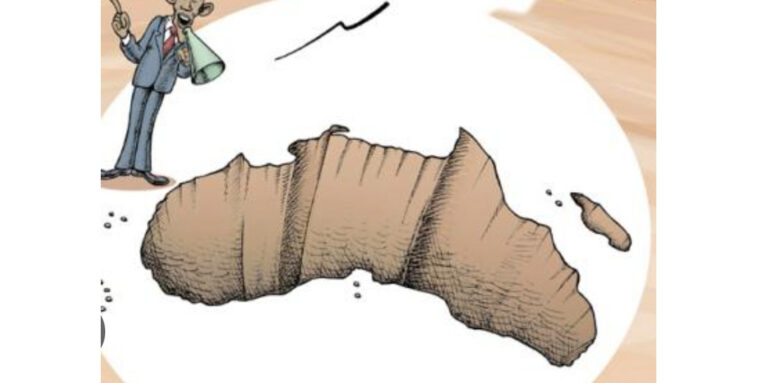
The 20th century promised a world governed by institutions, diplomacy, and the rule of law. The 21st is proving otherwise. In today’s global landscape, wealth and force have replaced respect and principle as the defining languages of power. For Africa — and Ethiopia in particular — this new world order is not merely abstract. It is a daily threat to sovereignty, economic independence, and human dignity.

The old order, shaped by post-war multilateralism, was premised on mutual recognition — the idea that smaller states could still command respect by adhering to international norms. Today, that assumption has collapsed. If you have wealth or military might, you get your way; if not, you get ignored or exploited.

Africa knows this reality intimately. From the mineral-rich Democratic Republic of Congo to Ethiopia’s strategic Horn of Africa position, the continent has become a chessboard for great-power competition. When former U.S. President Donald Trump recognized an alternative government in Venezuela and imposed crushing sanctions, he sent a clear message: sovereignty matters only for the rich and influential. The suffering that followed — hyperinflation, shortages, mass exodus — fell on ordinary Venezuelans. Africa watched and recognized the pattern all too well.

The new global order no longer negotiates in terms of justice or humanity. Its currency is influence, and its enforcement mechanism is force. Those with access to capital, technology, and weapons dictate the terms of politics, economics, and morality. For African nations without these assets, compliance is the only option.

China’s Belt and Road Initiative and Western sanctions regimes illustrate this perfectly. Beijing builds infrastructure in exchange for resources and strategic ports; Washington and Brussels leverage aid and debt relief to enforce governance reforms. Both approaches treat Africa as a junior partner rather than an equal. Ethiopia’s recent debt negotiations with creditors exposed this dynamic: years of infrastructure investment have yielded growth, but also vulnerability to external pressure.

Respect has become a sentimental luxury for African nations. Wealthier powers lecture about democracy and environmental responsibility while extracting rare earth minerals, dictating trade terms, and setting conditions for climate finance. The African Continental Free Trade Area (AfCFTA) offers hope for intra-African commerce, but its success depends on external powers allowing African economies to mature without interference.

The post-World War II institutions — the United Nations, World Bank, IMF, WTO — were meant to safeguard peace and development. Yet for Africa, they have often functioned as tools of control. Veto powers in the UN Security Council stifle African voices; IMF structural adjustment programs have deepened dependency; WTO rules favor industrialized agriculture over African farmers.

When morality has a price tag, global empathy becomes selective. Conflicts in the Sahel, Sudan, and the Horn of Africa draw sporadic attention, but rarely the decisive intervention seen in Europe. Refugees from African wars are turned away at borders, while those from geopolitically convenient conflicts are welcomed. The hierarchy of suffering mirrors the hierarchy of wealth.

Ethiopia’s experience underscores this. Despite centuries of independence and strategic importance, the country faces external pressure on internal affairs — from Tigray peace processes to GERD negotiations. The message is clear: African nations must align with great-power interests or risk isolation.

History warns that such imbalances do not last peacefully. Every few generations, the global system reaches a breaking point where accumulated inequality and unbridled power ignite conflict. Africa, strategically positioned and resource-rich, will be ground zero for this coming storm.

The First and Second World Wars were brutal resets. Today, Ukraine, Taiwan tensions, and Middle East conflicts expose a world moving toward confrontation. For Africa, the stakes are existential. Proxy wars, arms races, and competition for critical minerals could turn the continent into a battlefield. Ethiopia’s position at the crossroads of the Red Sea and Indian Ocean makes it particularly vulnerable.

Nuclear deterrence, AI warfare, and economic sanctions give great powers new tools to harm one another — and Africa will bear the collateral damage. Climate change, weaponized by the rich nations that caused it, threatens African food security and migration patterns. The new scramble for Africa’s lithium, cobalt, and rare earths will intensify, not diminish.

Is there a way forward? Yes — but it demands African unity and strategic autonomy. The AfCFTA must become more than aspirational; it must deliver intra-African trade that reduces dependency on external powers. Regional bodies like the African Union need stronger enforcement mechanisms and genuine peacekeeping capacity. Ethiopia, with its diplomatic heritage and growing economy, can lead by example — balancing relations with all powers while prioritizing national interests.

African nations must also diversify partnerships beyond traditional donors. Engaging with BRICS nations, Gulf states, and emerging Asian economies offers alternatives to Western dominance. Most critically, Africa must rediscover respect — not for wealth or borders, but for its own people and potential.

The new world order is not designed for cooperation but control. Those who command global capital will continue to shape politics and dictate policies. Unless this trajectory changes, history may once again choose violent reset — with Africa paying the heaviest price.

The tragedy is that it will not be the powerful who suffer. It will be Africa’s millions — those without influence, without weapons, without voice — who will carry the burden of the powerful’s pride. Ethiopia and its neighbors must prepare not just for economic challenges, but for the geopolitical storms ahead.

The old world order may have been flawed, but it aspired to ideals of respect and shared responsibility. The new one, driven by force and fortune, promises only exploitation disguised as partnership. If Africa does not reclaim its agency, the coming reset will not be a renaissance. It will be a reckoning.

China launches 2026 Year of People-to-People Exchanges with Africa at AU Headquarters

0

The official launch of the 2026 China-Africa Year of People-to-People Exchanges took place Thursday at the African Union (AU) headquarters here, drawing senior African leaders and diplomats who pledged to deepen cultural ties amid global turbulence. ​

Chinese Foreign Minister Wang Yi read a congratulatory letter from President Xi Jinping and delivered a keynote address to more than 200 attendees, including AU Commission Chairperson Mahmoud Ali Youssouf, Republic of Congo Foreign Minister Jean-Claude Gakosso — FOCAC’s African co-chair — and Ethiopian President Taye Atske Selassie.

Wang described the year-long programme as a key commitment from Xi and African leaders to strengthen youth exchanges, vocational training and cultural dialogue, building on platforms like the China-Africa Future Leaders’ Dialogue and Youth Festival. Xi’s letter outlined principles for mutual civilizational learning to advance a shared future, providing guidance amid rising Global South influence, Wang added.

African speakers hailed the launch as a milestone for FOCAC implementation, expressing readiness to expand cooperation in education, tourism, arts and youth programmes. They praised China’s consistent support — from annual foreign minister visits to Africa, to achievements in trade, agriculture and infrastructure aligning with AU agendas — and voiced gratitude for backing the continent’s development.

Wang warned of a world facing “profound changes unseen in a century,” with power politics challenging international norms and developing countries’ rights. He urged China and Africa to prioritise development, people-centred policies and openness, while African leaders endorsed Xi’s Global Governance Initiative against hegemonism and in defence of multilateralism.

Participants affirmed the “brotherly” China-Africa bond as mutually beneficial, committing to deepen Belt and Road and FOCAC partnerships for common prosperity. The event signals renewed momentum for South-South solidarity as both sides navigate trade shifts, geopolitical strains and shared ambitions under Agenda 2063.