
Monday, May 11, 2026
Home Blog Page 1792

Excise stamps expected to curb illegal activities in the beverage sector

0

According to reports, the upcoming implementation of excise stamps is anticipated to help eliminate illegal players in the beverage industry.

In alignment with the Excise Tax Proclamation 1186/2020, the Ministry of Finance (MoF) has recently drafted a directive for the management system of excise stamps, which will be applied to beverage products like bottled water and alcohol.

The preamble of the directive states that its objectives are to safeguard public health and safety, combat illicit trade, and ensure the integrity of excise tax collection systems.

Furthermore, it establishes a comprehensive framework for the management of excise stamps, covering the regulation, administration, and enforcement of excise duty obligations related to excisable goods.

The directive emphasizes the importance of proper affixation and tracking of excise stamps on excisable goods to maintain transparency, accountability, and compliance with the Excise Tax Proclamation.

Around a month ago, the MoF organized a consultation meeting with stakeholders. Experts in attendance indicated that there was generally an agreement reached regarding the proposed law, which is expected to be enacted soon.

As per the draft directive, excise stamps will be required for spirits, tobacco, bottled water, alcoholic and non-alcoholic beverages, cigarettes, and cigarillos. The ministry reserves the right to include additional goods.

The directive specifies that the excise stamp can be a paper stamp, digital stamp, or any approved mark for affixation or printing on excisable goods. The exact type, content, and manner of affixing the excise stamps will be determined by the tax authority.

The ministry is also required to designate a company responsible for developing and installing the excise stamp system, as well as printing and supplying the excise stamps and related systems.

Ashenafi Merid, the General Manager of the Ethiopian Beverages Manufacturing Industries Association (EBMIA), stated that the new program will put an end to any questionable and illegal bottling activities.

The head of a lobby group representing companies involved in bottled water, juice, and spirits recalled past investigations into illicit water bottling. He mentioned that such activities have significantly decreased and expressed confidence that the introduction of excise stamps will play a vital role in controlling and tracing illegal bottlers.

Ashenafi added that the excise stamp program will contribute to ensuring the safety and legality of the bottling industry. Illegal bottlers, he explained, will no longer be able to obtain stamps that distinguish their products from those produced lawfully.

The implementation of the new program is expected to commence after the technology supplier is selected through the bidding process conducted by the Public Procurement Service.

Experts anticipate that a foreign company with extensive industry experience will be chosen to supply the technology. The excise stamps are likely to be technology-based and easily readable, similar to QR codes.

Ashenafi stated that his organization has requested the inclusion of fruit juice products in the excise stamp program to address concerns about illicit packaging practices that negatively impact the market.

According to the proposed directive, excise stamps for locally manufactured products must be affixed at the manufacturing site immediately after packaging. For imported items, the stamps should be applied at the customs post or a location designated by the Tax Authority within five days of clearing customs.

The directive also allows for the possibility of applying excise stamps on imported excisable goods at the production site of the exporting nation, with certain restrictions imposed by the Tax Authority.

Transshipment business thrives amidst regional challenges

0

The transshipment business continues to expand despite the unstable conditions in the region, according to the Djibouti Ports and Free Zones Authority (DPFZA), a governmental organization that oversees and operates the Port of Djibouti, as well as several other sizable facilities in the country.

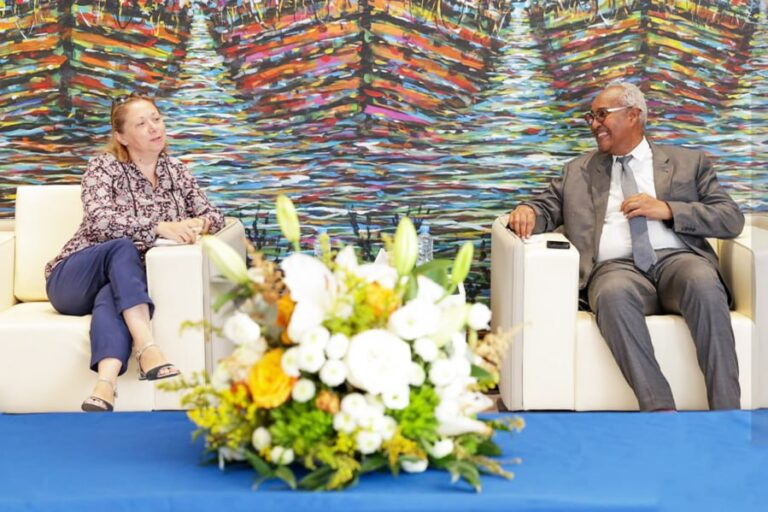
When Aboubaker Omar Hadi, Chairman of DPFZA, met with Dana Purcarescu, the French Ambassador in Djibouti, they discussed the most recent developments in the port industry.

Despite the difficulties caused by the circumstances in the Red Sea region, DPFZA saw a noteworthy 35 percent rise in transshipment activity, according to a statement released after the meeting.

The statement said, “This significant rise is evidence of the DPFZA’s operations’ adaptability and tenacity in the face of challenging geopolitical conditions.”

Since November of last year, the Houthi militia in Yemen, also known as Ansar Allah Movement, has been waging a campaign in sympathy with the Palestinian people and has put nations and their vessels that are affiliated with or support Israel at risk in the Red Sea region.

Attacks by the Yemeni military on ships traversing the Gulf of Aden and the sea have a significant impact on global logistics activity.

According to the statement issued by DPFZA, more ways to strengthen cooperation were discussed, with an emphasis on implementing comprehensive training programs for the environment protection unit, bathymetric survey unit, hazardous cargo IMDG management, ballast water, and contaminated water/oil treatment facility.

It stated that through deliberate investment in skill development programs, DPFZA hopes to enhance the competencies of its personnel, ensuring increased effectiveness and efficiency in its activities.

During the meeting between the Chairman and Ambassador Purcarescu, a thorough conversation regarding the final funding phase of the Bicidley Airport project was held. The airport is located approximately 60 kilometers from the present Ambouli Airport and will accommodate 1.5 million people and 100,000 tons of freight annually.

United Nation Secretary-General’s Special Envoy for Road Safety to launch global road safety campaign in South Africa

0

The United Nations Secretary-General’s Special Envoy for Road Safety, Jean Todt, will visit South Africa from 13 to 15 May 2024 to support national and local authorities’ road safety initiatives. In particular, the Special Envoy will launch the UN Global Campaign for Road Safety, in partnership with the No.1 outdoor advertising company worldwide, JCDecaux, under the hashtag #MakeASafetyStatement.  

One of the main goals of this campaign is to raise awareness of life-saving actions among young generations, who as statistics show, are the major victims of road crashes especially for young people aged from 5 to 29 years old worldwide. Supporting the efforts of South Africa in addressing this issue is key in a country where more than 60% of the population is under 35 years old. 

The launch events are to be held in Johannesburg and Pretoria with the participation of the Minister of Transport of South Africa and the Executive Mayors of Tshwane and Johannesburg.   

Mr. Todt will meet members of the Government as well as representatives of the private and public sectors and NGOs to advocate for the effective implementation of the Global Plan for the Decade of Action for Road Safety 2021-2030, which aims to halve the number of road fatalities by 2030.  

“Africa is the continent most affected by road crashes. Knowing that these affect the youngest first, it is beyond the human tragedy, an economic devastation sacrificing or invalidating for life the active force of a country. While the vaccine to avoid this carnage on the road exists, I urgently call on everyone to use it,” said the Special Envoy.

#MakeASafetyStatement 

Ten South African celebrities including Yvonne Chaka-Chaka, Bryoni Govender, Dr. Khumalo, Sello Maake Ka Ncube, Maduvha Madima, Leanne Manas, Dr. Moratwe Masima, Thokozani Ndaba, Gaisang Noge, and Caster Semenya, will join the campaign’s worldwide ambassadors to encourage users to adopt simple but effective rules to keep their roads safe. 

“Human Factors contribute 88% to South African road fatalities and therefore the involvement of celebrities as role models for the Youth in the #MakeASafetyStatement campaign will contribute towards the reduction of accidents on our roads,” stressed Ms. Sindisiwe Lydia Chikunga, Minister of Transport of the Republic of South Africa. 

New alarming figures 

The Special Envoy’s visit coincides with the recent release of the Global Status Report on Road Safety 2023 from the World Health Organization (WHO) on road safety, highlighting that Africa remains the region the most affected by this tragedy. 

According to the WHO report, the number of victims on African roads continues to grow with a mortality rate of 19/100,000 people, while in Europe, we observe a rate of 7 deaths/100,000 people. In South Africa, there are 25 deaths per 100,000 people.  

According to the World Bank (2026), the cost of road crashes represented 8.6% of South Africa’s GDP in 2016.  The RTMC 2023 State of Road safety Report highlights for 2023 the rate of 2.74% of South Africa ‘s GDP.    

Reliable data for swift revitalization 

Recent bus accidents have highlighted the run-down state of Africa’s vehicle fleet. Failure to comply with the Highway Code and to enforce penalties are also significant causes of accidents.  

Solutions to be implemented include adhering to the African Road Safety Charter and the United Nations Conventions on Road Safety, strengthening the health services that treat the injured and stepping up public awareness campaigns. Systematically collecting reliable data on road accidents and monitoring casualties is also a key element in reducing the number of victims. 

There is also a need to protect the most vulnerable road users, pedestrians, and cyclists, who are often the most disadvantaged and the youngest. Africa has the highest proportion of cyclist and pedestrian deaths, accounting for 44% of all road deaths.  

In South Africa, the efforts of the authorities are to be commended, with new initiatives such as the implementation of the Administrative Adjudication of Road Traffic Offences, the adoption of new technologies to enhance access to traffic licensing services (National Traffic Information System Online Services), the professionalization of the Traffic and Road Safety Officers Training through the National Framework Level 6 Qualification), Standardization and Harmonization of Traffic Law Enforcement and the development of a National Traffic Law Enforcement Code.   

Risk factors that are too often neglected 

Drink-driving, speeding, drowsiness, carelessness, non-use of seatbelts and helmets, negligence and non-compliance with the Highway Code are responsible for most road accidents in Africa. However, according to the WHO, more progress must be made regarding legislation and safety standards.   

Only six countries in the world have laws that comply with WHO best practices for all the risk factors – speeding, driving under the influence or distracted driving, use of UN-standard motorbike helmets, and use of seatbelts and child restraints. 

In South Africa, speeding in urban areas is high (60KM/h), and child restraint systems are not always available. At a time when the use of motorbikes is on the increase, particularly among young people, the wearing of seatbelts and quality helmets remains a real challenge, even though it could prevent many deaths and reduce the risk of serious injury by 69%.  

Recent data reveal that the majority of road crashes occur at night from Friday till Sunday with youth and pedestrians being the lead victims.   

Distributed by APO Group on behalf of United Nations Economic Commission for Europe (UNECE).

Riding the Wave: South Africa’s Financial Digital Revolution

0

GITEX Africa 2024 (www.GITEXAfrica.com), the continent’s largest tech and startup exhibition scheduled from 29-31 May in Marrakech, Morocco, emerges as a pivotal platform for exploring the intersections of digital transformation, financial inclusion, and economic empowerment. As South Africa’s banking of finance sector takes center stage in this global dialogue, the event promises to be a catalyst for innovation, collaboration, and growth.

In South Africa, digital transformation has become imperative across industries, and the financial sector is no exception. From the convenience of online banking to mobile payment solutions, banks are leveraging digital technologies to enhance efficiency, improve customer experience, and expand access to financial services.

With a growing youth population favoring digital banking, financial institutions are investing in user-friendly mobile apps and online platforms to meet evolving customer preferences.

Banks Face Competition from Fintech and Innovative Platforms

These digital banking platforms provide users with convenient access to a wide range of financial services, including account management, payments, and lending, all through intuitive user-friendly mobile and online interfaces.

However, amidst this digital transformation, banks face stiff competition from a diverse array of players, including agile fintech startups and innovative tech-driven platforms. These disruptors offer innovative solutions that challenge traditional norms and cater to evolving customer needs.

South African fintech startups, recognized locally and globally, provide convenient digital banking services, investment platforms, and innovative lending solutions, drawing customers away from traditional banks with their agility and customer-centric approach. In 2021, South Africa boasted the highest number of fintech startups in the African region with 154 companies (https://apo-opa.co/3KjmVTL). As of May 2022, fintech startups in South Africa secured close to $US77 million (https://apo-opa.co/3ys79ms).

The fintech value chain encompasses a wide range of services including banking, infrastructure, crowdfunding, digital currencies, lending, payment, and regulation technology.

By facilitating dialogue, collaboration, and knowledge sharing, GITEX Africa accelerates the pace of digital transformation in the financial services sector, driving inclusive growth and economic empowerment across the African continent. Among the more than 35 esteemed speakers from South Africa include Lillian Barnard, President at Microsoft Africa; Zondwa Mandela from Mandela Legacy; and Chipo Mushwana, Executive of Emerging Innovation and Payments, Nedbank.

Major South African investment funds, unicorns, and start-ups fast-forwarding cross-continental progress at GITEX AFRICA 2024 include SAVANT, Zindi, and go1.

Lillian Barnard, President of Microsoft Africa, said: “Africa has long been recognised for its formidable growth prospects and AI is the long-awaited key to help unlock that potential.”

“The AI-powered innovation we’re seeing today is poised to reinvent every aspect of society from healthcare to financial services, manufacturing and beyond. If Africa is to benefit from the paradigm shift currently sweeping the globe, we must make the promise of AI real for people and organisations across the continent – and do so responsibly.”

Hands-on Support Required for Startups

Bongani Sithole, CEO of Founders Factory Africa and a speaker at GITEX Africa outlines key challenges facing African startups: difficulties in finding product-market fit, hiring the right talent, maintaining company culture while expanding into new markets and securing funding.

Despite these challenges, Sithole highlights opportunities for startups to tap into, including the “development of new products and services to meet the needs of their growing customer base. This can lead to increased innovation and competitiveness.”    

In terms of specific trends within the African startup ecosystem, Sithole says we can expect to see more mergers and acquisitions (M&As) continue this year, primarily driven by larger companies seeking to acquire earlier-stage companies. “M&As are strengthening the startup ecosystem by offering a guarantee of revenue and funding for founders.” Additionally, he notes the potential of AI applications to address societal challenges and drive economic growth.

As Africa’s tech ecosystem evolves, he sees opportunities for cross-regional collaboration through initiatives like cross-border agreements for trade and talent, full implementation of the African Continental Free Trade Agreement (AfCFTA), fast-tracking of regulatory approvals.

Reflecting on lessons from leading African unicorns, he highlights the importance of solving societal problems and embracing failure as part of the startup journey. “Many successful founders are not first-time successes. Founders are encouraged to remain within the ecosystem even after failures to create potential unicorn by leveraging their experience.”

At GITEX Africa, Sithole aims to emphasize the importance of “hands-on support” for early-stage ventures beyond just capital. He also hopes to develop actionable steps to stimulate innovation and funding across Africa, advancing the tech and startup ecosystems.

Financial Inclusion and Economic Empowerment

Recognizing the significance of digital transformation, the South African government has taken proactive steps to promote financial inclusion and economic growth. In 2023, the National Treasury released a policy framework to broaden financial inclusion (https://apo-opa.co/4bff3OC), to achieve 90 percent banked status by 2030. This initiative highlights the government’s commitment to leveraging digital technologies to drive socioeconomic development and create opportunities for all South Africans.

While progress has been significant, challenges persist, highlighting the need for targeted interventions to ensure equal access to financial services. As South Africa continues to ride the wave of digital finance, the possibilities are boundless. By embracing innovation and strengthening collaboration, the country is charting a journey toward a brighter and more equitable future for all.

Distributed by APO Group on behalf of GITEX Africa.

Media Contact: 
Tayce Marchesi – PR Executive 
Tel.: + 971 58 552 3994 
Tayce.Marchesi@dwtc.com 

On social media:
Facebook: https://apo-opa.co/3JwCSp0
Instagram: https://apo-opa.co/3Qjatqj
Twitter: https://apo-opa.co/3w8Pbom
LinkedIn: https://apo-opa.co/3QluZGW
Youtube: https://apo-opa.co/3UdDFAb
Hashtag: #GITEXAFRICA
Website: www.GITEXAfrica.com

About KAOUN International:
KAOUN International is the independent events company and wholly owned subsidiary of Dubai World Trade Centre (DWTC) established to organize and manage events internationally. Derived from the Arabic word ‘universe’, KAOUN International’s mission is to ‘Create Limitless Connections’ for the industries and markets in which it operates. Created to leverage the 40-year legacy of DWTC’s events management business and drive future MICE sector opportunity in the MENASA region. KAOUN International delivers game-changing live experiences that build robust business connections, create opportunity, and stimulate economic growth, building on DWTC’s extensive portfolio of business and consumer events spanning multiple sectors, including technology, food and hospitality, sustainability, broadcast and satellite, automotive, talent development and leisure marine.