Saturday, May 9, 2026
Home Blog Page 2202

Conflict situation and the private sector 

0

Alazar Kebede

Armed conflict and post-conflict situations constitute severe constraints on economic life and present a hostile environment to business and investments. As the primary driver of economic development, the private sector’s ability to prosper is imperative to job creation and investments necessary for human security. The private sector, international and local, has the ability to contribute in at least two rather different ways: by conducting its core business and by actively promoting certain elements of peace-building.

Taking years of practical experience from private sector development in complex environments as point of departure, Sofia  Svingby, a private sector development specialist at Stockholm University argue that through conscious engagement and active dialogue promotion business can and does take on an important role for both economic development and peace-building in fragile contexts.

While potentially highly profitable, fragile or complex environments present a multitude of challenges for an international company. According to Sofia  Svingby, this risk-opportunity balance must be carefully managed to cater for long-term success. Weak formal institutions, opaque power structures, commercial and political interdependencies and ethnic tension are some examples of particular challenges of the fragile context any business company needs to navigate.

The private sector’s main contribution to developing economies and societies stems from its core activity of its ability to offer products and services meeting local demand, and the related effects on job creation and economic growth. Brian Ganson, Associate Professor at the Business School of Stellenbosch University stated that in their interaction with suppliers, consumers, employees and governments and institutions, companies may transfer know-how, promote peaceful tools of conflict management and good governance through their core business conduct. Herein lie both the inherent challenge and opportunity. According to him a company’s ability to steer towards sustainably successful business models rather than short-sighted and exploitative practices is pivotal.

Brian Ganson, however, argued that in order to be successful, companies can not go about doing ‘business as usual’. In complex or fragile environments, operations and products need to contribute to a virtuous rather than vicious circle of economic and societal development. If implementing conflict sensitive approaches in strategies and operations, companies can facilitate economic development while also contributing to establishing essential conditions for peace-building.

Brian Ganson further noted that a context-sensitive governance model, including means of ensuring local compliance with the corporate code of conduct, is required, but key to implementing such approaches is leadership. Leaders’ ability to navigate complex environments which is harvesting opportunity and managing risk determines if a business can successfully provide benefit to stakeholders, employees and society. In order to do this, leaders need to incorporate an attitude of attentiveness to any aspects in the local context that may influence the company’s operations. According to Sofia  Svingby, the key attribute of such an attitude is inquisitiveness, continuously striving to understand the environment in which the company operates.

Joanna Buckley, development economists at Oxford Policy Management Consultancy on her part argued that this approach helps business leaders anticipate and manage the way the company influences the local context, positively or negatively. Moreover, and equally important, it supports the management’s grasp on how the local context, for instance its conflict dynamics, affects the company and its ability to meet the financial, reputational, legal, and other requirements placed on international firms.

Joanna Buckley explained that in addition to conducting business sustainably and responsibly, private sector actors such as individual companies, multinational or local, as well as organised business, may offer channels and methods for trust-building outside the traditional arenas. This potential can be manifested by a well-functioning labour market dialogue or improved interaction between private sector and policymakers. The ability of individual employers or that of business organisations to contribute to conflict resolution, either at the workplace level or in society at large, may be decisive in establishing a dialogue-centred rather than conflict-oriented interaction.

The fact that companies often have an acute awareness of the challenges facing citizens in local communities is sometimes overlooked. Organised business on local and national level, meanwhile, can have an important role to play in holding governments and public institutions accountable. The achievements of the 2015 Nobel Peace Prize laureates, the Tunisian Quartet, clearly demonstrate how business and labour market parties, when engaged in broad cooperation, were able to provide an alternative, peaceful political process at a time when the country was on the brink of civil war.

Jonas Borglin, a known Swedish private sector and industrial analyst argued that business should be viewed and view itself as a stakeholder in sustainable development, even though a company’s status as a commercial entity may render it difficult to engage in far-reaching development work as such. The interests, capacity and mandate of companies and business associations need to be acknowledged if business actors’ potential in building resilient, prosperous societies is to be efficiently utilised.

According to Jonas Borglin, sustainable, responsible business practices and values are not complementary features of long-term successful business, but a pre-requisite. As such, the core business and the way it is conducted is the major contribution of a company not only as a source of financing, innovation, job creation and growth, but through its impact on stability and governance issues, including anti-corruption, peace and security and the rule of law.

ITA elevates Ethiopian culinary scene with “The Art of Wine” event

0

The Italian Trade Agency, the trade promotion division of the Embassy of Italy, launched a captivating event called “The Art of Wine” to showcase and promote Italian wines that are already available in the Ethiopian market. With a focus on promoting Italian culinary traditions, the Italian Trade Agency collaborated with esteemed sommelier Jacopo Fanciulli to organize a memorable evening at Dok Restaurant on Thursday, February 8.

This exclusive event, led by an experienced Italian sommelier, provided an opportunity for key players in the Ethiopian hotel industry to indulge in a selection of fine wines while gaining valuable knowledge about their origins, characteristics, and perfect pairings. By participating in this immersive experience, hoteliers and restaurateurs were able to enhance their offerings and elevate the dining experience for their esteemed customers.

Selected hotels and restaurants had the privilege of participating in exclusive tastings and short courses on Italian wines, facilitated by renowned importers serving the Ethiopian market. This event served as a unique platform for participants to savor a wide variety of Italian wines, including some of the finest selections available. Attendees gained valuable insights into the characteristics, pairings, and cultural significance of these wines, discovering how they could complement their existing menus and enhance the overall dining experience for their valued customers.

“The Art of Wine” event, organized by the Italian Trade Agency, proved to be a remarkable occasion for Ethiopian hospitality professionals to expand their knowledge, engage with Italian wine experts, and explore the rich tapestry of flavors that Italian wines have to offer.

Gode Airport expansion project officially opened

0

By Muluken Yewondwossen

The Gode Ugaas Miraad Airport Terminal expansion project, which cost over 12.3 million euros, has officially opened for service.
The inauguration was attended by senior officials, including Prime Minister Abiy Ahmed and the president of the Somali region, Mustafe Mohammed.

The project, located in the center of the Somali region, took three years to complete and includes a new 3,500 square meter terminal building, an apron capable of accommodating four De Havilland Q400 or B737 aircraft simultaneously, additional parking spaces, a new runway, and improved road networks. Ethiopian Airlines Group, the continent’s leading aviation company, has announced similar initiatives at four other airports. CEO Mesfin Tasew expressed satisfaction with the Gode Airport project, emphasizing its positive impact on passenger experience and the airline’s commitment to enhancing domestic airport infrastructure. The state-of-the-art terminal is equipped with modern amenities, including a solar system, to ensure a seamless travel experience.

Ethiopian Airlines operates daily flights to and from Gode, which is the third airport in the Somali region. With over 22 domestic destinations, the airline plays a significant role in regional connectivity. Following the acquisition of Ethiopian Airports Enterprise, Ethiopian Airlines Group has taken on the responsibility of managing the nation’s airport construction and renovation projects.

Ukama Ustawi Pause and Reflect Workshop: Fostering Collaboration for Resilient Farming Communities

0

By our staff reporter

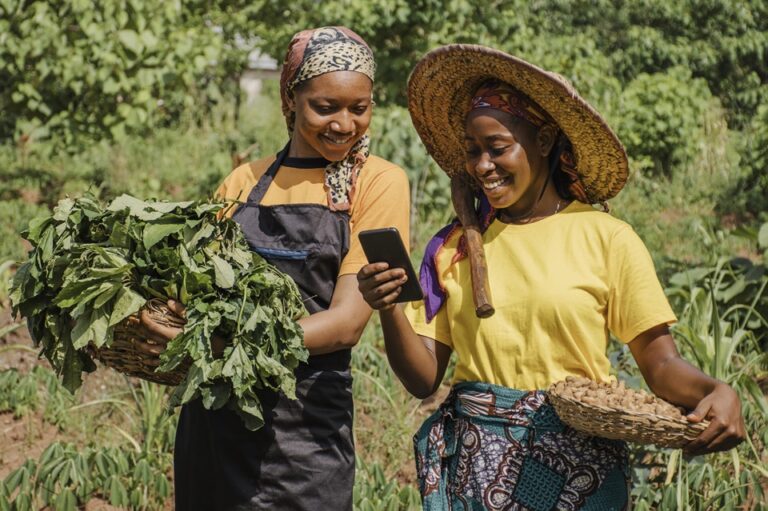
The Ukama Ustawi initiative, part of the CGIAR Research Initiative on Diversification in East and Southern Africa, recently organized the Ukama Ustawi Pause and Reflect workshop from 5-9 February 2023. The workshop took place at the ILRI Campus in Addis Ababa, Ethiopia. Bringing together regional partners, other CGIAR Initiatives, and CGIAR Country Convenors from East and Southern Africa, the event aimed to recapitulate the achievements of 2023 and plan for impactful initiatives in 2024.

The workshop featured interactive sessions designed to foster collaboration and cooperation among different WorkPackages, as well as with partners and the broader CGIAR community. The ultimate goal was to catalyze synergies that would benefit smallholder farmers in the region.

Nora Hanke-Louw, UU Project Coordinator and Deputy Country Representative of IWMI South Africa, emphasized the importance of collaboration in the African context, stating, “True to the Afrocentric cultural worldview, in the tapestry of life, threads of collaboration weave the most resilient fabric.” Ukama Ustawi aims to reconnect the “Community of Spirit” and the CGIAR community, with aspirations of making a positive impact in various countries, including Eswatini, Ethiopia, Kenya, Madagascar, Malawi, Mozambique, Rwanda, Uganda, South Africa, Tanzania, Zambia, and Zimbabwe. Events like the Pause and Reflect workshop play a critical role in aligning strategic endeavors, reflecting on past accomplishments, and reaffirming their commitment to sharpening the initiative’s impact in 2024, particularly in achieving climate resilience in farming communities.

Ukama Ustawi is a new regional integrated initiative by CGIAR in Eastern and Southern Africa. A kick-off meeting was held in Nairobi on March 2-3, 2022, with the participation of various stakeholders, including national agricultural research extension programs, government representatives, private sector actors, funders, and national and regional agricultural research and development organizations.

The initiative, spanning three phases, aims to support climate-smart agriculture and livelihoods in 12 countries in Eastern and Southern Africa. In Phase 1, the focus countries are Kenya, Zambia, Ethiopia, and Zimbabwe. Phase 2 includes Malawi, Rwanda, Tanzania, and Uganda, while Phase 3 covers Eswatini, Madagascar, Mozambique, and South Africa. By providing improved extension services, strengthening institutional capacity, offering targeted farm management bundles, policy support, enterprise development, and private investment, the initiative aims to empower millions of smallholder farmers to intensify, diversify, and de-risk their maize-mixed farming practices.