Saturday, May 9, 2026
Home Blog Page 2204

Exploring Africa’s democratic landscape and institutional transformations: Insights from the Global State of Democracy (GSoD) 2023 Report

0

By our staff reporter

The International Institute for Democracy and Electoral Assistance’s (International IDEA) Africa and West Asia Regional Office, in collaboration with the Embassy of Switzerland, has unveiled the Global State of Democracy (GSoD) 2023 Report titled “The New Checks and Balances.” The report sheds light on the strengths and challenges faced by African democracies, emphasizing both the wave of unrest and military coups in the Sahel region and the progress made in countries like The Gambia and Zambia.

According to the report’s key findings, African countries have shown advancements in election administration, political participation, and the expansion of civic space. Notably, political participation has emerged as a regional strength, with nine African countries ranking among the top 50 globally. The experiences of countries such as Ghana, Kenya, Morocco, Mozambique, Nigeria, and Sierra Leone demonstrate the significant role that popular movements can play as countervailing institutions when other mechanisms fail to constrain governments.

The launch event, held on February 8th, 2024, in Addis Ababa, has garnered participation from various stakeholders, including International IDEA member states, the African Union, Regional Economic Communities (RECs), United Nations agencies, diplomatic representatives, civil society organizations, research institutions, think tanks, academic bodies, election management bodies, and government officials.

The Global State of Democracy Report, an annual publication by International IDEA, provides a comprehensive overview of global and regional trends in democracy and human rights. It combines case studies with actionable recommendations for policymakers, governments, and civil society, offering valuable insights for promoting democratic governance.

Dr. Roba Sharamo, the Regional Director of International IDEA’s Africa and West Asia Office, highlights the challenges faced by African democracies, particularly in the Sahel region. However, he also acknowledges positive developments across the region, including the strengthening role of civic groups and popular political movements.

The report further highlights the mixed record of formal countervailing institutions. While co-opted and weak legislatures contrast with judiciaries and fourth-branch institutions that effectively serve as checks on executive power, the role of the African Union and Regional Economic Communities in upholding democratic norms is underscored. However, the report emphasizes the need for effective democratic institutions at the domestic level, as member states’ inadequate compliance has demonstrated.

The Global State of Democracy (GSoD) 2023 Report provides a valuable resource for understanding the state of democracy in Africa, informing policy discussions and initiatives aimed at strengthening democratic governance in the region.

EEP faces delays in power transfer, maintenance due to compensation claims

0

By our staff reporter

The Ethiopian Electric Power (EEP) has encountered challenges in carrying out power transfer and operation maintenance works on time due to compensation claims related to border enforcement. The Department of Operation and Maintenance of South West Region Transmission Lines and Distribution Stations highlighted that boundary enforcement has become a significant obstacle in their operational and maintenance activities.

Compensation claims arising in areas where transmission lines pass are impeding the timely execution of operation and maintenance tasks. The inspection and maintenance work on the transmission lines, including those extending from Jimma Zone to Gambella in the Southwest Region, is becoming increasingly challenging due to these compensation claims.

Director of the department, Getahun Sisay, explained, “Compensation claims filed in areas traversed by the transmission lines are hindering the timely completion of operation and maintenance work.” Moreover, the theft of tower components in various areas along the transmission lines is seen as a threat to the region’s operations.

Efforts are needed to address both the compensation claims and the theft issue in order to ensure smooth power transfer and maintenance activities for the Ethiopian Electric Power.

Getahun highlighted the recurring theft incidents along the Gibe 2 – Wolaita Sodo route, emphasizing that these thefts have shown a declining trend over the past three months. This positive development can be attributed to the collaborative efforts undertaken with administrative bodies.

However, Getahun expressed concern regarding the ongoing thefts on the Metu-Bedele and Metu-Gambela lines, as these incidents remain unresolved and pose a threat to operational work. Although power interruptions have not occurred due to theft on the lines thus far, continued theft incidents on these two lines could potentially lead to future power disruptions.

In order to address the issue of border enforcement effectively, discussions are being conducted with administrative bodies at all levels. The aim is to find sustainable solutions and mitigate the challenges posed by theft in the Ethiopian power sector.

ECMA advances licensing for participants, awaits central bank directive on retail banks

0

By Muluken Yewondwossen

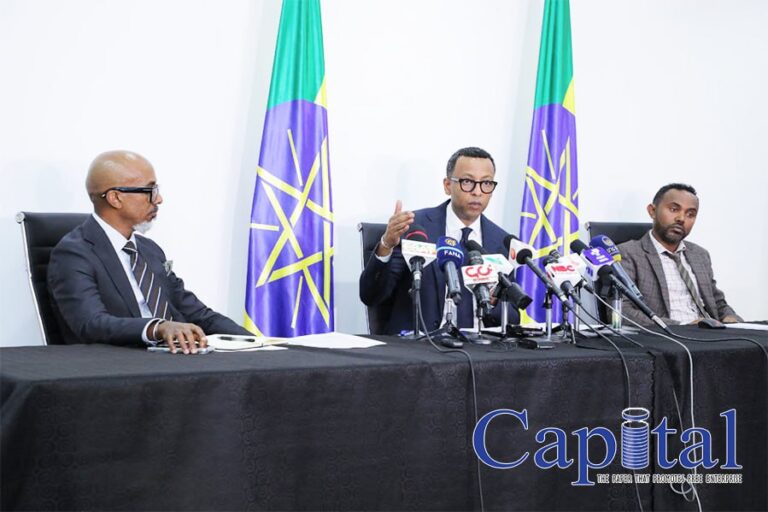
The Ethiopian Capital Market Authority (ECMA) has announced its readiness to grant licenses to participants, marking a significant advancement in the long-awaited launch of the capital market. However, the establishment of subsidiaries by local retail banks, as permitted by a central bank directive, is still pending.

On Wednesday, February 7, the Director General of ECMA, Brook Taye, informed the media that the Authority will begin accepting applications from prospective actors starting tomorrow. Brook added that if all the necessary paperwork is submitted correctly, the licenses will be granted in less than a month.

The ECMA offers a range of licenses that service providers can apply for in order to participate in the upcoming capital market, which will be operated by the Ethiopian Securities Exchange (ESX). These licenses include securities brokers, investment advisers, operators of collective investment schemes, investment banks, securities dealers, custodians, market makers, credit rating agencies, securities appraisal firms, securities portfolio managers, and others, as listed in the ‘capital market service providers licensing and supervision 890/2024’.

Investment banks, as non-deposit taking financial institutions, are expected to be among the major participants in the securities market. Brook mentioned that three well-known multinational companies have expressed a strong desire to participate in the industry, but he refrained from disclosing their identities to protect their commercial interests. He also noted that two local retail banks are diligently preparing to apply for a license to actively engage in the alternative financial sector.

There is anticipation that a potential new law from the National Bank of Ethiopia (NBE) would support the endeavors of retail banks. Both the ECMA and NBE, which are separate regulatory bodies for the financial industry, have recently disclosed that discussions have taken place to provide retail financial institutions with more opportunities to operate in the upcoming secondary market.

The two regulatory bodies currently have laws in place that prohibit retail banks from participating in any capacity in the capital market or investment banking activities.

To address this, both parties have reached an agreement that the central bank should introduce legislation requiring local banks to establish subsidiary entities that would function as investment banks. This would enable local retail banks, who are potential sources of life for the capital market, to participate. However, the regulatory authority, the National Bank of Ethiopia (NBE), has not yet officially released the potential directive.

“On our end, we have made preparations to handle the license applications for securities exchange actors, including applications for an investment bank license from the Ethiopian Capital Market Authority (ECMA),” said Brook, the Director General of ECMA. He emphasized that the responsibility lies with the central bank, stating, “We are aware that the central bank is working on issuing the directive that would allow the formation of subsidiaries for local banks, but we cannot provide a specific timeline for when it will be issued.”

Investment banks operate as security brokers, dealers, and financial advisors. They also facilitate the issuance of securities by companies, governments, and other entities through underwriting. Additionally, they serve as intermediaries between securities issuers and the investing public, as well as assist in mergers and other company reorganizations.

Brook stated, “With respect to issuing licenses, the regulatory authority has taken another significant step, creating a favorable environment for the Ethiopian Securities Exchange (ESX) to commence its operations.” However, he noted that the readiness and decision to open the doors of the securities exchange ultimately lie with the ESX.

Industry insiders view the recent development by ECMA as a significant milestone for the launch of the new market, which Ethiopia has been without for approximately fifty years. Ethiopia is one of the few remaining nations without a capital market.

Capital has been unable to obtain further information from the National Bank of Ethiopia (NBE) at this time.

Industrial sector to benefit from revised foreign currency retention directive

0

By Muluken Yewondwossen

The Ministry of Industry (MoI) has announced that recent changes to the retention directive will facilitate access to foreign currency for the industrial sector. The National Bank of Ethiopia (NBE), the country’s central bank, revised the foreign exchange surrender law in August of the prior year with the aim of promoting the effective utilization of hard currency by exporters.

Previously, banks were required to surrender 70 percent of their foreign exchange earnings to the NBE under the surrender law. However, this directive has been amended. Under the previous directive, exporters of goods and services, as well as recipients of inward remittances, were allowed to retain 20 percent of their export earnings in foreign currency indefinitely in a retention account. This was after deducting the compulsory 70 percent surrender and remitting the remaining percentage to the respective bank.

In August, the NBE revised the percentage, enabling exporters of products and services to retain 40 percent of their foreign exchange earnings. Local manufacturers have often expressed concerns about the insufficient availability of foreign currency, despite their ability to generate hard currency.

Melaku Alebel, the Minister of MoI, presented his six-month report to the Industry and Mining Standing Committee, stating that since the revision of the foreign currency retention directive, there has been an increase in the availability of hard currency. This availability is crucial for importing capital goods, components, and inputs. According to the minister, the manufacturing sector was projected to receive USD 338 million during the first half of the budget year. However, the actual supply amounted to USD 274 million, which also included funds for the import of new machinery. Melaku acknowledged that there are still limitations on the amount of hard currency that can be allocated for the import of inputs and spare parts, which affects the current operations of the industry.

To address the challenges faced by the industry sector, the Minister suggested considering additional options such as supplier credit and franco valuta schemes. Although specific figures were not provided, the Minister acknowledged that there has been improvement compared to the previous year’s performance due to the revision of the foreign currency surrender directive.

Regarding financing availability, heavy industries have been granted 23.7 billion birr in credit, an increase of 883 million birr compared to the same period in the previous year. However, the original plan was for 30 billion birr. As part of the Home Grown Economic Reform (HGER) II plan, the industry sector is expected to receive 24 percent of the overall loan provision, up from the previous position of 12 percent.

In terms of loan distribution, the manufacturing sector currently receives 13.8 percent of all loans. The Minister emphasized the need for improvement in this area and stated that discussions have been held with banks and other relevant bodies to address this issue. The manufacturing industry plays a crucial role in import substitution efforts, with a market share of 39.7 percent, which has increased by more than one percent compared to the end of the previous budget year. Import substitution efforts have reached nearly one billion dollars, achieving 90 percent of the target. The goal is for locally manufactured goods to capture 60 percent of the market share by the end of the ten-year growth plan.

The sector faces challenges such as internal conflicts, issues in the Red Sea region, and difficulties with Djibouti Customs. These factors have contributed to the obstacles encountered in improving the industry sector.