Saturday, May 9, 2026
Home Blog Page 2208

Ethiopia takes significant step towards vaccine independence with $70 Million Investment

0

By Eyasu Zekarias

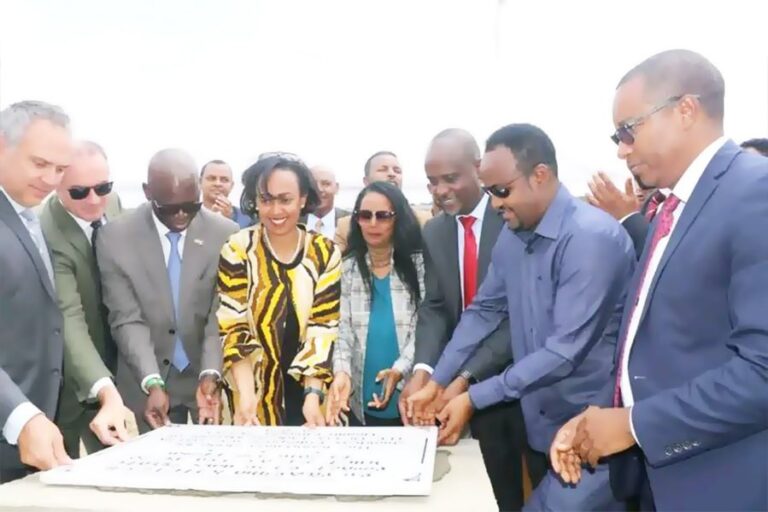
Ethiopia has successfully secured the bid to establish vaccine production within its borders. The foundation stone for this project, which has received a $70 million investment, was laid at Kilinto Industrial Park. The aim is to eliminate the need for importing vaccines, which currently incurs high foreign currency expenses. Additionally, the government of Ethiopia is actively working to enhance domestic vaccine production capacity, collaborating with various stakeholders, including the Ministry of Health.

On August 20, 2023, the regulations for the establishment of Shieldvax Enterprise and Ethio Bio Pharma were approved by ministers. Shieldvax Enterprise is an umbrella enterprise that encompasses the National Veterinary Institute (NVI), a long-standing institute involved in veterinary vaccine manufacturing, and the newly established ShieldVax Enterprise. NVI has a track record of producing vital medical products, including vaccines, pharmaceuticals, medical supplies, and tests, for both human and animal use, catering to the domestic and international markets.

This establishment is well-timed and aligns with the African Union’s ambitious plan to produce 60% of Africa’s required human vaccines on the continent by 2040. The COVID-19 pandemic has underscored the importance of robust healthcare systems and domestic medicine production. Consequently, the government has officially established Shieldvax Enterprise as a government development company to address these concerns.

The African Vaccine Manufacturing Accelerator (AVMA), a collaboration between the Vaccine Alliance, developing countries, donor governments, the World Health Organization, UNICEF, the World Bank, the vaccine industry, technical agencies, civil society, the Bill and Melinda Gates Foundation, and GAVI’s board, has approved the establishment of a financial instrument known as AVMA. This instrument will provide up to $1 billion to support sustainable vaccine production in Africa. The AVMA aims to incentivize and support at least four African vaccine manufacturers over the next decade to secure GAVI/UNICEF tenders, producing over 800 million vaccine doses on a sustainable and large-scale basis.

On January 29, 203, Ethiopia announced the launch of the Shieldvax Enterprise project, which will receive an investment of over $70 million. The project aims to produce various types of vaccines at the Kilinto Industrial Park. The launch event was attended by senior government officials, including the Minister of Health, representatives from the World Bank, various ambassadors, and leaders from the Customs Commission and federal and state levels.

Lia Tadese, the Minister of Health, announced that Shieldvax Enterprise has officially been established as a government development company by the Council of Ministers. The project is scheduled to complete vaccine filling and packaging by the end of 2026 and achieve full vaccine component production by 2027.

In 2021, the African Union established the Partnerships for African Vaccine Manufacturing (PAVM) under the Africa CDC, with the goal of enabling the African vaccine manufacturing industry to develop, produce, and supply over 60% of the continent’s vaccine needs by 2040. This is a significant increase from the current level of less than 1%, with interim goals set at 10% by 2025 and 30% by 2030.

Jean Kaseya, the Director General of Africa CDC, views AVMA as a testament to Africa’s collaborative efforts in securing support and funding ($1 billion) for African vaccine manufacturers. This achievement demonstrates the benefits of African unity and cooperation with international partners.

Ethiopia, along with Africa CDC and other partners, remains committed to working together to achieve the goal of manufacturing 60% of Africa’s vaccine needs by 2040. This project not only aids in the recovery from the COVID-19 pandemic but also strengthens the country’s ability to respond to future health emergencies. The construction of the vaccine production factory is expected to be completed by 2027, with production commencing thereafter.

EMPA joins forces with EMI to enhance leadership sector

0

By our staff reporter

The Ethiopian Management Professional Association (EMPA), a long-standing professional group focused on elevating industry expertise, has welcomed the Ethiopian Management Institute (EMI) as a member to contribute to its mission. During the EMPA general assembly held on Saturday, January 27, at Addis Ababa University’s FBE Campus, Eshetu Chole Hall, members made the decision to play a significant role in the leadership sector.

Numerous research studies and experts have highlighted the lack of competent leadership and administrative skills as a substantial challenge in both public and private sector workplaces. EMPA, founded in the 1980s with the aim of assisting the industry, has experienced various ups and downs over the past three decades. However, in the past four years, the association has been actively operational after a period of suspension, according to Dawit Wubshet, a departing board member.

“The industry is constantly evolving, and it is our responsibility to meet the growing demand for skilled and high-caliber managers across various fields, while also establishing effective structures for public and private entities,” Dawit emphasized, acknowledging the significant role played by other professional associations in their respective fields.

EMPA has initiated several projects in recent years, and these endeavors are expected to further develop in the coming years. Its members consist of former students and educators with leadership training experience, many of whom are currently working in various fields, including teaching.

EMI, a public company that has been providing management development services in Ethiopia since 1956, has joined EMPA as a member. This collaboration creates a valuable synergy that is expected to enhance EMPA’s role, as stated by the former board member. In addition to the election of new board members, six subcommittees, including marketing, research, and mobilization, have been established to strengthen the association’s activities.

EMPA has been actively engaged in capacity building, training, research, advocacy, and the promotion of innovative ideas. Due to the overwhelming demand, there is an agreement to expand the association’s operations. Despite the rapid expansion of the nation’s economy, management needs have not received the attention they deserve, according to Dawit. He emphasized the importance of providing proper attention to professional leadership to sustain the growth momentum.

Workneh Kassa, an associate professor at AAU, and Mekbeb Kifle, one of the EMPA founders, have been reelected as president and vice president, respectively, to lead the organization’s activities.

Goh Betoch welcomes new president as Mulugeta Asamre retires after a storied career in the financial sector

0

By Muluken Yewondwossen

Mulugeta Asamre, a highly accomplished leader in the banking industry, officially handed over the reins of Goh Betoch Bank (GBB) to Girum Tsegaye, the newly appointed president. With over three decades of experience in the financial sector, Mulugeta has made significant contributions to the Ethiopian banking landscape.

Notably, Mulugeta played a pivotal role in the rebranding of Bank of Abyssinia (BoA), one of the pioneering banks in Ethiopia when the market opened to private investors thirty years ago. During his tenure as CEO for approximately five years, he successfully rebuilt the bank’s foundation and enhanced its profitability. Prior to his role as CEO, Mulugeta held high-level positions, including vice president, at BoA from 2010 until assuming the leadership role in 2014.

Before joining BoA, Mulugeta began his career at the state-owned Commercial Bank of Ethiopia (CBE), where he worked for eighteen years in various senior positions. After departing BoA in 2018, Mulugeta joined a group of industry experts and business community members to establish the first private mortgage finance company. The company launched in October 2021 with a significant capital investment and a large pool of shareholders.

Having served as the founding CEO of the mortgage finance firm for over two years, Mulugeta notified the GBB board of directors of his retirement plans late last year, citing health issues as the reason for his departure. Getahun Nana, a founding member and chair of the GBB board, stated that Mulugeta’s retirement was unavoidable due to his health condition.

Despite retiring from an active leadership role, Mulugeta expressed his intention to remain involved in the industry as a consultant and contribute to the board. He emphasized the need for the banking industry to focus on developing leaders with competitive skills aligned with the requirements set by the National Bank of Ethiopia.

Girum Tsegaye, the former CEO of Berhan Bank, has been appointed as the second CEO of GBB, assuming the role on February 1. With over thirty years of experience in the financial industry, Girum previously held positions at CBE, Hibret Bank, and Ethio Lease. He served as the founding CEO of Ethio Lease, the country’s first privately held equipment leasing firm, for three years before rejoining Hibret Bank as senior vice president for strategy and marketing.

As Mulugeta Asamre embarks on a well-deserved retirement, the financial sector bids farewell to an iconic leader who has left a lasting impact on the industry.

Once close allies now foes: Abinet loses civil case over document dispute with Al Amoudi

0

By Muluken Yewondwossen

Former associate of business tycoon Sheik Mohammed Hussein Al Amoudi, Abinet Gebermeskel, has lost a civil case against Sheik Mohammed in a well-known legal dispute. The ruling this week favored Sheik Mohammed, who had filed a civil complaint seeking the annulment of a document. The court decision stated that Abinet, the defendant, lacked the authority to execute loan agreements on behalf of Sheik Mohammed, rendering the verified document from the Document Authentication and Registration Service (DARS) inappropriate.

According to court documents, Abinet’s brother, acting under power of attorney, signed a credit agreement on behalf of Sheik Mohammed in June 2021. The agreement guaranteed that Sheik Mohammed had received funds from Abinet on several occasions for various expenses. Abinet claimed that, based on verbal instructions from Sheik Mohammed, he had covered bills, costs, and accommodations using his personal credit card and bank account for visitors, including VIPs, who were visiting the US. He alleged that Sheik Mohammed had failed to reimburse him as promised.

To ensure that his former friend acknowledged a debt of three million dollars for the expenses incurred in the US, Abinet signed a payment agreement at DARS on behalf of Sheik Mohammed. Abinet’s brother, acting under power of attorney for Abinet, also signed the document. Sheik Mohammed argued that he did not accept the payment and that the document exceeded the authority granted to Abinet in the power of attorney, which was approximately ten years old.

Around 22 months ago, Abinet also initiated a civil lawsuit, seeking reimbursement from Sheik Mohammed for the expenses he had incurred on behalf of his former friend. Sheik Mohammed countered that the debt claim was unfounded and that the power of attorney granted to Abinet did not authorize him to make credit-related deals. He claimed that the document signed without his authority and verified by DARS was unlawful.

Regarding the loan claim, Sheik Mohammed stated that the evidence presented by Abinet did not support his case, as it was produced by the defendant himself. Despite Abinet’s claim that he could provide transaction statements from US financial institutions and the court’s order for the Ministry of Foreign Affairs to obtain information from US banks, the US banks denied his request, stating that they would only disclose records upon request from a US court.

The court granted Abinet the opportunity to present bank statements, but he was unable to provide the requested documents. On Wednesday, January 31, the court delivered its verdict on both lawsuits filed by Sheik Mohammed and Abinet’s counter-accusation. The court accepted Sheik Mohammed’s argument regarding the unverified credit and ruled that the DARS-verified document was inappropriate. Additionally, the court clarified that the power of attorney granted by Sheik Mohammed to Abinet was limited to proceedings within Ethiopia and did not extend to matters in the United States.