Saturday, May 9, 2026
Home Blog Page 2212

Expansion of SGTD boosts transit cargoes, enhances regional trade

0

By Muluken Yewondwossen

Ethiopian Shipping and Logistics (ESL), a state-owned logistics enterprise, commends the expansion of Doraleh Container Terminal Management Company (SGTD), a prominent port in the region. SGTD has announced that the recent expansion, which includes an increased transshipment capacity and additional gantry cranes, will significantly benefit transit cargoes in terms of time and cost.

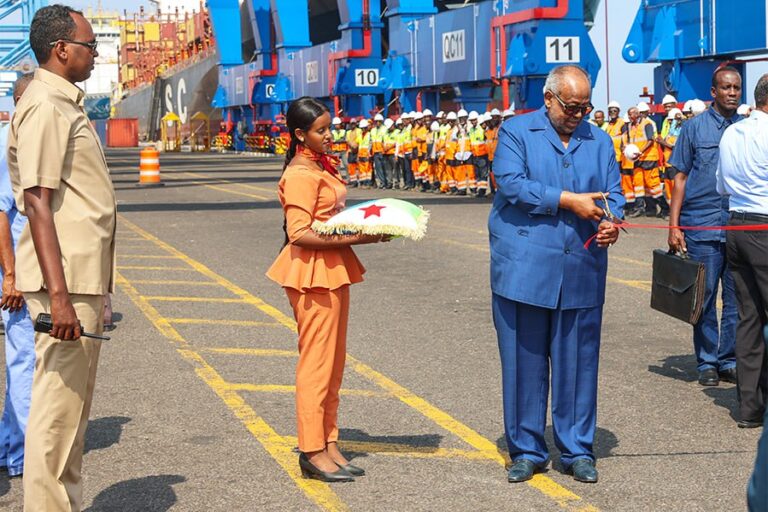
The container terminal in Doraleh, located 12 km northwest of Djibouti’s capital, has inaugurated the expansion of its stake yard and the addition of four gantry cranes, at a cost of USD 70 million. During the launch of the flagship project on January 22, President Ismail Omar Guelleh emphasized Djibouti’s unwavering goal of maintaining its position as the leading port in the region. He stated that the installation of the new gantries is a crucial step towards achieving this aim.

The President highlighted that the gantry cranes demonstrate their commitment to enhancing the terminal’s activity with major shipping lines and expanding transshipment volumes. Furthermore, he emphasized that the gantries are part of their strategy to diversify the terminal’s customer base, allowing for a significant increase in regional and international transshipments. This, in turn, will lead to more trade, growth, and prosperity for the region.

Berisso Amallo, CEO of ESL, expressed satisfaction with the new expansion, believing that it will strengthen their extensive logistical operation. He noted the potential opportunities for ESL’s shipping business at the newly opened facilities. With the addition of the gantries, large vessels can now be accommodated, providing the opportunity for faster loading and unloading, thus accelerating port activity.

The project, which faced delays due to COVID-19, involved a USD 30 million extension of the yard and USD 40 million for the construction of Megamax ship-to-shore (STS) cranes, supplied by Liebherr Container Cranes, a leading industry provider based in Germany. In 2019, the terminal reached nearly 80 percent of its capacity, according to SGTD CEO Abdillahi Adaweh Sigad. The need for additional capacity, gantry cranes, and space arose from the growing demand from liners, particularly for the transit market with Ethiopia, as a result of the terminal’s improved productivity in recent years.

“We had eight gantries that were sufficient for operating vessels up to 15,000 twenty-foot equivalent units (TEUs) in size. However, with the increasing number of larger vessels like the Triple E (3E) Class and Malaccamax, which can carry between 15,000 and 23,000 TEUs, our capacity was insufficient. This prompted the expansion,” the CEO explained. “Currently, large vessels capable of carrying more than 15,000 TEUs dominate the transshipment market.”

“The expansion included the addition of cranes in addition to the yard,” he informed Capital.

The gantry crane arrived in December of the previous year, following the completion of the yard extension at the beginning of 2023.

“Even before we could commission the gantry crane, liners discovered its arrival and initiated transshipment operations,” he continued. “Although SGTD accounted for only 5 percent of transshipment in 2022, the presence of the gantry crane for the past six months has increased our transshipment to 20 percent of the total operation.”

Currently, SGTD aims to achieve 35 percent transshipment for the entire year of 2024, with a goal of 50 percent in 2025.

“This means that 50 percent of shipments will be transshipment, while the other 50 percent will be local and transit, serving customers in Ethiopia, Djibouti, and the international market,” the CEO stated.

Adaweh Sigad clarified that in addition to the lucrative transshipment business, the new development provides significant benefits for Ethiopian transit cargoes and Djibouti.

He emphasized that the increasing transshipment will directly benefit shipments to Ethiopia and Djibouti.

“When we bring a vessel with, let’s say, 1,000 TEUs, we cover all the vessel’s costs since we are Djibouti and Ethiopia. Shipping companies don’t concern themselves with the number of containers as long as they are paid. Whether the vessel remains at the port for twelve hours, two days, or three days, the shipping company is paid the full daily rate,” he explained.

“As the CEO, since taking over the management of the port facility in early 2018, if our transshipment grows to 4,000 and 1,000 TEUs for Djibouti and Ethiopia, transshipment will become the majority payer.”

He revealed that Ethiopia will benefit from transshipment in two key ways: price and speed. With more cargo, both local and transshipment, coming through the SGTD port, the price will be lower. Additionally, the speed of delivery will improve.

“If we have 5,000 containers tomorrow, they will arrive directly and be discharged here, rather than going through transshipment. This means that Ethiopian customers who used to wait two months or a month and a half for cargo from Shanghai will now only wait three weeks, as it will come directly,” he explained. “Therefore, we argue that transshipment saves both money and time during import or export transit.”

Adaweh Sigad, who has led several achievements in the port over the past five years, emphasized that transshipment will improve connectivity.

“When you have a direct call vessel with less time from the main supply chain point, from China to Djibouti, your connectivity rate increases,” he noted.

The new investment, with the addition of four important cranes and yard expansions boosting storage capacity by 20 percent, will double the capacity of the container terminal. The storage extension will solidify the Doraleh Terminal’s position as the dominant port in the area, increasing the accommodation capacity from 1.6 million TEUs to 2 million TEUs annually. In terms of the harbor, SGTD can accommodate any large vessel in the world.

According to the 2022 S&P Global Market Intelligence and World Bank container port performance index (CPPI), SGTD, which opened in 2009, is ranked as the most productive port in sub-Saharan Africa.

East African Pastoralist Expo commences in Addis Ababa

0

The Ministry of Irrigation and Lowland Environment, in collaboration with the Intergovernmental Authority on Development (IGAD), has inaugurated the East African Pastoralist Expo at the Millennium Hall in Addis Ababa. The expo, themed “Pastoralism of the East African Union – Color,” will span seven consecutive days.

With the participation of over 1,200 pastoralists from the East African region, including more than 950 from Ethiopia and over 250 from other countries, the expo aims to showcase and celebrate the lifestyle of pastoralists. It will feature panel discussions, exhibitions, and various related events.

The primary objectives of the East African Pastoralist Expo are to foster regional trade, strengthen development linkages, promote mutual benefit, and address the challenges faced by pastoralist communities in a sustainable manner. The Ministry of Irrigation and Lowland Areas, in collaboration with IGAD, has organized the event with these goals in mind.

The expo has attracted numerous guests from East African countries, demonstrating their commitment to enhancing the development ties between Ethiopian pastoralists and their counterparts in the neighboring nations. This collective effort will contribute to finding joint solutions to the challenges faced by pastoralist communities.

Distinguished attendees at the expo include Tageese Chafo, the Speaker of the House of Representatives of the Federation, Aisha Mohamed, the Minister of Irrigation and Lowland Environment, Nassise Chali, the Ministry of Tourism, and representatives of pastoralist communities from various East African countries. The expo will run from January 26 to February 1, 2024.

Maersk discontinues Blue Nile express service, minimal impact on port operations assured

0

By Muluken Yewondwossen

Maersk, one of the leading global shipping companies, has made the decision to discontinue its Blue Nile Express (BNX) service, which traverses the Red Sea en route to Djibouti. However, the Doraleh Container Terminal Company (SGTD) assures that this move will not significantly impact the operations of the port.

The container shipping business, headquartered in Denmark, announced recently that it would temporarily halt reservations for its BNX service to Djibouti from Asia, the Middle East, Oceania, East Africa, and South Africa due to maritime security concerns.

Abdillahi Adaweh Sigad, CEO of SGTD, emphasized that Maersk is a major client of the largest container terminal on the East African coast. He noted that both commercial and security perspectives should be considered in these matters. While Maersk has discontinued one of its services, the CEO of SGTD questioned the reasons behind their actions. He explained that Maersk claims they do not want to be targeted for security reasons, and considering the political motives of those obstructing traffic, it is understandable that they are among the primary targets.

However, the CEO assured that Maersk’s decision would have minimal impact on the port of Djibouti, located on the outskirts of the capital. He acknowledged that incidents have occurred in Somalia before reaching the Red Sea and the Indian Ocean. Therefore, Maersk wants to prioritize the safety of its sailors and avoid any risks associated with these areas.

Adaweh Siga clarifies that the discontinuation of the Blue Nile Express service is just one of the services offered by Mediterranean-born cargos. The majority of their cargo, particularly from Asia, remains unaffected.

He assures customers not to worry, as shipping lines are professional and will transship the cargo using feeder vessels. Additional vessels will be rented from third parties to ensure the continuation of activities. Although there may be a delay of one or two weeks, the cargo will ultimately arrive.

The CEO highlights their partnership with other major shipping companies for alternative solutions. Customers can request to have their shipments carried by these companies in the future. He emphasizes that the operations of the port, serving multiple shipping lines, and the clients of the liner will not be impacted.

Maersk has also stated that the security situation in the Red Sea and Gulf of Aden remains unstable. To address this, they will be changing their MECL service, avoiding the Red Sea and instead going around the Cape of Good Hope.

SGTD, a container terminal in Djibouti, is one of the port facilities used by Ethiopia. With recent expansions, including a new stacking yard and gantry crane, it is becoming one of the largest alternative transshipment hubs in the region.

Maersk’s decision would exclude Jeddah and King Abdullah Port in Saudi Arabia, in addition to Djibouti. The Blue Nile Express service connects ports in Saudi Arabia, Oman, India, Djibouti, and the United Arab Emirates.

Ethiotelecom achieves impressive results with mobile finance and digital services

0

By Eyasu Zekarias

Ethiotelecom has proudly announced the successful achievement of 98% of its plan within a six-month period by delivering a diverse range of mobile finance and digital services, resulting in a total income of 42.86 billion birr. The revenue breakdown reveals that voice services accounted for 41.8%, data and internet services for 25.7%, international revenue for 9.3%, value-added services for 8.7%, telecom service equipment sales for 5%, Telebirr for 2.5%, infrastructure rental for 1.1%, and other digital services for 5.9%. The report confirms that the company has a significant presence in the capital.

Through the provision of mobile finance and digital services, Ethiotelecom has accomplished 98% of its plan, generating a total income of 42.86 billion birr during the current fiscal year. Notably, the company’s customer base reached an impressive milestone of 74.6 million within six months, showcasing a growth of 4.7 million or 6.7% compared to the same period in the previous fiscal year. This achievement represents 98.3% of the set plan. Additionally, Ethiotelecom has successfully earned 84.7 million US dollars from foreign exchange earning services, surpassing its plan by achieving 109% of the target.

The company’s strategic network expansion efforts from July to December 2023 have resulted in the acquisition of 678.2 thousand 3G users, 1.1 million 4G users, and 148.2 thousand 5G users, leading to a significant increase of 1.9 million additional customers. As a result, the total mobile network customer handling capacity has expanded to accommodate a whopping 81 million users.

Frehiwot Tamiru, the CEO of the institution, provided a comprehensive overview of the company’s performance over the past six months. He proudly declared, “In the first half of the year, we surpassed expectations by achieving 113% of our plan, resulting in savings of over 2 billion birr.”

Ethiotelecom has further announced a remarkable accomplishment of achieving 137% of its plan, as evidenced by a net profit of 19.77 billion birr or 46% of the net profit in the first half of the year. This represents a notable growth rate of 14% compared to the same period, ultimately leading to a profitability ratio of 26%.

Frehiwot Tamiru, the Chief Executive Officer of the institution, revealed that during the first half of the year, the company diligently fulfilled financial obligations by paying 18.5 billion birr in taxes, 2.46 billion birr in loans, and 4 billion birr in government dividends.

Ethiotelecom also has exceeded its plan by achieving 104% through the Telebirr service, attracting over 41 million customers and facilitating a transaction volume of 910.7 billion birr. Notably, since the launch of Telebirr, the total transaction amount has reached an impressive 1.7 trillion birr, playing a significant role in driving the economy.

The company has provided various Telebirr financial services to its customers, including Telebirr Sanduk, Telebirr Ende Kise, Telebirr Mela, Telebirr Senq, Telebirr Endrase, and Telebirr Address. As of now, 3.8 million customers have availed credit services worth 8.3 billion birr, while 1.5 million customers have saved 8.4 billion birr.

Within the past six months, a total of 602 governmental and non-governmental institutions, including the Ministry of Foreign Affairs, Ministry of Innovation and Technology, Ministry of Trade and Regional Relations, Immigration and Citizenship Services, Ethiopian Airlines, Addis Ababa City Administration Revenue Office, Oromia Region Revenue Office, National Lottery, various universities, and others, have integrated their service payment systems with Telebirr.

Frehiwot Tamiru highlighted some challenges faced by the company during the first half of the year, such as service interruptions due to security issues in different parts of the country, threats to network assets, theft and damage to fiber and copper lines, telecom fraud, material shortages, market instability, and power outages. Despite these obstacles, Ethiotelecom has made significant profits.

Formerly known as the Ethiopian Communication Corporation, Ethiotelecom is the primary provider of internet and telephone services in Ethiopia. It is owned by the Ethiopian government and holds a monopoly on all telecommunication services. As one of the “Big-5” government corporations in Ethiopia, it stands alongside Ethiopian Airlines, Ethiopian Commercial Bank, Ethiopian Insurance Company, and Ethiopian Shipping Line. The institution is based in Addis Ababa.