

The government determined the establishment date of the independent regulatory body for the insurance sector. After the next fiscal year, insurers will be supervised by a separate regulatory agency, distinct from the National Bank of Ethiopia (NBE), which is the country’s central bank.
The NBE has announced that the Insurance Regulatory Agency will be established by June 2025. It has been revealed that the government is aiming to create a new entity that will oversee the insurance sector similar to how it was regulated prior to the late 1970s. Before the significant economic and governmental changes of the 1970s, the Ministry of Trade was responsible for regulating the insurance sector. However, for nearly 50 years, the central bank has been in charge of regulating the sector. The stakeholders in the sector have raised concerns, arguing that under the NBE’s oversight, the industry does not receive sufficient attention for potential growth. The government asserts that by restructuring the regulatory body, the insurance sector will become open to international investment. Additionally, the government is currently working on granting foreign investors access to the banking sector.
Ethiopia to establish independent Insurance Regulatory Agency, separating from Central Bank oversight
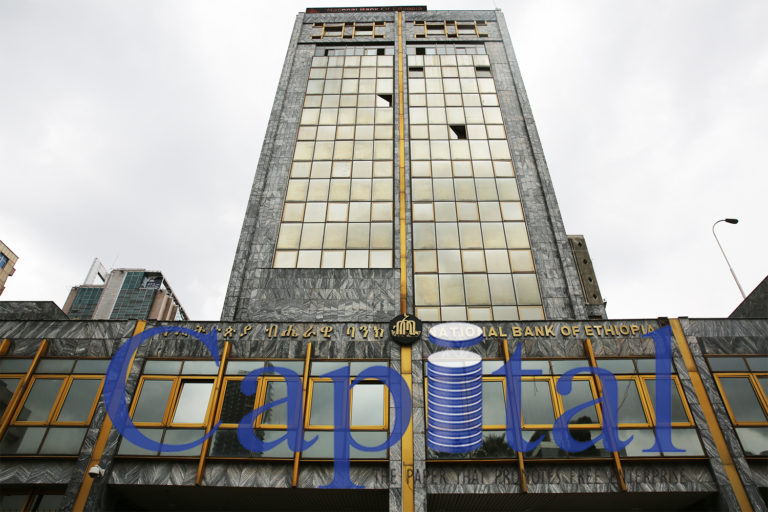
Ministry of Education introduces revised curriculum

By Eyasu Zekarias
The Ministry of Education has announced the development of a new curriculum aimed at improving the education and training policy that has been in place for the past 28 years. As part of the new policy, it has been decided that English language instruction should begin in the 1st grade, with the option to study an additional foreign language starting from the 9th grade.
On February 27, 2023, the Council of Ministers approved a letter from the Minister of Education, instructing all regional and city government education offices to implement the new education system. According to the policy, students from the 3rd to 10th grade will have the opportunity to learn one more local language, based on their preference.
However, some teachers from private education institutions in Addis Ababa have expressed concerns about the new policy. They mentioned that despite the government’s ban on teaching such languages, including English, in private schools, some institutions are still offering these subjects secretly. Private schools differentiate themselves from government schools by offering a broader range of languages and a unique curriculum.
Government school teachers, on the other hand, believe that the focus on quality education should include compulsory English language instruction up to the 12th grade, as it is essential for their students to compete internationally.
Capital reached out to the Minister of Education for clarification on these matters but received no response. However, it has been revealed that the new education and training policy was designed to address the declining quality of education. The curriculum was criticized for being theory-heavy, not reflecting the current national context, lacking indigenous knowledge, and having infrequent assessments.
The new policy has been implemented in all state and city government education offices, public universities, and private higher education institutions. It has been enforced for kindergarten students in various schools.
While private schools continue to teach English language contrary to the ban, they are required to use the revised books that align with the new curriculum.
The government aims to provide two years of free and compulsory pre-primary education for 5 and 6 year-old children, with primary education starting at the age of 7 and becoming free and compulsory from the 1st to 6th grade. The new education system includes general education levels: pre-primary (ages 5-6), primary (grades 1-6), middle (grades 7-8), and secondary (grades 9-12).
It has been emphasized that the previous education and training policy failed to adequately instill good manners in citizens and did not prepare them for entrepreneurship and international competitiveness.
Ethiopia secures $600 Million Wind Power Project agreement at Climate Change Summit
By our staff reporter
Ethiopia, as the host of the 28th Climate Change Summit, has made a significant agreement during the event. The United Arab Emirates (UAE) and Ethiopia have agreed to collaborate on wind power projects, environmental development, and climate change initiatives.
The Cop28, the 28th annual United Nations (UN) climate meeting, took place in Dubai from November 30 to December 12, 2023. The summit focused on discussions regarding strategies to mitigate and prepare for future climate change.
On the sidelines of the 28th United Nations Climate Change Conference, Ethiopia announced a $600 million agreement with AMEA Power, a UAE-based company, for a 300-megawatt wind power project. Additionally, Italy has pledged €8 million to support joint efforts on environmental development and climate change.
During the conference, developed countries pledged significant financial support to assist developing nations. This includes an $792 million Climate Change Loss and Damage Fund to address the impacts of climate change. Developed nations have also agreed to double their support for the Adaptation Fund. The World Bank has committed to providing $9 billion in funding for climate-related projects in 2024 and 2025. Overall, international financial institutions have pledged a total of $22.6 billion to aid in climate change response efforts.
In terms of meeting the goals outlined in the Paris Agreement, the member countries of the Climate Change Conference have collectively committed to reducing greenhouse gas emissions by at least 43 percent by 2030.
Moreover, the countries participating in the conference have made a significant decision to move away from non-renewable fossil fuel sources and transition towards renewable energy. They have agreed to triple the use of renewable energy sources by 2030 and double energy efficiency.
Ethiopia’s collaboration with the UAE and other nations highlights its commitment to addressing climate change and advancing environmentally sustainable projects, particularly in the field of wind power.
Capital, Hotto unite to celebrate milestones
By our staff reporter
Addis Ababa, a prominent diplomatic center and home to numerous international missions and expatriates, is dedicated to providing comfort and convenience to its residents and visitors. The city aims to meet the needs of its inhabitants, whether it be staying informed about local and regional news or finding enjoyable leisure activities.
In line with this objective, Hotto opened its doors a year ago on Cape Verde St., near Bole Atlas, quickly establishing itself as a popular destination in Addis Ababa. Renowned for its exceptional cuisine and vibrant atmosphere, Hotto has attracted notable individuals from the diplomatic community and esteemed visitors, including high-ranking officials.
“Our goal is to fulfill the needs of visitors in one of Africa’s largest and most vibrant cities,” stated Chef Daniel Birhanu, Executive Chef and Partner of Hotto by Toptable Trading. “Given the significant expat and diplomatic presence, as well as the hosting of major international events, we wanted to create a five-star restaurant that provides comfort to these important individuals.”
Since its opening on January 24, 2023, Hotto has offered a refined dining experience, drawing inspiration from the art of Japanese cuisine. The restaurant takes pride in the culinary creations of Executive Chef Daniel, promising to delight the taste buds of its guests.

On the other hand, Capital, with its 25-year history, has established itself as a reputable media platform and a leading source of information for the local community, international residents in Addis Ababa, and anyone interested in learning about Ethiopia and the region from anywhere in the world.
“As pioneers in the media industry, we have consistently delivered valuable and trustworthy news to our readers across various platforms,” said Teguest Yilma, Managing Editor of Capital. “We take pride in being one of the longest-standing foreign language newspapers in Ethiopia, successfully transitioning from print to the digital age.”

“In the economic sector, the Ethiopian government is working towards comprehensive support for economic reform and macroeconomic stability,” stated Ambassador Mesganu Arega, State Minister of the Ministry of Foreign Affairs of Ethiopia. He explained that legislative and institutional reforms to enhance financial freedom are nearing completion, while transitioning to a private sector-led economy remains a priority policy agenda for the government.

“Over the past quarter-century, we have navigated challenges and witnessed the evolution of the urban media landscape, but our commitment to disseminating information has remained unwavering, reaching a global audience through our digital platform,” added Teguest Yilma. Capital Newspaper has not only fostered national pride through various developments but has also contributed to economic growth by promoting direct foreign investment. Moreover, our dedication to economic issues, particularly foreign direct investment, has made us a vital resource for the private sector. We consistently highlight success stories and positive developments,” emphasized the Managing Editor.

Capital covers a wide range of topics, including economics, socio-cultural aspects, and politics. By providing information to foreign visitors and reporting on diplomatic activities, the newspaper helps bridge gaps and foster understanding.
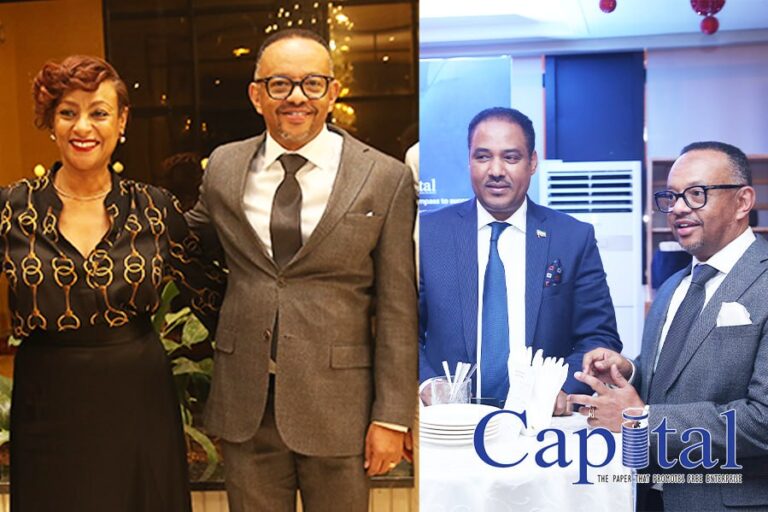
To celebrate their respective milestones, Hotto and Capital commemorated their 1st and 25th anniversaries together on January 25, 2024, in the presence of esteemed government officials, including senior officials from the Ministry of Foreign Affairs of The Federal Democratic Republic of Ethiopia, and members of the diplomatic community.
