Thursday, October 1, 2026
Home Blog Page 245

Djibouti prioritises Ethiopian cargo amid rising vessel traffic due to Gulf crisis

0

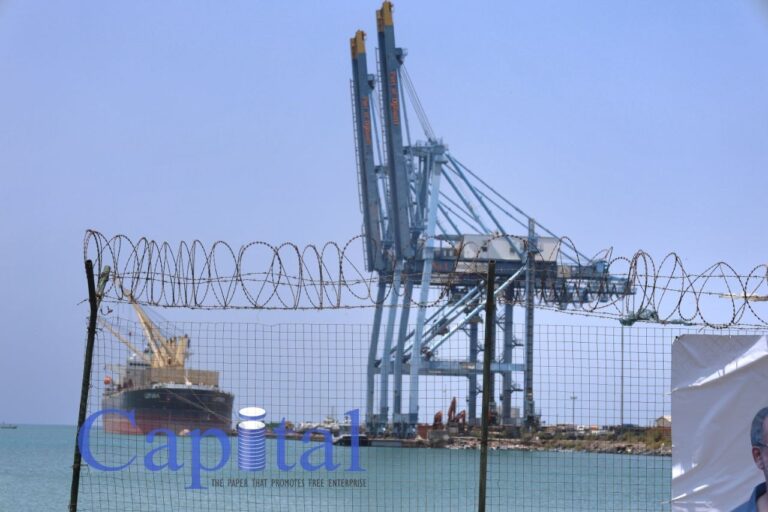
The Djibouti Ports and Free Zones Authority (DPFZA) has announced that despite a surge in incoming vessels driven by the ongoing conflict in the Persian Gulf, priority will be given to cargo destined for Ethiopia.


The chairman of DPFZA, Aboubaker Omar Hadi, stated that the situation in the Strait of Hormuz has led to an increased number of vessel calls at Djibouti’s ports.


Speaking to Capital, he confirmed that some ships originally bound for Jebel Ali have been diverted to Djibouti.


However, Hadi noted that the Persian Gulf conflict has not significantly affected Djibouti, as the country lies outside the affected shipping lanes. “We are on the Bab el Mandeb, and Hormuz is too far. Djibouti is open to the Indian Ocean,” he explained. “All the goods that transit through our ports come essentially from Asia and Europe. So for the moment, the Bab el Mandeb and the Suez Canal are not much affected.”


He added that Djibouti has even seen a recovery in traffic flows. “We have recovered a little flow for the countries of the region,” he said.
Addressing concerns over potential congestion due to the rising number of vessels, the chairman emphasised that Djibouti possesses ample infrastructure to handle the influx. “We have around six deep-sea ports in Djibouti, so we are not going to face any congestion,” he said.


The only possible bottleneck, he acknowledged, could arise from inland transport—namely rail and road networks. “But what we are going to do is handle the cargo discharged in Djibouti ports as transshipment: ship to ship. So there will be no congestion issue,” he clarified.


When asked about potential challenges for Ethiopia—Djibouti’s largest port user, which relies heavily on the facility for its imports and exports—Hadi was unequivocal. “We are not the one who created this problem. So for Ethiopia, we are going to give priority to all Ethiopian cargo destined for Ethiopia,” he said, adding that priority would apply especially to fertiliser shipments.


Regarding the opportunity to promote Djibouti as a key transshipment hub in global logistics, the chairman struck a cautious tone, declining to make bold promotional moves. “We are visible enough. We don’t want to be more visible,” he said. “It’s very dangerous to be more visible.”


On the subject of security, Hadi expressed no concern about potential attacks from Ansarullah forces in Yemen. “I don’t think they will target Djibouti,” he stated.


He noted that Djibouti’s ports are located at the southern entrance of the Red Sea, south of Bab el Mandeb, and therefore remain unaffected by any unrest in that narrow strait. “All our ports are south of it—the southern entrance of the Red Sea,” he reiterated.


iibGroup Receives License from NBE for a Representative Office in Addis Ababa, Strengthening Presence into Ethiopia’s Emerging Financial Sector

0

Addis Ababa, Ethiopia/Manama, Bahrain, March 27, 2026 – iibGroup has officially opened a Representative Office in Addis Ababa, marking a significant milestone in the Group’s long-term regional strategy in East Africa. The new office will enable iibGroup to deepen its engagement with Ethiopia’s financial ecosystem, support cross-border investment, and position the Group to play a constructive role as the country advances reforms aimed at modernizing and opening its financial landscape. While there are 15 representative offices in Ethiopia, iib is the first to obtain this significant license post-reform, which underscores our commitment to the Ethiopian market.

Ethiopia’s Financial Liberalization Creates New Opportunities
As regulatory reforms continue to unfold, the market is expected to unlock new opportunities in foreign investment, trade facilitation, and financial services innovation. Building on its regional platform through iib East Africa in Djibouti, iib’s presence in Addis Ababa positions the Group among the first international financial institutions establishing a footprint in Ethiopia. Through its regional expertise and transactional banking capabilities, the bank aims to support Ethiopia’s expanding trade and investment landscape while building long-term partnerships with local institutions and businesses. iib is well positioned to leverage its experience and networks across the Horn of Africa to support Ethiopia’s financial sector transformation.

“Ethiopia represents one of the most exciting frontier opportunities in global finance today,” said Sohail Sultan, Chairman of iibGroup. “As we deepen our understanding of the local market and build trusted partnerships with Ethiopian businesses and institutions, we will continue to explore opportunities to expand our presence in line with Ethiopia’s evolving regulatory framework. Our office in Addis Ababa reflects our long-term commitment to Ethiopia and to the broader East African region.”

Strengthening the Ethiopia–Djibouti Trade Corridor
With a presence in both Djibouti and Ethiopia, iib East Africa will provide commercial and transactional banking services with a focused mandate on the Ethiopia–Djibouti trade corridor, one of the region’s most strategically important trade routes through which most of Ethiopia’s import and export trade flows.

Operating within the regulatory framework governing banking offices, iib East Africa in Ethiopia will focus on developing relationships with local financial institutions, engaging with key stakeholders, and conducting market research to identify emerging opportunities in Ethiopia’s evolving financial sector. The office will also serve as a liaison through which Ethiopian businesses and potential partners can access iibGroup’s international banking capabilities and connect with the bank’s broader regional network.

“We aim to serve as a bridge between Ethiopian businesses and international markets,” said Mrs. Aynalem Ababu, Chief Representative Officer in Addis Ababa. “At the same time, we look forward to supporting international investment into Ethiopia’s major infrastructure initiatives, including the Bishoftu airport project and its planned aerotropolis development.”

About iibGroup Holdings W.L.L. (Bahrain)
iibGroup is a diversified international investment and banking group with operations across East Africa, the Middle East, West Africa, and the Caribbean. The Group provides banking, investment, and advisory solutions while also deploying capital into high-impact sectors such as trade, digital infrastructure, and financial inclusion. Through its regional platforms, iibGroup supports SMEs, empowers women- and youth-led enterprises, and channels capital to industries that strengthen regional integration and sustainable growth across emerging markets. For more information, visit www.iibanks.com

About iib East Africa (Djibouti)
iib East Africa is a licensed banking institution based in Djibouti, serving corporate and institutional clients across the Ethiopia–Djibouti corridor. The bank is committed to advancing financial inclusion, innovation, and private sector development in the region. For more information, visit www.iibanks.com/eastafrica

Ethiopian lawyer Meron Aragaw named to Courtroom Mail 100

0

Meron Aragaw Erkihun, former Executive Director of the Ethiopian Women Lawyers Association (EWLA), has been recognized in the 2026 Courtroom Mail 100 list of top legal professionals, highlighting her contributions to women’s rights advocacy and human rights in Ethiopia.

During her tenure at EWLA from 2017, Meron led efforts to promote and protect women’s economic, political, social, and legal rights through free legal aid, public education, capacity building, research, and policy advocacy. The organization, founded in 1995 by women lawyers, envisions a society where Ethiopian women enjoy equal rights with men under the constitution and international standards.

Meron, now Gender, Youth, and Inclusion Advisor at Engender Health, has been active in addressing online gender-based violence and legal gaps affecting women’s safety. She has participated in national dialogues with organizations like the Ethiopian Women’s Development Organization (EWDO) and the Strategic Initiative for Women in the Horn of Africa (SIHA) to push for reforms.

Her inclusion in the Courtroom Mail 100 – a prestigious annual ranking of influential lawyers – underscores her impact on legal reform, women’s empowerment, and human rights amid Ethiopia’s evolving judicial landscape.

UNICEF says Iran war means more children will suffer in Somalia

0

The sound of a crying child is a sign of hope in a crowded displacement camp in southern Somalia — the most malnourished children are too weak to even cry.

For the mothers in the Ladan camp in the town of Dollow, survival is the only thing on their minds — not the Iran war or how UNICEF gets the supplies to keep the place running. The displaced here have fled the drought that has ravaged swaths of this Horn of Africa nation after four failed rain seasons.

Their crops and livestock devastated, they show up at the camp, often with nothing but their children.

Aid workers at Ladan say the raging war in the Middle East — more than 3,000 kilometers (1,800 miles) away — has made their work harder, disrupting supplies and sending fuel costs soaring. UNICEF says it has $15.7 million worth of lifesaving supplies — including therapeutic food, vaccines, and mosquito nets — in transit or being prepared for delivery to Somalia. But those shipments now are uncertain.

Transport costs could rise by 30% to 60%, and even double on some routes, while delays caused by rerouting and backlog become more likely, the U.N. agency says.

During a visit to Dollow on Wednesday, Catherine Russell, UNICEF’s executive director, said the Iran war has been a “shock to the system” for the agency’s work on the ground in Somalia.
