Wednesday, April 1, 2026
Home Blog Page 2537

WaterAid Ethiopia INVITATION TO BID

0

INVITATION TO BID

Supply and Installation of Solar Powered Water Pumping System

Bid Ref. WAE/SPW/BOE/OB/2022/Ep0017

WaterAid is an international Non-Governmental Organization established in 1981. Its vision is a world where everyone, everywhere has access to safe water, sanitation and hygiene and its mission is to transform lives by providing safe water, sanitation and hygiene (WaSH). WaterAid works in partnership with government at all level to effectively contribute towards the achievement of its vision and mission. WaterAid started its mission in Ethiopia in 1983 by financing small projects through established organizations such as Ethiopian Red Cross Society but opened its country office in 1991. So far, it served more than 3 million people with safe water, sanitation and hygiene.

WaterAid Ethiopia hereby invites eligible bidders to submit their bids for:

Supply and Installation of Solar Powered Water Pumping System at Gimbichu Woreda Finchawa Egzahber Kebele.

  1. A complete set of bid document (TOR) can be obtained from WAE’s office from September 21, 2022 to October 07, 2022during working hours, 08:30AM – 12:30PM and 01:30PM – 05:00PM.
  2. Bids must be accompanied with renewed business license and registration, VAT/TOT, TIN Registration Certificate and Construction license must submit these requirement/s.
  3. Bidders should have at least three years similar experience and must have evidence of successful completion of all works.
  4. Bidders should submit their offers in sealed envelopes to WAE’s office on or before October 07, 2022 until 07:30 PM and must be accompanied by a bid bond amounting to two (2%) of the offer in the form of bank guarantee or CPO at least for three months from the date of bid opening.

   Note: CPO must be attached in the original financial document.

  1. Bid must be clearly marked by “bidders name, address, legal stamp and Reference number Bid Ref. WAE/SPW/BOE/OB/2022/Ep0017.
  2. Bidders must submit the technical and financial document separately. The technical and financial documents should have one original and one copy for each, clearly marked “ORIGINAL” and “COPY“. Each envelope shall be stamped and sealed. In the event of any discrepancy between them the original will prevail.
  3. Bids will be opened in the presence of bidders or representatives who prefer to attend at our office on October 07, 2022 at 02:00 PM.
  4. WaterAid Ethiopia reserves the right to accept or reject any or all bids. Late bids shall also be rejected.
  5. Bidders can visit our website http://www.wateraid.org/et to access the invitation and the TOR.

WaterAid Ethiopia

Tel: +251 11 669 5965, E-mail: ethiopiaprocurementho@wateraid.org /  waethiopia@wateraid.org

In front of Bole Medehanialem Church, next to Edna Mall, United Insurance Building 3rd floor Addis Ababa, Ethiopia

Agriculture ministry, logistics giant celebrate timely fertilizer delivery

0

Ministry of Agriculture (MoA) and the Ethiopian Shipping and Logistics Services Enterprise (ESLSE) celebrate success attained over a fertilizer consignment which was recorded in a short timeframe contrary to the past. Officials of Doraleh Multi-purpose Port and Djibouti Customs were also praised for their seamless service they gave to MoA and ESLSE.
During the event held at Ethiopian Skylight Hotel on September 17, the logistics giant and MoA have recognized partners who contributed towards the swift delivery of different fertilizers prior to the commencement of the farming season, which starts at the beginning of the rainy season.
Roba Megersa, CEO of ESLSE, said that for the past three years after the government gave a responsibility to ESLSE to manage the shipment of fertilizer from loading ports to major destination points it has attained massive performances.
“In collaboration with our stakeholders including MoA, we have seen improvements every year,” he said.
“The tireless efforts and working as a single body with stakeholders at Djibouti, Doraleh Multi-purpose Port and Djibouti Customs has been one of the major reasons for success with regards to transporting fertilizers on time,” Roba told Capital.
Similarly, Debele Kabeta, Commissioner of the Ethiopian Customs Commission, and Rahma Omar Bogoreh, Director of Transit Department of Djibouti, told Capital that the strong relationship and cooperation between the two countries customs offices is one of the exemplary achievement registered on the logistics sector in addition to that of the fertilizer consignment.
Regarding the port activity of handling the fertilizer cargo, Djama Ibrahim Darar, CEO of DMP, expressed his pleasure at the acknowledgement.
“We pulled in incredible efforts to deliver the fertilizer to our Ethiopian farmers on time,” Ibrahim Darar said, adding, “We have achieved the best performance regarding discharge and transport of fertilizer cargos within a very minimal time frame.”
The CEO reminded that there was a record registered regarding a single day discharge of fertilizer. DMP has managed to discharge over 20,000 tones of fertilizer in a day.
The port leader expressed his company’s commitment to continue with the high quality service for Ethiopian cargos, “particularly for the fertilizer consignment, timely delivery is our utmost priority.”
ESLSE’s CEO also acknowledged the system that DMP established to handle the fertilizer shipment from arrival to dispatch, which was done in an extraordinary fashion.
Roba expressed his appreciation to Oumer Hussein, Minister of MoA, for his strong support and follow up to harmonize the operation.
Oumer said that the commitment of ESLSE and other stakeholders is recording improvement every year, “This enables us to get and distribute the fertilizer for our farmer.”
Mengistu Tesfa, Agricultural Input Supply Lead Executive at MoA, said that due to different reasons starting operations for fertilizer imports has been relatively delayed compared with the past.
“When comparing the preceding experience in the year, only 203 days were needed to transport 1.3 million tons of fertilizer. A year ago it took 244 days to handle the transportation of fertilizer,” Mengistu said.
He added that the effort of Ethio-Djibouti Railway SC (EDR) was fantastic to transport the cargo on rail.
Roba said that in the year, 26,000 trucks voyaged between DMP port to the centre and 2,200 train wagons with 61 voyages had been assigned to transport the fertilizer.
ESLSE had assigned 25 vessels to operate to transport the cargo to Djibouti, since the service is a door to door operation with the products being transferred at the nearest centre of Ethiopian farmers.
“This year the train highly supported us to accelerate the transportation of fertilizer to the centre. EDR’s share from the total fertilizer consignment was 12 percent,” the ESLSE CEO explained.

The Day the Process of Globalization Begins

0

Many historians asserted that the beginning of Globalization goes back to the outcomes of the first voyage of Christopher Columbus that brought him, on October 1492, to the shore of an island in the Caribbean sea. It was the starting point of a brutal and bloody intervention of European sea powers in the history of American peoples, a region of the world that had, unto then, remained insulated from regular relationships with Europe, Africa and Asia.
True, for thousands of years before that year, there were intermittent contacts between distant parts of the world. But continuous, rather than very occasional, direct human interaction across continents began with the European exploration of the oceans from the 1400s onward. That’s not a Eurocentric world view. That’s a historic fact.
The arrival of Columbus in America thus provides the decisive punctuation mark in that evolving process. It is the day when globalization actually began. The event was really remarkable. All human progress and mutual knowledge accumulated since that time is largely due to this journey. This process involved marvellous things, the merely good ones, the bad and the real evil ones.
Ira Straus, Chairman of Center for War/Peace Studies and United States Coordinator, Committee on Eastern Europe and Russia in NATO stated that there is a tendency today to focus on the evils, along with plenty of moralizing against explorers and, yes, colonizers. But throughout the developing world, the downsides of the interchange with the West are, in the aggregate, far outweighed by the benefits. According to Ira Straus, the only thing that could reverse this would be the self-destruction of humanity, wilful or not, by means of new technologies. Such self-destruction is unfortunately a realistic prospect.
Everything that has happened with globalization in the half millennium since 1492 can be summed up in one sentence: Global interchange has continued at an ever-accelerating pace, despite intermittent setbacks. Oceanic exploration and trade soon covered all regions of the globe, while starting out strongest in the transatlantic dimension connecting Europe and the Americas. The global trade routes out of Europe passed through the Atlantic as the home area, dwarfing the old trade routes of the Mediterranean and the Silk Road, turning the Atlantic into the center of the emerging world economy for the coming centuries.
Global interchange accelerated with every advance in science and technology, from the steamship and industrial revolution onward to the present. It continued in the 1900s, despite some long-lasting setbacks such as communism, fascism and world wars. Interchange was renewed and buttressed after 1945, in response to these setbacks, by international institutions. The UN system, the Bretton Woods system, and the Euro-Atlantic system all served to rebuild, stabilize and increase the interchange. True as well that the deregulation of financial flows which commenced in the 1980s increased the interchange greatly, while engendering risks of another major setback. This seems to have been the starting point of the popular use of the term “globalization.”
Interchange was further accelerated by the abandonment of the largest protectionist and socialist barriers to it in the 1990s in China, India and the former Soviet space. China and India lifted themselves out of their self-imposed stagnation and began a phase of remarkable progress. Jack Turner, a Rhodes Scholar and MacArthur Foundation Junior Research Fellow stated that the flip side of that has been that Western workers are no longer shielded from the competition from Chinese workers in goods production and Indian workers in services. In addition, Western workers have suffered a reduction in the wage gains they would have otherwise been enjoying.
According to Jack Turner, the resulting risk of social destabilization has triggered an understandable reaction against globalization. At the same time, when one looks at a global balance sheet, there is no denying that hundreds of millions of truly poor workers in the world have gained dramatically in income and welfare, thanks to the intensification of globalization. All of this has finally brought some wage equalization on the global level, after several centuries in which the West had rushed ahead thanks to its science and technology.
The internet has added yet another dimension of globalization. It has meant an acceleration of interchange that is explosive in more than one sense of the word. It has accelerated the spread of information at a geometrical, even exponential, pace. Discussion and organizing have mushroomed across borders for all purposes – love and culture, scholarship and science, telecommuting and outsourcing, money laundering and terrorism.
Ira Straus noted that the question of how humanity can organize itself to better manage the consequences of this explosion of interchange – to better, to buttress, to channel, to regulate and to restrain it – will involve more globalization. With the benefit of hindsight, we will see that social media are but a crude interim step in that evolving process.
As Jack Turner argued, the future cannot be predicted in detail. What can be predicted is that the central developments of the future, whichever way they go, will go global. The train of globalization left the station when Columbus reached the Americas. It will never go back.

Adding Value to the African Service Sector through the Creation of a Coalition for the Creative Cultural Industries

0

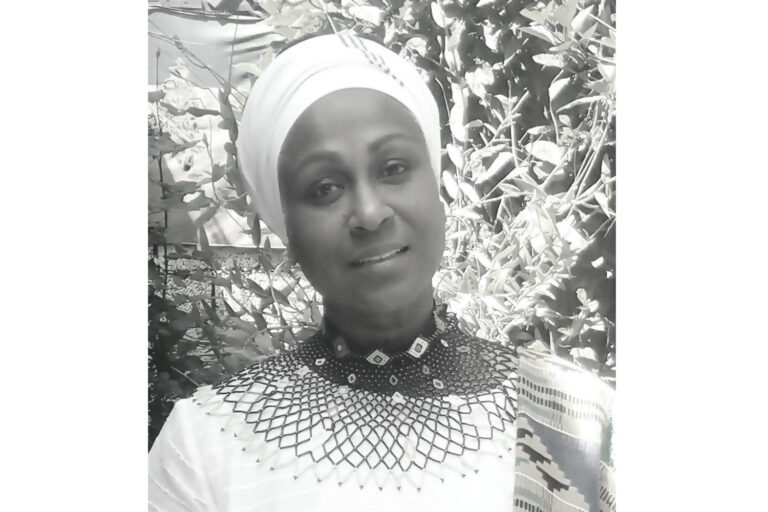
Thank you for this opportunity to bring a much misunderstood and under estimated, yet important service sector in Africa to the table of the African Union Trade and Industry Commission, AU Member States, experts and colleagues in Africa and the Diaspora, likewise. The sector to which I am referring is the Creative and Cultural Industry (CCI), the life blood and ultimate expressions of African’s frustrations and tribulations, hopes and aspirations; and in the context of goods and service, the daily bread which feeds millions of Africans while simultaneously feeding the minds, hearts and souls of African and worldwide consumers. Art, crafts, music, fashion, photography, film, literature and more are portions of CCI, which we all use and benefit from in daily life. Yet do we know the value? Are we ready to nurture, develop, protect and leverage the proverbial “bird in hand” verses focusing on the “two birds in the bush”?
“The notion of culture is often disconnected from the economic dimension…” states Ernst & Young in the First Global Map of CCI, published in December 2015 with the cooperation and guidance of over 150 international renown artists and CCI experts including Beninise singer Angelique Kidjo and Senegalese sculptor Ousmane Sow. The Ernst & Young report on CCI revenues state the figures surpass even telecom services worldwide, placing CCI estimated revenues at US$2,250billion providing 28.5m jobs. The top earner in this study was television, second was visual art and third newspapers/magazines. Visual art earnings were valued at US$391b and positioned as the number one employer of over 6.70m people worldwide. Keeping in mind, that these numbers don’t properly reflect the informal CCI economy, estimated at another US$33b delivering 1.2 million jobs.
Ernst & Young’s report, specifically on Africa and the Middle East, state a combined generated income of US$13.1billion dollars providing over 350,000 jobs in 2013. So what do all these numbers mean for Africa as we try to protect and preserve the historic component of our artistic expressions and promote contemporary creations; while balancing the immense opportunities for Africans to organize and leverage our CCI, changing the course of the “commodification” of culture… to Africa’s benefit?
Allow me to reflect, for a moment, on the European Renaissance, 14th–17th Centuries, that set the trajectory for the current robust trillion dollar CCI with institutional infrastructure from early childhood education to museums and more positioning them as leaders in art and culture to date. Ironically, many African treasures are amongst in their vast collections, but that’s another discussion. Visual or fine art, a significant component of the Renaissance Period, was reserved primarily for the elite; juxtaposed to the African relationship with visual art. Continental creativity, a language of sorts, had profound meaning to creators and society alike, with myriad symbolic and substantial relevance and use. Intrinsic value was placed on amulets, ceremonial masks and sculptures etc. stemming from ancestral, spiritual and/or social norms. Much like modern art, the traditional creations also memorialized time, space and circumstance, but woven into everyday life; unlike western modern art.
The relationship with visual art in Africa began its slow and steady change in the post-colonial era, barely a few decades ago. But value or economic systems have still not been developed to ensure the development, protection and promotion of CCI from Intellectual Property protection to publishing and other essential areas. The focus over the past several decades was placed on art education, on a limited basis. For instance Ethiopia, on July 23, 1958 HIM Emperor Haile Selassie I opened the first ‘By African For African’ art institution on the continent with founder and namesake, Artist Alle Felege Selam, stating, “We have established this institution because We consider it a matter of great importance to revise and develop fine arts in our country… . If Ethiopian paintings and other works of art attain such a high standard that they can… hold their own amidst exhibits from other countries, they can certainly help in the efforts to make Ethiopia known more widely as a nation fully participating in the spirit and substance of modern civilization.” Eight years later in April 1966, Senegal President Leopold Sedar Senghor, hosted the Pan African driven WORLD FESTIVAL OF BLACK ARTS in Senegal promoting worldwide black culture. The poet president Senghor unapologetically stated, “The civilization of the twentieth century cannot be universal except by being a dynamic synthesis of all the cultural values of all civilizations. It will be monstrous unless seasoned with the salt of negri-tude for it will be the savior of humanity.”
Let us move forward to 2014, to the Pan African island state of Jamaica, my birth country and one of the most popular countries in the world, based not on our beaches but our culture. The former Prime Minister, Portia Simpson, created a National Cultural and Creative Industries Commission supported by a technical working group with Members drawn from across relevant government ministries and agencies and representatives of the CCI for policy development to help drive the creative industry. The intention is to significantly increase economic and development opportunities, while positioning Jamaica, enhancing its leverage, and finally facilitating and empowering ‘creative practitioners’. This is the most poignant point of my presentation, in that our continent can take a page from Jamaica’s book, our African Diaspora, in order to help us better understand the potential and process for the development of services, protection and promotion of culture and not just relegated to sub-committees in Ministries of Culture or Social Affairs, but Trade, Industry, Finance etc. So again, we thank the AU Commission for this inclusion.
So though Ethiopia, Nigeria, and Senegal amongst many other African nations realized the value of culture, the arts were contextualized socially and strong value chains were not put in place to ensure participation in the emerging economy of art. Was this oversight influenced by our historic relationship with art or was it our natural desire to develop based on the mainstays of agriculture and other industries? Maybe both. However, I propose the delay in creating a system for CCI in general has put us on the rear side of a well-established art industry that decides our value for us. Take for instance, Sotheby’s auction house. Is it fair or even fathomable that the famous auction house estimated the value of the iconic 16th century – 22 cm tall ivory mask, looted from Benin by the British, at over US$6m? And Christie’s auction house, sold Ethiopian-American Julie Mehretu’s 2013 painting for over US$4.6m; making her the number 7 top selling living female visual artist in the world! How the value determined was and I pose to this august body, couldn’t these pieces have been worth even more if our value was factored in? A value system would also increase potential income and opportunities for related service providers in or related to CCI such as insurance, security, technology, transportation, media, manufacturing and more.
Allow me to share two prevalent moments in CCI on the continent that buttress my point. In 2005, as Managing Director of the Bob Marley Foundation, we coordinated the Bob Marley 60th Birthday under the auspices of Nana Rita Marley and with the support of then AU Chairman Alpha Konare, under the theme Africa Unite. The month long event of music, art, dance, and symposium attracted over 200,000 local and international visitors and over 300 international journalists. Coming forward to this past July; my firm co-sponsored a multi-million dollar collection for Julie Meheretu in Addis Ababa at the Gebre Kristos Desta Contemporary Art Center. In both instances we were faced with challenges that could have caused cancellations but worst, the economic impact, just on insurance, transportation, technical support etc benefitted the West, monetarily, more so than those on the continent. Had we as Africans, created a CCI network or coalition, millions could have rolled into continental based businesses in the above mentioned areas.
The time is perfect for us to stake our claim to African creativity for the benefit of the artists and all stakeholders or face being further disenfranchised and worst wiped out of the market by cheap reproductions from Asia. We propose the creation of a CCI Coalition for the continent under the MBA brand – Made By Africans – which may facilitate the:
Protection of our intellectual property through out and across all member states and internationally through integrated systems created and implemented by and for us,
Unencumbered movement of goods and services from the African CCI sector throughout the continent through harmonized immigration laws,
Provide a standard for CCI which ensures quality, consistency with concern for the environment and use of readily available local raw and manufactured materials,
Emphasize the creation and capacity building of our women and youth, the main ones impacted by and/or involved in CCI,
Organize the sector on the continent as a united force to deter low quality reproductions of our goods; be it cloth, kitsch or other products;
Brand MBA to ensure the domestic (continental) and international market are conscious and sensitized to the products or services under this brand, created by a CCI continental coalition, which ensure not only quality products and services but in support of indigenous knowledge and creativity and strong economic and value systems, and finally the coalition would
Provide various levels of support and opportunities to CCI sector, ensuring innovation, networking, resource sharing and more for all CCI service stakeholders.
In closing, I wonder what does the future hold for Africa in regards to CCI? My answer, based on the efforts of several AU member states, including Burkino Faso, Ethiopia, Kenya, Ghana, Senegal, Zambia amongst others are evaluating re-thinking of the potential of CCI. The arts are an inherent component of culture and tourism, and Africa’s substantial inventory and access to ancient and fine art, alike, make the continent a powerful place for such a coalition. In closing I share the following quotes, AUC Director for Trade and Industry, Madame Treasure Maphanga says, “Arts and culture are more than our heritage, they represent a key vehicle for Africa’s structural transformation and economic emancipation.”
According to Bob Marley’s song, though Marcus Garvey’s message, “Emancipate yourself from mental slavery, none but ourselves can free our minds…” And finally on behalf of the Pan African Diaspora who loves and stands in solidarity with Africa, I quote the Hon. Kwame Nkrumah, “I am not African because I was born in Africa, but because Africa was born in me.” Thank you, Betam amaseganalu.


This article was first published in September 2016