

The Army side back to its old-age popular name “Mechal ” is busy in the transfer market, overhauling its squad under newly appointed Head Coach Fasil Tekalegn. Though Fasil’s track record as EPL coach shows walking out before end of season both at Baherdar and Adama, he appears to have a free hand in players’ transfer window thus nearly a dozen new faces joining the ranks.
Ethiopian national team attacking midfielder Kenan Markneh and former national team defensive midfielder Tesfaye Alebachew are the two biggest fishes in Fasil’s hunt. Kenaan left champions St George due to some disagreement on his contract extension while Tesfaye the giant tackler who played for number of clubs including St George left Hossana following his contract termination.
The winger Bereket Desta and left full back Amsalu Tilahun left former champions Fasil Ketema to sign a two year contract with Mechal. The giant central defender from Adama Tomas Semeretu from Adama, two defenders from Baherdar Ahemed Reshid and Menyelu Wondemu, Fitsum Alemu from relegated side Addis Ababa, goalkeeper and Dagem Tefera from Hawasa are part and parcel of the New Face Mechal. Left winger Samuel Saliso also joined the side for his third spell. Former Sidama Bunna goal keeper Teklemariam Shanko is the latest to join Mechal in a one year contract.
Issued the tough task of bringing one of the oldest yet much decorated Mechal out of obscurity, Fasil started-off his signing many players he worked with at Baherdar and Adama. The welcome addition of defensive midfielder Tesfaye Alebachew and the versatility of Kenaan Markneh is a massive boost for Mechal and both will have pivotal parts to play in the club’s big future.
One of the highest spenders in the transfer market and back to its old yet popular name “Mechal” the Army side is expected to be the real face of the Army it represents.
Back to “Mechal” the Army side in huge face lifting
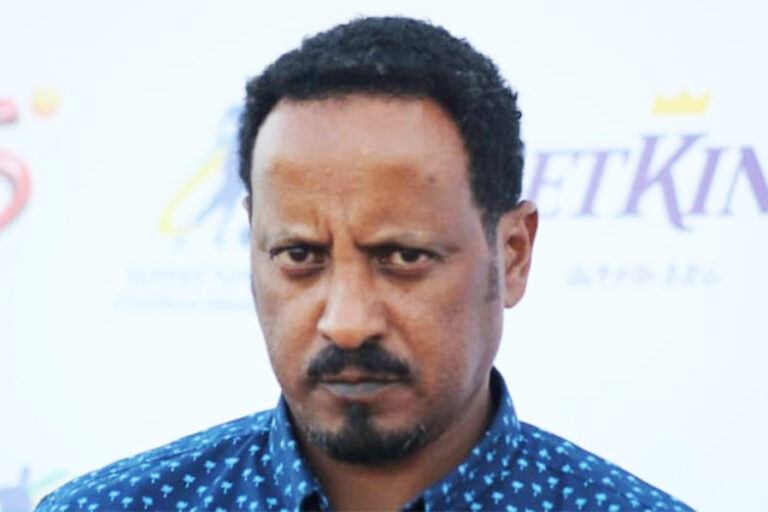
Makeda Mulushewa

Name: Makeda Mulushewa
Education: BA in Accounting and Finance
Company name: WERQ Natural
Title: Founder
Founded in: may 2022
What it do: Sell natural skin and hair care products
Hq: Addis Ababa
Number of Employees: 2
Startup Capital: 15,000 birr
Current Capital: 15,000 birr
Reason for starting the Business: My struggle with hormonal acne
Biggest perk of ownership: The freedom to create
Biggest strength: Curiosity
Biggest challenge: Lack of access to an environmentally friendly packaging
Plan: To increase the variety of products and start exporting
First career: Accounting
Most interested in meeting: People who made it in business
Most admired person: My grandmother
Stress reducer: Meditation time in church
Favorite past time: Expolring nature
Favorite book: Rich Dad’s Cashflow Quadrant: Guide to Financial Freedom
Favorite destination: Anywhere natural with water body
Favorite automobile: Jeep
Religion and Capitalism

The publication of George Gilder’s “Wealth and Poverty” in 1998 and, later, his work on “Recapturing the Spirit of Enterprise” brought renewed emphasis to capitalism’s spiritual side. George Gilder’s writings, along with Michael Novak’s “The Spirit of Democratic Capitalism”, provided a desperately needed counter to the almost century-long trend of casting capitalism in a morally negative side.
But George Gilder’s books also unfortunately implied that Adam Smith had ignored spiritual aspects of capitalism, suggesting that Smith concerned himself more with technical factors of supply, demand, and price. Such a misperception seeped into the work of writers of all political stripes, resulting in critics of capitalism from the Left, including Michael Harrington and Robert Heilbroner, and from the Right which includes Irving Kristol and Richard Weaver, charging that material progress occurred only at the expense of individual dignity or of society’s spiritual values.
Adam Smith explained that individual self-interest required a person to serve his fellow man to obtain a return. Whatever the motivation, the individual must focus on the desires and needs of others, address those needs, and provide a good or service before receiving any recompense. Another way to look at those activities is as service. A person must first serve others before demanding a return. Determining how much value the service has is fraught with problems if one leaves it to an arbitrary source, such as a government board or commission.
Market economies typically use money as a measure, or symbol, of how much service one individual has provided to others. Economist Walter Williams has detailed on several occasions how the process works in daily life. A woman sits down in a restaurant and orders a meal which represents the accumulated efforts of farmers, shippers, meat packers, the restaurant owner, the waiter, and others; but in order to pay for the meal, she must have money. Her money represents her own service to others that she has performed in her clothing business and the value that others have placed on her service to them. Money acts as a type of “accumulated service to others” which is a proof that the holder has served others, and to what degree.
Assume that an entrepreneur starts a hamburger stand. In doing so, he invests time, energy, and talent procuring products, facilities, and employees. Before earning a single dime, he has served others by making these investments of time, talent, and energy. The entrepreneur still has not received any personal return, which comes from meeting his customers’ culinary needs or desires. What if he provides terrible food? Or what if the food is good, but he is abusive and crabby to his customers? In either case, he will soon be out of business (not in Ethiopia of course!). He has not served his fellow man, nor has he met any need or fulfilled any desire. Note that despite working hard, he has not benefited others!
Consequently, labor itself is not sufficient as a measure of value. Indeed, unwanted labor is economically useless in one economic sense, in that it allows a single person to consume scarce resources without returning anything to society. Rather, labor that does not serve others, in a market sense, is actually consumption, not production. All economic activity can then be summarised with a question – “How have you served your fellow man?”, and an imperative, “Prove it!”
Adam Smith thought that most people were naturally inclined to such service, but that they naturally overestimated the value of their own labor and underestimated that of others. Consequently, the only reliable measure that could adjust for the individual misperceptions of millions of people in the market was the crucial price mechanism. Prices forced on everyone a reality check, so they could not overestimate their own service or undervalue that of others. For that reason, he warned about any distortions of prices brought about by anything other than the market itself. His warning extends to business combinations, monopolies, in current jargon, or businesses obtaining special privileges from governments.
Indeed, it is important to realize that any economic activity not solely derived from market effects can produce negative results. Charity, for example, generates its own economic implications. If individuals, Churches, community groups, or governments provide for nothing, or at artificially lower cost, what others in the market would charge to provide, that free service will have an impact on the price and affect the market. Labor unions have long resisted efforts to have prisoners perform work, contending that “slave labor” undermines the price of “free labor,” and they are correct.
If a farmer simply gave food away for whatever moral motive, it would have the effect of driving down the price of food everywhere, essentially telling other farmers that their service is worth less than it really is. Artists, musicians, writers, and actors have long faced the grim reality that their love of their craft means that they would paint, act, write, or play music if no one paid them, which has had the effect of driving down the price of all art. In short, all activity, even charity, has economic outcomes that affect prices. Giving goods away creates another problem. Gift givers don’t always choose what the recipient wants.
A final point alludes to one of our earlier questions, namely, how do others benefit from the failure of entrepreneurs? First, when entrepreneurs fail, they provide critical information about the wants and needs of others. The collapse of one business company may suggest, for instance, that the location is wrong. But it might also be that the product is poor quality or too expensive, or that the owner have other things to do. Here, one thing is certain. Other aspiring similar businesses will think twice before venturing into that location. Second, failure of a business frees up resources for the use of other businesses. The former location of the failed company may be the perfect location for the business. Third, not only do other businesses benefit from failed enterprises, but consumers profit, too.
In fact, some of the world’s greatest success stories resulted from abject failure. For example, America’s Automaker Henry Ford, banker A. P. Giannini, and department store founder Sam Walton all declared bankruptcy, had their first enterprises fail miserably, or were unceremoniously kicked out of companies they created before they attained ultimate success. In other cases, entrepreneurs have made fortunes or founded thriving businesses in services or with products that few would find lucrative. Yet no matter what path a particular entrepreneur took, each had a single characteristic in common: a willingness to take a risk.
The element of risk taking by entrepreneurs which, again, constitutes an act of faith and not reason, sets them apart from managers and paid employees. No element of business enterprise is risk free, and certainly management and labor have seen periods of mass layoffs. Ultimately, the only source of a job is one’s own talent and labor. The worker’s ability, in essence, creates his own employment demand. But in general, companies in capitalist societies offer a far higher level of income security and, whenever possible, extended employment to managers and employees than typical entrepreneurs ever attain.
In most small businesses, employees receive pay even if there is not enough left for the owner at the end of the week or the month. Different research studies revealed that many small-business owners have reported not taking their salary for years, plowing every cent back into their business.
SUSTAINING AFRICA’s PRODUCE
OCP (Office Chérifien des Phosphates) is a Moroccan state-owned phosphate rock miner, phosphoric acid manufacturer and fertilizer producer. Founded in 1920, the company has grown to become among the world’s largest “supermajor” producers of phosphate and phosphate-based products and it is one of the largest phosphate, fertilizer, Chemicals and Mineral industrial companies in the world by revenue.
OCP has access to more than 70% of the world’s phosphate rock reserves. Initially a mining company, OCP diversified in 1965 to become a phosphate processor, making it the world’s largest and leading fertilizer manufacturers.
In Ethiopia, the OCP office was incorporated in September 2015 to support the development of Ethiopian Agriculture. Quite recently, due to the global rise of fertilizer prices , the firm has donated a total of 60,000MT to Ethiopia under OCP Group’s fertilizer relief program The relief program will be accompanied with OCP flagship programs that aim to develop the capacity of farmers and skills trainings to increase yield.
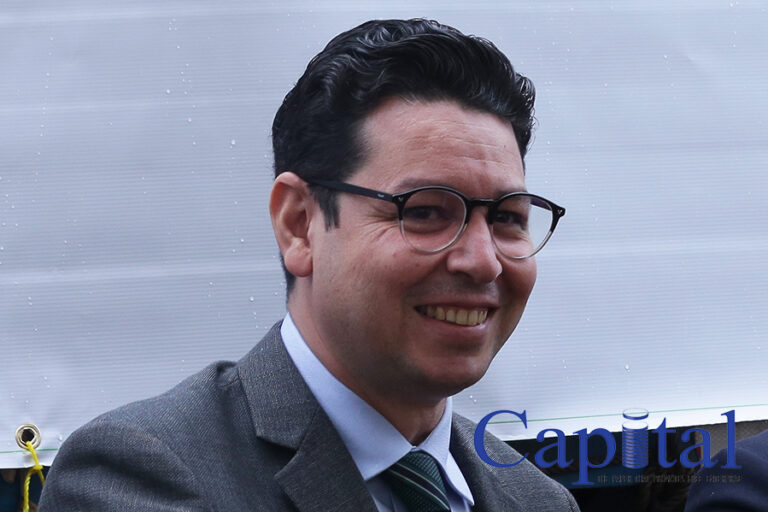
Capital reached out to Youssef Lahmiti, Managing Director of OCP Ethiopia and Vice President of OCP Africa, East Africa, for insights on the progress of OCP in Ethiopia and the inspiration behind the fertilizer donations, amongst other issues. Excerpts;
Capital: Tell us how the fertilizer donation came about?
Youssef Lahmiti: Along with supplying fertilizers to satisfy local demand OCP has been engaged in CSR in Ethiopia. The donation made under the fertilizer relief program initiated by OCP Group and is a donation from OCP to African countries in these times of fertilizer prices upsurge.
We decided on this donation based on the current context of fertilizers as the price has been increasing first due to COVID and now the War of Russia and Ukraine which is impacting the availability of the products as well as the prices too.
As we all know, Russia is a big exporter of fertilizer as well as Ukraine; since they are big producers of natural gas.
OCP is a state company in Morocco, a country that is well known as having the largest reserve of phosphate in the world, which amounts to 75% of the world’s phosphate reserve.
This is the first phase of our donations of the year, and we will be organizing more soon. Due to the urgency of the matter, we are providing donations to several African countries
This fertilizer relief program is of a total volume of 550,000 tons with 180,000 tons of fertilizer as a donation and 370,000 tons sold at discounted prices. Ethiopia has received 60,000 tons of the donations for free, which represents one third of the total amount donated under the relief program.
Capital: For what propose can this fertilizer be used?
Youssef Lahmiti: From the 60,000 tons of fertilizer, 50,000 metric tons of the donations is NPSB and will go towards supporting Prime Minister Abiy Ahmed’s wheat initiatives in sustaining self sufficiency of wheat in the coming years.
From our end, we are impressed and command Ethiopia’s by these initiative, and we are happy to be able to support by providing these fertilizers. In the coming months we have plans to provide training to farmers on fertilizer usage and provide them with the technical tools to increase their yields.
The remaining 10,000 tons is TSP which will be supplied for two blending factories as a base of some blended materials. We are currently working on a programme of customization in two blending factories to produce fertilizers locally as such formulated blends will have a positive impact on the yield.
To this end the ongoing demonstrations and popularization of our blended fertilizers adapted to acid soils in Ethiopia should support farmers in Ethiopia.
Capital: What made Ethiopia to stand out and receive higher portions of the donation?
Youssef Lahmiti: Ethiopia consumes on average over 1 million tons of fertilizer per year. 60000 tons is our modest contribution to Ethiopia.
What led us to determine the donation here is the consumption and volume of demand in Ethiopia that is a large fertilizer consuming country.
Moreover, OCP is a key strategic partner to Ethiopia not only as a supplier of agricultural inputs but also due to our presence since 2016 that have enabled us to be well accustomed to the demand., Thus we pushed for a donation that takes into consideration the country’s general consumption.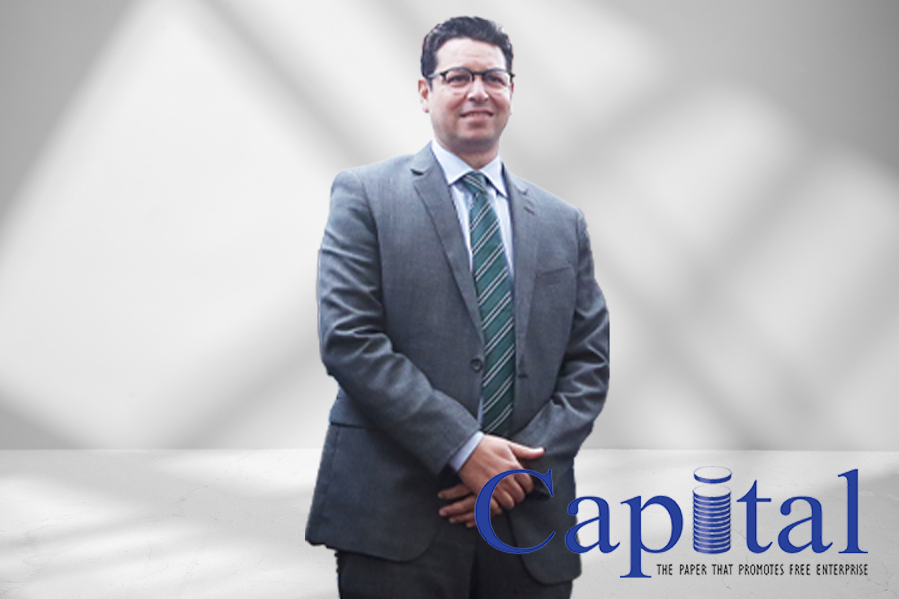
The donation is contingent on the country’s use of fertilizers. Even though there is no set formula in which the OCP group allocates these donations, it’s important to understand that among the many criteria, we looked at the need of the country within our capacity.
Capital: OCP has been in Ethiopia since 2016 having a project in Dire Dawa. So on what stage is the project now?
Youssef Lahmiti: The project in Dire Dawa is still on the table and OCP is committed to realize the project.
This project is a partnership between the two, Ethiopia and Morocco governments, and it is based on the complementarities of naturalization between both parties. To produce fertilizers, we need some raw materials and with Ethiopia’s gas and Morocco’s phosphates, this project will be revolutionary.
The government of Ethiopia is pushing for this project and for the gas production part the Poly
GCL has failed to start the construction, thus we had faced some delays on this project.
I think there are issues to be solved and we are working closely with the government on the follow up, because we need the gas for our production. To this regard, we are also very appreciative of the Ministry of Mines for putting pressure on Poly GCL to solve this problem as soon as possible.
As they work to solve the issue, I would like to also state that we remain committed to this project because it’s a good opportunity for OCP to have a presence in this country for the long haul and we are also committed to reinforcing the idea of South-South cooperation in addition to helping countries that we partner up with in developing their capacity.
This project having been launched in 2016 in the presence of our King, and for us since we are a state company, we often receive questions on the project status. As OCP we will continue to work in partnership with the government to start construction as soon as possible.
Capital: The Minister of Agriculture on his speech has been indicating that the government expects you to complete the factory with in one or less than two years. How do you see this?
Youssef Lahmiti: It means that there is a strong commitment from the government. The commitments of the government with OCP for this project are very high. When he says one year it is not meaning this will be completed in one year, it cannot be built in one year. Building fertilizer companies is a time consuming and big project .
It is my believe that the government is committed to building the factory as fast as possible since there is an urgency to have a Pan African fertilizer manufacturing company. OCP happens to have the capacity, knowledge, and the natural resources support in that.
As I explained earlier, we have faced some delays because of Poly GCL and it is our understanding that the government is working tirelessly to find a solution to this. If the government plans to speed up the project within a year or two, there should be concerted efforts to find better ways in doing so, to which we are open to provide our assistance in full capacity. We are aware of how time sensitive this issue is and it is our hope that construction will begin sooner rather than later.
Capital: There are some people who argue that fertilizers have a negative impact on the farm land. What’s your take on these assumptions?
Youssef Lahmiti: There are 7 billion people in the world that we need to feed and fertilizers play a pivotal role in food security.
Scientifically, this assumption is not correct. To make more produce, the plant needs to be fed and fertilizers go a long way in ensuring that the right nutrients are available.
The supply of fertilizer is a direct answer for the global context of food insecurity to which African countries were on top of the list for food security hotspots. So when we speak about organic versus non organic, it’s important to understand the context in which you want to discuss it. Food security is a critical issue and as OCP we want to play a role in bringing sustainability with regards to food security through the provision of the necessary agricultural inputs for African countries and
African farmers so as to satisfy local demand and offer food security.
