

Kacha Digital Financial Service becomes a national switch member after buying 10 million birr worth of shares from ETHSwitch.
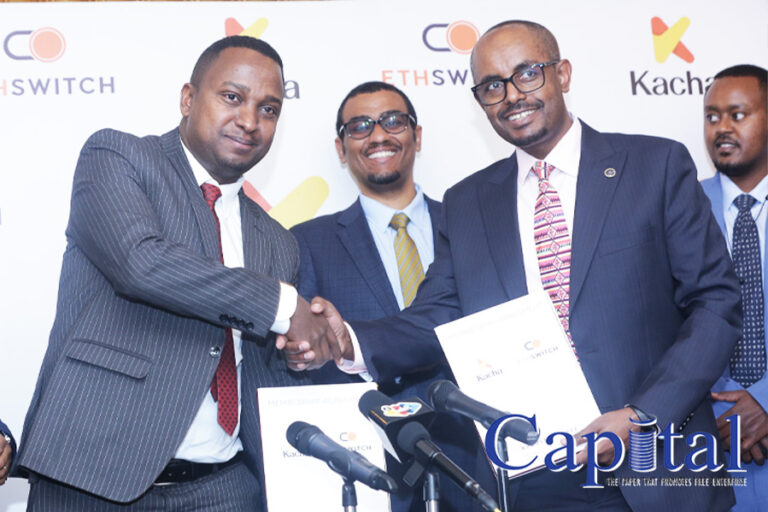
On Tuesday August 30th, 2020 the two companies signed their agreement through their CEO’s, Abereham CEO of Kacha and Yilebes Addis EthSwitch’s CEO.
Kacha is Ethiopia’s first ever private mobile money service provider, “The financial sector reform and subsequent directives have paved the road for payment instrument issuers like Kacha,” said Abreham, adding, “On boarding Kacha to the national switch membership is realized after fulfilling all requirements including a license from NBE and buying shares at EthSwitch.”
EthSwitch is said to provide Kacha interoperability with the already built network of financial and payment industry that will enable any transaction, authorization, and clearing of payments and transfers to and from any of the existing financial services providers including banks and MFIs from a single interface.
“One of EthSwitch’s mandates is to contribute to the efficiency of the national payment systems and enhance its modernization and accessibility all over the country,” said Yilebes, EthSwitch’s CEO during the signing ceremony.
As the CEO indicated, financial companies are expected to buy 5 percent or 40 million birr of share from EthSwitch to be member and if they are not capable of buying the 40 million birr share, they can also buy shares equal to their 5 percent of subscribed capital. As indicated by the CEOs, Kacha has gone for the second option on its way to becoming a member.
Kacha is the first private mobile money provider in Ethiopia established with a 200million birr subscribed capital with 13 Ethiopian entrepreneurs.
Currently, Kacha is working on final preparation and piloting its platform before commercial launch. Once commercialized Kacha’s mobile money platform in collaboration with banks, microfinance institutions, and SACCOS will be able to provide cashless transactions through 30,000 agents on board across the width and breadth of Ethiopia.
Kacha’s services are said to include opening a mobile wallet account, cash in, cash out, fund transfer, bill payment, unsecured micro credits, direct payments, bill payments, fund transfer, airtime top-up, card payments, international remittance, micro saving, micro-insurance, and other innovative services, which will ultimately boost financial inclusion and speed up how companies access their funds and transactions.
The membership enables Kacha’s customers leverage payment acceptance devices deployed by banks and payment system operators across merchant locations, to issue payment cards to its customers, which they can use on all ATM and POS terminals throughout the country
EthSwitch, established in 2011, is a share company fully owned by all banks and several MFIs and a payment instrument issuer in Ethiopia. It was established mainly to provide simple, affordable, secured, and efficient e-payment infrastructure services to retail payment service providers, and through them, to end users in Ethiopia.
It is indicated that currently, EthSwitch is rolling out multiple multimillion-dollar projects aimed at transforming Ethiopia’s payment ecosystems through instant payment gateway, and shared wallet platforms.
Kacha becomes EthSwitch member
Ashewa Tech bridges logistics gap in Addis

Ashewa Technology Solution, a digital commerce platform provider, embarks on a new venture in digital business.
This time around, the tech company has spread its wings to add a delivery and logistics service for Addis Ababa buyers.
The company which was formed in alignment with government’s Digital Ethiopia 2025 strategy has successfully been running its ecommerce platform through the ashewa.com trading platform and currently provides services for 1,600 traders to sell over 5,000 products.
Recently, the company has disclosed that as one of the 11 digital businesses, it targets to operate on the delivery and logistics sides of its business in the capital city.
According to Daniel Bekele, CEO of Ashewa, the logistics and delivery service will accommodate 15,000 traders, 10,0000 customers and 5,000 products in a month’s time.
To introduce the new venture, the company has facilitated three warehouses that will be increased to eight in the fiscal year.
According to officials of the digital company, the new scheme has a role to tackle price hike besides creating an opportunity to connect farmers to customers without middlemen.
Water, Energy Ministry hosts summit to harness solar potential
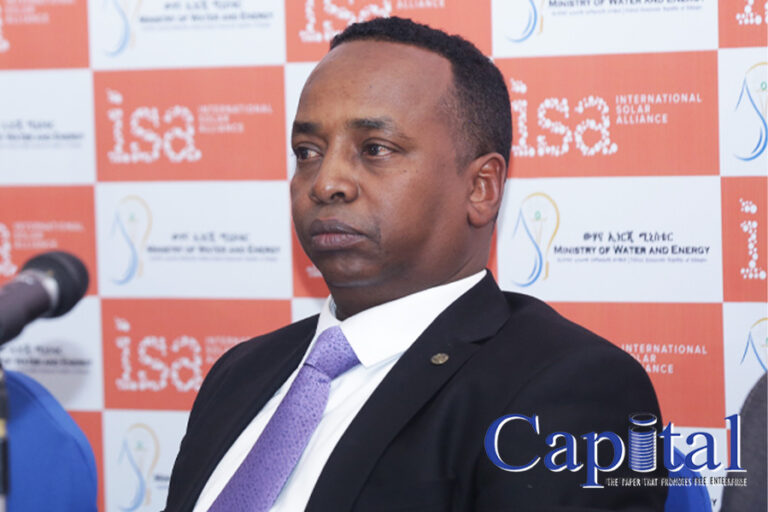
Ministry of Water and Energy prepares new investment policy to encourage private sector investment engagement in solar energy investment.
Ethiopia last week has hosted the fourth Regional Committee Meeting for the Africa Region of the International Solar Alliance /ISA/ from 29-31 August 2022.
“Ethiopia has potential to produce 100 GW energy from solar yet the country is generating only 4500 MW per annum,” said Sultan Wali, State Ministry of Water and Energy, adding, “The sector wants high investment. It is only the government and its partners so far who are investing in the sector. We are working to create and strength partnership between government and the private sector.”
The meeting proceedings featured detailed discussions on the progress and achievements thus far and future plans.
Ministers from Ethiopia, Central African Republic, Guinea, Ghana, Mali, Guinea-Bissau, Comoros, and Somalia attended the meeting along with Ajay Mathur, Director General of ISA participating in the first ISA’s physical meeting in the region organized in partnership with the Ministry of Water and Energy of Ethiopia.
The meeting discussed the roadmap for mobilizing USD 1 trillion in solar investments by 2030. Blended finance risk management strategy, international grids development and implementation of the ISA’s green hydrogen program were also discussed.
ISA’s head underlined that the African continent is blessed with unlimited potential for renewable energy, including abundant solar energy to the capacity of 10 TW.
“We are working towards mobilizing USD 1trillion of investment for a massive deployment of solar energy technologies and for expanding solar markets. With the right interventions, planned approach and support of the leadership, Africa can move towards providing electricity to all the 600 million people, while supporting economic growth, jobs, and a safe and healthy environment in the region,” the ISA head stated.
The ISA has 107 member countries with 38 engaging as Member Countries and 6 as signatories from the African continent. In Africa, ISA has projects in Ethiopia, Burkina Faso, Burundi, Comoros, Djibouti, Gambia, Malawi, Mali, Mauritius, Mozambique, Niger, Senegal, Seychelles, Sudan, Togo, and Uganda. In Ethiopia, ISA is working on the development of 410MW Solar Park providing 2,250 solar pumps for irrigation and 1,400 solar water pumps for drinking water purposes.
Ethiopia ranks 9th globally in food inflation
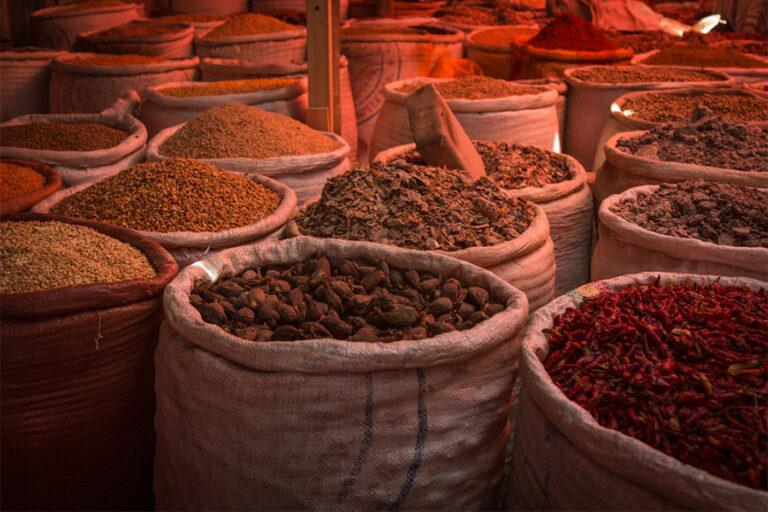
Ethiopia ranks 9th in the world having high food price inflation according to the World Bank latest food security update.
The report indicates 10 countries with the highest food price inflation, in nominal and real terms, using the latest month for which data are available between April and July 2022.
Lebanon sat at the top having the highest nominal food inflation in the world with 332 percent followed by Zimbabwe 309, Venezuela 155, Türkiye 95, Sri Lanka 91, Iran 90, Argentina 66, Suriname 38, Ethiopia 38, and Moldova 34.
“Domestic food price inflation remains high around the world, with high inflation continuing in almost all low and middle-income countries and the share of high-income countries with high inflation increasing sharply,” reads the World Bank’s update.
Inflation continues to be a daunting macroeconomic challenge facing the Ethiopian economy over the past five year. Headline inflation hit a record 33.5 per cent in July year on year, while food inflation hit 45.5 percent.
Food inflation has notably increased faster than headline inflation over the past several years. The rising price of wheat, edible oil, and fertilizer in the global market in particular transmits to the local market since Ethiopia is dependent on the international market for import.
The impact of the Northern conflict, impact of COVID-19 pandemic, supply chain disruptions, recurrent drought in Southern and Southeastern Ethiopia, and spikes in the global food prices mainly due to the war in Ukraine are putting multiple pressure on inflation and the Ethiopian economy.
Following the worst hunger crises in the greater Horn of Africa region in the last 70 years, according to the World Health Organization, trade openness and continuous movement of goods has been cited as vital for food security. In eastern Africa, the most traded commodities are maize and wheat. Other food staples that are traded and are essentials in the household food basket also include rice, sorghum, and sugar. Trade between countries in the region for the aforementioned commodities increased to above-average levels, such as exports from Ethiopia, Tanzania, and Uganda to food-deficit countries including Burundi, Kenya, Rwanda, Somalia, and South Sudan. Furthermore, reduced rainfall and droughts have affected trade in other protein-rich food sources such as livestock.
The World Bank currently is helping countries boost food and nutrition security during the current crisis through the 2.3 billion dollar Food Systems Resilience Program for Eastern and Southern Africa which helps countries in Eastern and Southern Africa increase the resilience of the region’s food systems and ability to tackle growing food insecurity. The program will enhance inter-agency food crisis response and also boost medium- and long-term efforts for resilient agricultural production, sustainable development of natural resources, expanded market access, and a greater focus on food systems resilience in policymaking.
