Thursday, October 1, 2026
Home Blog Page 271

South African Trade Mission Focuses on ICT and Agro-Processing Sectors in Ethiopia

0

A new chapter of economic diplomacy has reportedly begun, aiming to tap into the potential of two of the largest economies in East and Southern Africa. Officials from Ethiopia and South Africa stated that the two nations are transitioning from their historical political cooperation toward a robust and comprehensive strategic partnership.

Yasmin Wohabrebbi, State Minister for Trade and Regional Integration, noted that the focus of this relationship extends beyond mutual respect to “accelerating Africa’s economic transformation.” It was highlighted that the foundation for major trade expansion has already been laid, as South Africa is currently Ethiopia’s 5th largest export destination and 4th largest source of imports within the continent.

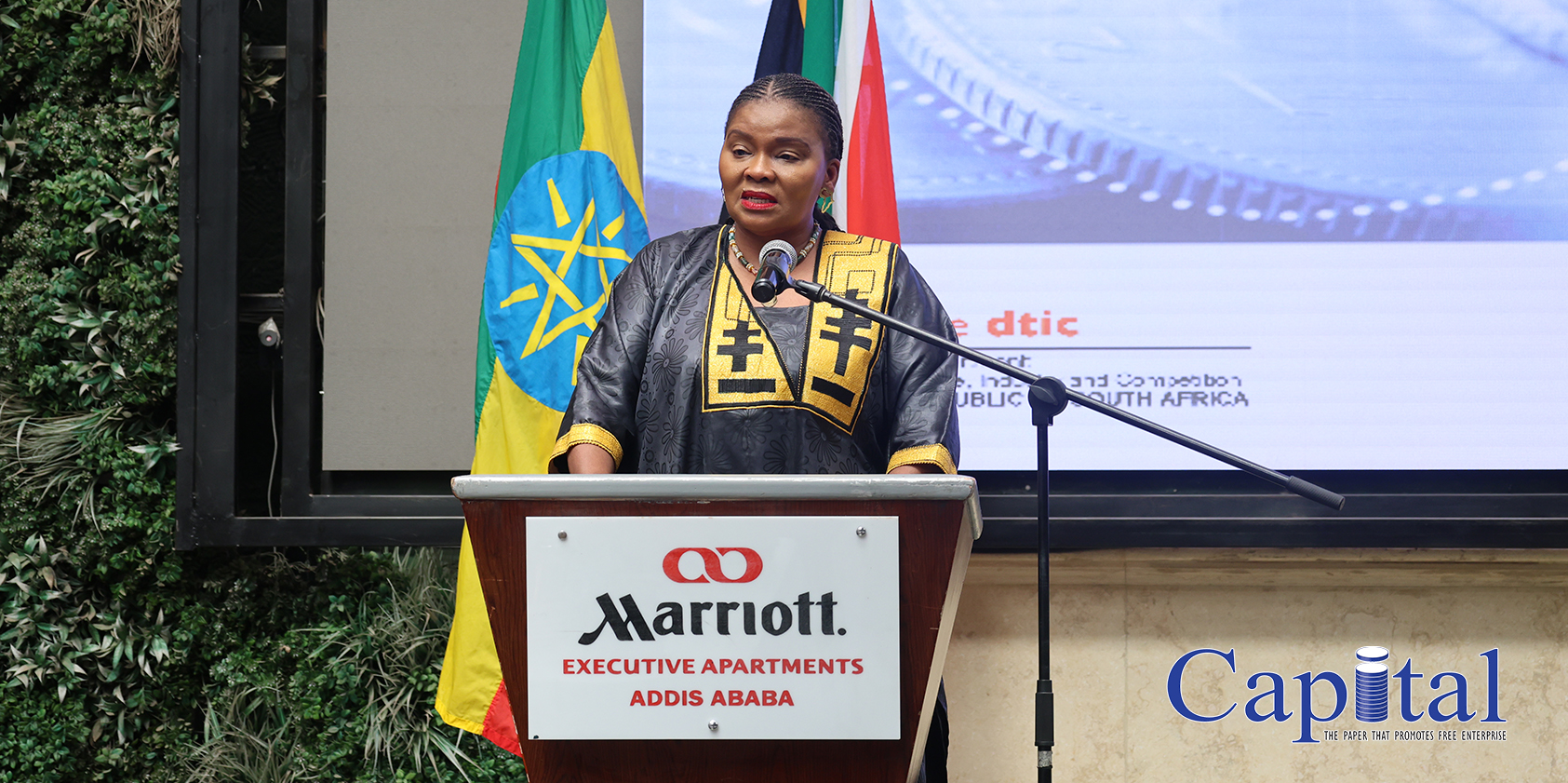
These remarks were made during a Business-to-Business (B2B) networking forum held in Addis Ababa. The event was organized by the Embassy of the Republic of South Africa in collaboration with the Department of Trade, Industry, and Competition (DTIC) to strengthen trade and investment ties between the two countries.

Led by the DTIC, the South African trade delegation focused on Information and Communication Technology (ICT), agro-processing, and metals fabrication. It was noted that these sectors will significantly bolster African trade integration. While trade between the two nations averaged $154 million between 2020 and 2025, recent data indicates a major shift. In the 2024-2025 fiscal year, Ethiopia doubled its performance from the previous year, generating $3.8 billion in total export revenue.
“In the first seven months of the current fiscal year, we have reached $5.9 billion,” Yasmin stated, adding that the country is on the right track to achieve its annual goal of $9 billion. This growth is attributed to the “Homegrown Economic Reform Program,” which focuses on streamlining customs procedures, reducing trade barriers, and improving logistics corridors.

The South African delegation expressed a strong interest in participating in Ethiopia’s rapidly growing digital and agricultural sectors. In the ICT sector, South African innovators aim to create platforms for connectivity and capacity building, with a specific interest in collaborative work using Artificial Intelligence (AI) to solve continental challenges.

In the agro-processing sector, both countries share a goal of transforming the agricultural value chain to ensure food security and create job opportunities. While Ethiopia is well-known in the South African market for its specialty coffee, it is now diversifying its exports to include products such as kidney beans, floral products, strawberries, and oilseeds.

In return, South Africa continues to supply essential goods to the Ethiopian economy, including machinery, electrical equipment, and base metals. This partnership is anchored within the framework of the African Continental Free Trade Area (AfCFTA). South Africa began trading under the AfCFTA in January 2024, and Ethiopia has completed its domestic process for publishing its specific tariff offers according to the agreement.

Additionally, Ethiopia’s massive infrastructure developments were a major topic at the forum. It was noted that in January 2026, Ethiopia officially began construction on what will be the largest airport in Africa within the next five years. This project is expected to create significant opportunities for South African companies in logistics, hospitality, and the aviation sector.


Ethiopia, Russia Move to Strengthen Agricultural Cooperation and Coffee Trade

0

Ethiopia and Russia are stepping up efforts to deepen cooperation in agriculture, with a focus on boosting trade in coffee and improving access to key agricultural inputs.

Ethiopia’s Minister of Agriculture, Addisu Arega, held talks with a Russian delegation led by Maxim Markovich, Deputy Minister of Agriculture of the Russian Federation.

Following the meeting, the minister described the discussions as “productive and forward-looking,” emphasizing the shared commitment to strengthening strategic ties in the agricultural sector.

According to the minister, the talks focused on priority areas such as agricultural input supply, trade in coffee, oil crops, and horticulture, as well as agricultural mechanization, agrochemicals, and the transfer of knowledge and technology.

Ethiopia and Russia maintain a longstanding bilateral relationship, which both sides now aim to elevate through expanded collaboration in agriculture.

Gambella Gold Production up 35 Percent

0

The Gambella Region of Ethiopia announced that in the past seven months the region has produced more than 4,488 kilograms of refined gold (up 35 percent from last year same period) and submitted to the National Bank of Ethiopia.
The production is which is 988 kilograms higher than the plan, according to Gambella Regional Mineral Resources Development Deputy Director General Mr. Elias Gedamu stated that the amount of gold production submitted to the National Bank is more than 1,175 kilograms higher compared to the same period of the previous year, according to the state media Ena report.

Elias Gedamu mentioned the result was achieved due to the government’s focus on the sector and the implementation of regulation, monitoring, and support activities. The gold production submitted to the National Bank was produced in the Dima, Abobo, Gambella, and Mengesh woredas of the region through traditional methods, special small scale, and large-scale gold companies.

Elias Gedamu confirmed that work is being done with focus to further strengthen the activities started in the region and submit more than the planned 6,000 kilograms of gold to the National Bank in the budget year.

Ethiopia Invests $1.5 Billion to Develop Industrial Parks

0

The Industrial Parks Development Corporation (IPDC) says the government has invested $1.5 billion over the past 10 years to develop industrial parks and fulfill infrastructure requirements.At a discussion forum organized to strengthen the participation of financial institutions within Special Economic Zones (SEZs), Fitsum Ketema, Deputy CEO of the Corporation, stated that the government has allocated significant capital by giving high priority to the construction and infrastructure development of industrial parks.

He noted that the Corporation currently manages 14 Special Economic Zones and industrial parks, which house more than 250 domestic and foreign investors.

Fitsum indicated that more than 60% of the investors operating within these Special Economic Zones and industrial parks are domestic investors.

Emphasizing that these local investors require extensive financial support in addition to infrastructure supply, he urged banks to give proper attention to the sector and support investors.

The Deputy CEO mentioned that the service provision, which was previously restricted to only one bank, has now been resolved; currently, all commercial banks are operating within the Special Economic Zones.