
Friday, October 2, 2026
Home Blog Page 285

Ethiopia Emerges as East Africa’s Hotel Construction Powerhouse

0

Ethiopia has positioned itself as one of Africa’s most dynamic hotel development markets, with nearly 80% of its planned hotel rooms now under construction – one of the highest ratios on the continent, according to the 2026 Hotel Chain Development Pipelines in Africa report released Tuesday.


The W Hospitality Group report reveals Ethiopia currently has 5,964 rooms across 34 hotels in its development pipeline, ranking fifth among African nations by total volume. More significantly, 4,768 of those rooms – a striking 79.9% – are already under construction, placing Ethiopia second only to Kenya (79.5%) among the continent’s top 10 markets for construction momentum.


This construction-heavy pipeline signals that new hotel supply in Ethiopia will come online faster than in many competing markets, where projects remain stalled in earlier planning stages.


“Ethiopia and Kenya both have nearly 80% of their rooms under construction, closely followed by Tanzania at 77.5%,” said Trevor Ward, Managing Director of W Hospitality Group. “What stands out this year is the strength of East Africa in terms of projects moving forward. Kenya, Ethiopia and Tanzania show some of the highest construction ratios on the continent, which suggests that this is where we are likely to see new supply coming through in the short to medium term.”


The contrast with other major markets is stark. Nigeria, Africa’s third-largest pipeline by volume with 8,480 rooms, has only 39.2% of those rooms under construction. Egypt, which dominates the continent with a staggering 45,984 pipeline rooms, is actively building just over half (51.4%) of its planned capacity.


Ethiopian hotels in the pipeline average 175 rooms, slightly above the continental average, suggesting development focused on mid-to-large scale properties.


The East African construction boom comes as part of a broader continental expansion, with Africa’s total hotel pipeline reaching a record 123,846 rooms across 675 properties – an 18.6% year-on-year increase. However, the report warns that development activity is increasingly concentrated, with the top 10 countries now accounting for 79% of all pipeline rooms.


Marriott International leads all operators in Africa with 31,782 pipeline rooms, followed by Hilton and Accor. The five largest global chains collectively account for approximately 80% of all pipeline hotels across the continent.


While more than 65,000 rooms are projected to open across Africa in 2026 and 2027, the report cautions that historical actualisation rates suggest actual deliveries may fall short of current forecasts.
The findings will be discussed in greater depth at the Future Hospitality Summit Africa, scheduled for March 31 to April 1 in Nairobi.

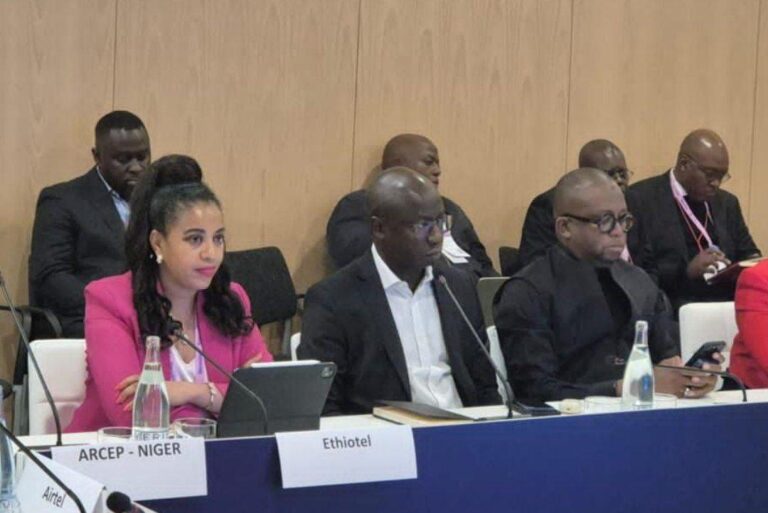
Ethiopia Unveils Groundbreaking Fund to Bridge Rural Digital Divide, Imposes 1.5% Telecom Revenue Levy

0

A landmark regulation approved by the Council of Ministers is set to transform Ethiopia’s digital landscape, mandating a historic contribution from telecom operators to connect the nation’s most remote communities.


In a major policy shift aimed at accelerating its digital economy ambitions, Ethiopia has officially established the “Universal Access Fund,” a dedicated financial mechanism designed to eradicate technological isolation in rural and underserved areas. Regulation No. 585/2026, approved by the Council of Ministers, marks a pivotal moment in the country’s quest for digital inclusion, ensuring that the benefits of connectivity reach every citizen.


The fund’s primary engine will be a mandatory 1.5% contribution on the annual gross revenue of all licensed telecommunications service providers operating in the country. This bold financial mechanism empowers the Ethiopian Communications Authority (ECA) to collect and strategically deploy resources to bridge the infrastructure gap that has long left rural populations, schools, and health centers on the wrong side of the digital divide.


In a move that balances ambition with market realities, the regulation introduces a “Pay-or-Play” principle, offering operators unprecedented flexibility. While companies can fulfill their obligation through direct monetary payments into the fund, they are also empowered to meet their targets by directly investing in network expansion. By building infrastructure and delivering services in designated unserved areas, operators can deduct the incurred costs from their 1.5% revenue contribution, turning a regulatory requirement into a strategic investment opportunity.


To further stimulate competition and lower barriers for new entrants, the Council of Ministers has included a critical incentive: a three-year grace period for newly licensed operators, exempting them from the contribution as they establish their foothold in the market.
The fund’s mandate extends far beyond basic infrastructure. It is explicitly designed to be a catalyst for social equity, prioritizing connectivity for rural schools and healthcare facilities, and ensuring access for women, persons with disabilities, and low-income households. Furthermore, the fund will actively promote the growth of local digital content and technological products in indigenous languages, fostering a uniquely Ethiopian digital ecosystem.


To ensure robust compliance, the ECA will enforce strict penalties. Operators failing to remit their contributions will face a 2% penalty for the first month of delay, escalating to a sharp 5% for each subsequent month of non-payment, underscoring the government’s commitment to the fund’s success. This new regulation signals a decisive and structured approach to building a connected and inclusive digital future for all Ethiopians.

Africa Risks 30-Year Digital Lag Without Policy Overhaul, Ethio telecom CEO Warns

0

The head of Ethio telecom has delivered a stark prognosis for Africa’s technological future, asserting that continent-wide progress will stall for decades unless governments abandon what she described as “ad-hoc” policymaking in favor of a holistic development model.
Speaking on the fringes of the GSMA Ministerial Roundtable at the Mobile World Congress in Barcelona, Frehiwot Tamru cautioned that the current trajectory of addressing connectivity barriers in isolation is condemning the continent to a prolonged state of digital exclusion.


While acknowledging the GSMA’s efforts to benchmark progress through its new Digital Africa Index, Frehiwot pointed to a significant intelligence gap. She noted that the reluctance of numerous African nations to submit comprehensive data has resulted in an incomplete picture of the landscape, hindering the ability of both investors and policymakers to make informed decisions.


Frehiwot argued that the traditional method of tackling hurdles—first coverage, then affordability, followed by relevance—is no longer viable. “We cannot afford to treat the digital divide as a linear problem to be solved step by step over decades,” she said. “If we continue to tackle infrastructure separately from device economics, or content separately from regulation, we will still be discussing this same gap in 2056.”


She proposed a synchronized model where network densification, handset subsidization, local innovation ecosystems, and adaptive legislation are pursued as a single, integrated agenda.


In a direct appeal to the regulators present, Frehiwot pushed for a fundamental rebranding of the telecom sector’s role in national development. She argued that viewing operators merely as commercial entities selling minutes and data packages is an outdated notion that stifles potential.


“We are the architects of the digital backbone upon which future economies will be built,” Frehiwot stated. She urged a shift toward co-creative regulation, where frameworks are designed in partnership with operators to unlock infrastructure investment and foster socio-economic growth.


The discussions highlighted a frustrating contradiction within the African market: while 4G signals blanket roughly 84% of the population, a significant portion remains offline due to the prohibitive cost of entry-level devices. Ethiopia’s participation in a GSMA pilot scheme aiming to introduce ultra-low-cost 4G smartphones—priced under $40—was cited as a critical test case for bridging this “usage gap.”


The economic imperative for swift action is immense. According to industry data presented at the roundtable, converting the millions of under-connected Africans into active users could inject an estimated $700 billion into the continent’s collective GDP by the end of the decade.


Ethio telecom’s presence at the forum underscores its ambition under its “Next Horizon” plan to act as a catalyst for this economic shift, positioning itself not just as a service provider but as a foundational pillar of the region’s digital future.

Somali  Regional  Education   Bureau  Invitation   for National  Competitive   Bid

0

Somali  Regional Education  Bureau invites  interested eligible  bidders  invites for Procurement mention below

SINoDescription  of Item                                                                   Bid No.        Bid Type  
1Procurement  of Student  Bedding/Carpeting   Bedding of Boarding  Stbools  10/6/15/24   National  Competitive   Bid (NCB)

The Bid document shall be obtained commencing  from Somali  Regional  Education  Bureau; Procurement  and Property Directorate;  1st Floor against payment of a non-refundable fee of  Birr 600.00 (Six Hundred  birr only)  which shall be paid in finance Department  ‘Somali Regional State Education  Bureau. The bid document shall be collected during office hours (Monday to Friday 8:00-12:00pm  and 2:00-5: 15pm) after the announcement  of news paper by presenting the payment advice. Presenting copy of renewed Trade License, Tax Clearance Certificate and VAT Registration Certificate is a must.

Bidders  who do not have any poor performance  history on previous  Bureau’s Projects  can participate  in this Bid. Bidders shall be quite sure to state direct line phone number, cell phone number, fax number and e-mail  address  of their organization  correctly  while collecting  bid documents. Failure in receipt of bid communication due to incorrectness of the above will not bethe responsibility of the Bureau.

Bid proposal  shall be accompanied by the bid bond/Earnest Money Deposit of 2% of the item contract  in the form of Unconditional  Bank Guarantee  or Cash Payment  Order (CPO.).  Bid bondlEMD in any other form is not acceptable.

Bids must be deposited in the tender box prepared for this purpose at Somali Regional Education Bureau, logistics department during office hours before 2:00 pm.

Bid opening shall be held in the presence of bidders and/or their legal agents who wish to attend, on 2:30 p.m. at the place mentioned  Failure to comply any of the conditions from 2 – 5 above shall result in automatic rejection.

Interested eligible bidders may obtain further information  from Procurement  and property

Administration department, P. O. Bo 210, Jigjiga, Ethiopia,  Tel: 025 775 2069, Fax 025 775 3524, or visit:https:/lethiosomi,obs.com.

B  ES
